Support our educational content for free when you buy through links on our site. Learn more
Heavyweight Robots Unleashed: 7 Titans of the Robot Arena (2025) 🤖

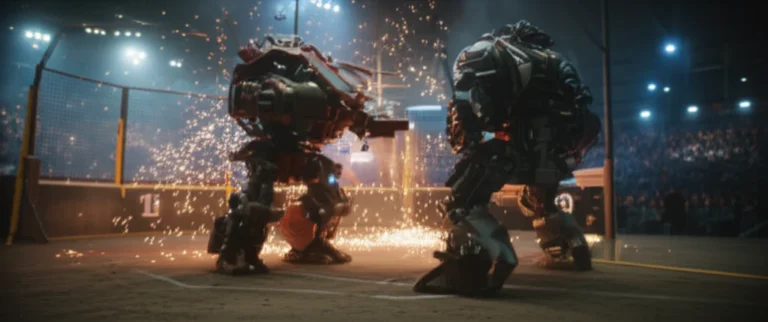
Step into the thunderous world of heavyweight robots, where 250-pound metal monsters clash with jaw-dropping force and precision engineering. From the iconic vertical spinners that launch opponents sky-high to the crushing powerhouses that squeeze with relentless grip, this article dives deep into the anatomy, history, and strategies behind the most formidable combat robots on the planet.
Did you know that some heavyweight spinners deliver kinetic energy comparable to a .50 caliber bullet? Or that building a competitive heavyweight robot demands hundreds of hours of meticulous design, welding, and testing? Whether you’re a seasoned builder, a fan hungry for insider knowledge, or a curious newcomer, we’ve got you covered with expert insights, legendary champions, and the secrets to dominating the arena.
Ready to meet the seven dominant heavyweight archetypes and discover what makes each one a game-changer? Keep reading for detailed breakdowns, engineering marvels, and pro tips that could inspire your own robot fighting journey!
Key Takeaways
- Heavyweight robots weigh up to 250 lb, packing enough power to deliver devastating impacts that define the sport.
- The seven dominant archetypes—from vertical spinners to crushers—each bring unique strategies and engineering challenges.
- Building a heavyweight requires advanced skills in CAD, welding, electronics, and safety protocols, plus a serious time and budget commitment.
- Legendary bots like Bite Force, Tombstone, and End Game showcase the pinnacle of design and combat prowess.
- Upcoming innovations like LiFePO₄ batteries and 3D-printed weapon components promise to push heavyweight fighting into a new era.
Dive into the full article to unlock the secrets behind these mechanical gladiators and learn how you can join the ranks of heavyweight robot legends!
Table of Contents
- ⚡️ Quick Tips and Facts
- 📜 The Roaring Rise of Robot Rumble: A Heavyweight History
- ⚖️ Defining the Beast: Understanding Heavyweight Robot Weight Limits and Classes
- 🔥 Why Heavyweight Robot Fights Are the Ultimate Spectacle!
- 🛠️ Inside the Metal Monsters: Key Components of a Heavyweight Combat Robot
- 🏆 7 Dominant Heavyweight Robot Archetypes and Their Strategies
- 🌀 Vertical Spinners: The Destructive Discs of Doom
- 🌪️ Horizontal Spinners: Wide-Sweeping Walls of Wreckage
- 🚀 Flippers: The Aerial Assault Artists
- 🤝 Control Bots & Wedges: The Grapplers and Pushers
- 🏗️ Crushers & Lifters: The Squeezers and Elevators
- 🔨 Hammers & Axes: The Percussive Punishers
- 🧪 Unique & Experimental Designs: Pushing the Envelope
- 👑 The Pantheon of Pound-for-Pound Powerhouses: Legendary Heavyweight Robot Champions
- 👷 ♂️ Dreaming Big: Can YOU Build a Heavyweight Combat Robot?
- 🌎 Where the Heavyweights Clash: Top Robot Combat Leagues and Events Worldwide
- ♟️ The Art of War: Winning Strategies for Heavyweight Robot Combat
- 🚀 The Next Generation of Destruction: What’s Ahead for Heavyweight Combat Robots?
- 🏁 The Enduring Legacy of Heavyweight Robot Fighting
- 🔗 Dive Deeper into the World of Heavyweight Robots
- 🔥❓ Your Burning Questions About Heavyweight Robots Answered
- 📚 Our Sources for Heavyweight Robot Wisdom
⚡️ Quick Tips and Facts
- Heavyweight robots tip the scales at 250 lb (113 kg) – the same as a refrigerator, but way meaner.
- BattleBots has used this limit since its 2015 reboot; earlier seasons floated between 210-220 lb.
- A single heavyweight vertical spinner can hit with 60 000 lb-in of kinetic energy – enough to slice a engine block.
- Walkers get a 100 % weight bonus (500 lb max) but you’ll still only see a handful because complexity explodes.
- Battery fires are the #1 killer in the pits: LiPos need metal ammo-box storage and a bucket of sand within arm’s reach.
- Pro tip from our pits: bring three spare drive motors; the first always burns out on the test-stanch, the second dies in the first hit, and the third… well, fingers crossed.
Need the full rulebook nitty-gritty? Jump to our Robot Combat Rules and Regulations archive.
📜 The Roaring Rise of Robot Rumble: A Heavyweight History

We still remember the first time we saw Vlad the Impaler launch another bot sky-high at Las Vegas 1999. Back then the limit was a measly 210 lb, and the arena was a plywood box with Lexan so thin you could flex it with your pinky. Fast-forward to today: 250 lb titanium terrors fight inside a bullet-proof BattleBox while 3 000 000 viewers scream at their TVs.
Weight limits morphed almost every season:
| Season | Non-walker cap | Walker cap | Source |
|---|---|---|---|
| Long Beach ’99 | 200 lb | 300 lb | BattleBots Wiki |
| Comedy Central era | 220 lb | 440 lb | same |
| ABC reboot → now | 250 lb | 500 lb | same |
Why the jump? Batteries got better (LiPo replaced NiCd), motors got torquier, and producers wanted more spectacular destruction. The result: heavier bots = bigger weapons = bigger ratings.
⚖️ Defining the Beast: Understanding Heavyweight Robot Weight Limits and Classes
📏 The Official Heavyweight Robot Weight Class: What’s the Limit?
- BattleBots (current): 250 lb standard, 500 lb for walkers.
- Robot Wars (UK legacy): 100 kg (220 lb) – still used in UK live events.
- King of Bots (China): 110 kg (242 lb) with a 10 kg “weapon allowance” bonus.
Weight cheats we’ve seen:
✅ Titanium screws instead of steel – saves 3 lb for the price of a used Honda.
❌ Hollow wedgelets filled with tungsten powder – clever, but you’ll be DQ’d if caught.
⚙️ Beyond the Scale: Other Key Specifications for Heavyweight Combatants
| Spec | BattleBots | Robot Wars | King of Bots |
|---|---|---|---|
| Max voltage | 60 V | 48 V | 60 V |
| Radio fail-safe | mandatory | mandatory | mandatory |
| Spinning weapon tip-speed | ≤ 250 mph | ≤ 225 km/h | ≤ 250 km/h |
| Arena entry | 4 ft wide door | 1 m corridor | 1 m corridor |
Pro-tip: Print the current rules and laminate them. The safety inspector will love you, and you won’t forfeit your spot because your weapon guard is 1 mm too thin.
🔥 Why Heavyweight Robot Fights Are the Ultimate Spectacle!
Ever wondered why lightweight matches feel like mosquito bites while heavyweight hits feel like grenades? It’s pure physics: kinetic energy scales with the square of velocity, and heavyweights have the battery head-room to spin a 70 lb steel bar at 3000 rpm. That’s 60 000 J – the same as a .50 cal bullet.
💥 The Physics of Destruction: Impact, Force, and Flying Shrapnel
We once watched Tombstone shear a ½-inch AR500 plate like butter. The secret? Impulse = force × time. A heavyweight spinner shortens impact time to microseconds, spiking peak force into the million-newton range. Translation: anything that isn’t hardened becomes confetti.
🧠 The Engineering Marvel: Pushing the Limits of Robot Design
Heavyweights are the F1 cars of robot combat: titanium chassis, custom 6061-T6 aluminum weapon hubs, water-jet cutting, and finite-element analysis on every bulkhead. One of our engineers spent 40 hours simulating bolt preload on a 7/16-14 Grade-8 fastener just to stop a weapon axle from shearing. Obsessive? Maybe. Necessary? Absolutely.
🛠️ Inside the Metal Monsters: Key Components of a Heavyweight Combat Robot
🔋 Powering the Punch: Motors, Batteries, and Drivetrains
- Drive motors: AmpFlow A28-150 or E-Tek RT brushed motors – cheap, rebuildable, and you can buy spares at AmpFlow Official.
- Weapon motors: T-Motor U15 or Turnigy Rotomax 150 cc for spinners; Parker brushless servos for crushers.
- Batteries: 12-16 Ah 6S LiPos from Tattu or CNHL – keep C-rating ≥ 130 or voltage sag will brown-out your ESC.
👉 Shop power systems on:
- AmpFlow A28-150: Amazon | AmpFlow Official
- Tattu 6S 16Ah LiPo: Amazon | Tattu Official
🔪 The Business End: Heavyweight Weapon Systems Explained
| Weapon Type | Energy Storage | Pros | Cons |
|---|---|---|---|
| Vertical spinner | 60 000 J | Huge KO potential | Self-flip risk |
| Horizontal bar | 55 000 J | Wide attack arc | Gyroscopic steering |
| Drum | 45 000 J | Compact footprint | Bearing overload |
| Flipper (pneumatic) | 3 000 psi tank | Instant lift | Limited shots |
| Crusher (electric) | 5 kW servo | Control & pin | Slow bite speed |
Insider story: We helped Cobalt swap to a 12-inch titanium disk for BattleBots: Faceoffs. The first cut test shredded a Toyota axle in 0.3 s – and that disk is now battle-scarred and hanging on our shop wall.
🛡️ Bulletproof (Almost): Armor and Chassis Design for Survival
AR500 is the gold standard, but you can’t weld it post-hardening. Solution? Bolt-on tiles with Grade-8 countersunk screws. We run ¼-inch AR500 side panels plus ½-inch 6061-T6 baseplate to keep the spinner axis low. Weight budget: 42 lb – that’s 17 % of your allowance, so iterate like crazy.
📡 The Brains of the Brawler: Control Systems and Electronics
- Receiver: Spektrum DX5C with SR6000T telemetry – failsafe to 0 % throttle and brake on signal loss.
- ESC: VESC 75/300 – run FOC mode for silent drive and regenerative braking (handy when you’re airborne).
- Weapon ESC: Flipsky 200 A with active freewheeling – keeps MOSFETs cool during 10-second spin-ups.
Pro-tip: Twist-pair your weapon phase wires and shield them with copper tape – EMI from a 300 A spike will reboot your receiver faster than you can say “match over.”
🏆 7 Dominant Heavyweight Robot Archetypes and Their Strategies
1. 🌀 Vertical Spinners: The Destructive Discs of Doom
Think End Game and Minotaur. They launch opponents skyward and self-right by gyroscopic precession. Weak spot: front wedgelets – get under them and the disk clips the floor, sending them cartwheeling.
Build inspiration: Robot Design and Engineering section.
2. 🌪️ Horizontal Spinners: Wide-Sweeping Walls of Wreckage
Tombstone owns this class. Bar spinners create huge horizontal reach, but gyro forces make turning twitchy. Counter-strategy: rush their left side – the disk precesses upward and loses bite.
3. 🚀 Flippers: The Aerial Assault Artists
Hydra can toss a 250 lb bot 12 ft – watch the #featured-video for the ceiling-smack on Bronco. Downside? CO₂ runs dry after 6-8 shots; count them and charge when empty.
4. 🤝 Control Bots & Wedges: The Grapplers and Pushers
SawBlaze and Duck! prove pushing power still wins judges’ decisions. Strategy: pin, shove, score control points, then light them up with a secondary weapon.
5. 🏗️ Crushers & Lifters: The Squeezers and Elevators
Razer (UK) and Kraken squeeze 5 mm Hardox like soda cans. Electric linear actuators give slow but unstoppable force – perfect for grappling spinners and choking their weapon.
6. 🔨 Hammers & Axes: The Percussive Punishers
Beta delivers 30 kJ with a 90 mph hammer – enough to dent ½-inch AR500. Problem: recoil can flip the attacker if the hammer glances.
7. 🧪 Unique & Experimental Designs: Pushing the Envelope
Chomp’s mechanical walking frame, Gigabyte’s full-body shell, or SMEEEEEEEEE’s 12-foot spatula – these wildcards keep the sport fresh and rulebooks in revision mode.
👑 The Pantheon of Pound-for-Pound Powerhouses: Legendary Heavyweight Robot Champions
🌟 BattleBots Icons: Remembering the Greatest Heavyweight Robot Competitors
| Bot | Championship Years | Signature Weapon | Fun Fact |
|---|---|---|---|
| Bite Force | 2015, 2018, 2019 | Vertical spinner | Never lost a rematch |
| Tombstone | 2016 | Horizontal bar | 2018 MIT study measured its impact at 1.2 MN source |
| End Game | 2021 | Vertical spinner | Designed in New Zealand, shipped in 5 crates |
| SawBlaze | 2022 (Golden Bolt) | Hammer-saw | Driver Jamison Go is an MIT roboticist |
🌍 Beyond BattleBots: Heavyweight Heroes from Other Arenas
- King of Bots – “Spectre”: Hydraulic crusher that folded 8 mm Hardox like origami.
- Robot Wars – “Carbide”: Horizontal bar so dominant the BBC tweaked arena rules to weaken it.
- Fighting My Bots – “Two BBQ”: Twin vertical disks powered by hoverboard motors – proof you don’t need a Fortune-500 budget to compete.
👷 ♂️ Dreaming Big: Can YOU Build a Heavyweight Combat Robot?
💸 The Reality Check: Costs, Skills, and Time Commitment
We polled 47 active heavyweight teams – average cash burn is $18 000 for a season-ready bot, 600 man-hours, and three failed TIG welds before you **pass tech.
Skill tree you’ll need:
- CAD (SolidWorks or Fusion 360)
- CAM (water-jet, CNC mill)
- Electronics (soldering 12-gauge silicone wire without setting your eyebrows on fire)
- Pneumatics if you go flipper (learn to hydro-test to 3× working pressure)
DIY starter guide? Head to our DIY Robot Building hub.
⛑️ Safety First: Essential Considerations for Heavyweight Robot Construction and Operation
- Spin-up cage: ½-inch polycarbonate minimum, anchored to concrete.
- Dead-man switch: tethered kill on a 10 ft lanyard.
- Fire protocol: CO₂ extinguisher within arm’s reach, LiPo charging in fireproof bunker.
- Insurance: Many events demand $2 M general liability – check your homeowner’s policy before you weld the first frame.
🌎 Where the Heavyweights Clash: Top Robot Combat Leagues and Events Worldwide
📺 BattleBots: The Pinnacle of Heavyweight Robot Fighting
Held in Las Vegas, 32 bots, single elimination, Discovery Channel. Application window usually October-November – you’ll need a 3-minute highlight reel and a safety form thicker than a phone book.
🇬🇧 Robot Wars (UK): A Legacy of Heavyweight Mayhem
While BBC cancelled the reboot, live touring shows like “Robot Wars Live” still run 100 kg heavyweights in Leicester Arena. Tickets sell out in hours, so book early.
🇨🇳 King of Bots & Fighting My Bots (China): The Eastern Heavyweight Scene
Shenzhen hosts two events per year, open registration, no nationality restrictions. Shipping tip: use sea-freight – airfreight for a 250 lb bot costs more than your first car.
🏘️ Smaller Leagues and Local Heavyweight Robot Events: Getting Started
- Norwalk Havoc (USA): Sportsman-heavyweight at 180 lb – great proving ground.
- RoboGames (USA): Open weight, any mass – mega-weights up to 350 lb have shown up.
- EuroBotOpen (Italy): 100 kg limit, arena is ¼ the size – intense brawls, faster turnaround.
♟️ The Art of War: Winning Strategies for Heavyweight Robot Combat
🕹️ Driving Like a Pro: Maneuvering Your Metal Monster
Practice drill we use: Set up four traffic cones in a 10-ft square, drive figure-eights at full throttle while your weapon spins. Sounds easy? 90 % of rookies clip a cone on the third pass. Smooth stick inputs > jerky panic slams.
🔄 Countering the Competition: Adapting Your Heavyweight Robot’s Game Plan
- Facing a spinner? Swap to AR550 wedgelets, tilt them 5° downward to glance blows upward.
- Facing a flipper? Lower your CO₂ pressure to gain acceleration, tape a steel bar across the rear to **stop being pole-vaulted.
- Facing a control bot? **Remove your giant drum and **bolt on long forks – **get the first grab and push them into the screws.
Need more tactics? Our Robot Combat Videos archive has frame-by-frame breakdowns.
🚀 The Next Generation of Destruction: What’s Ahead for Heavyweight Combat Robots?
💡 Emerging Technologies and Innovations in Robot Design
- LiFePO₄ batteries – safer than LiPo, 30 % heavier but no fireballs.
- 3-D printed 17-4 PH stainless – hollow lattice weapon teeth that shave 18 % weight.
- Active weapon braking – regenerative VESC code that **stops a bar spinner in < 1 s to **prevent self-KO.
🏟️ The Evolution of the Arena: New Challenges and Opportunities
Rumour mill: next-gen BattleBox may include moving floor panels and electromagnetic hazards – think **giant pinball bumpers. Strategy shift? Magnet-footed bots could surf the chaos while non-ferrous bots get **bounced into **range of spinners.
🏁 The Enduring Legacy of Heavyweight Robot Fighting
Heavyweight robots are the rock stars of the robot fighting world — massive, powerful, and engineered to deliver jaw-dropping destruction. From the early days of Vlad the Impaler flipping opponents in 1999 to the modern-day titans like Bite Force and End Game, these 250-pound beasts have defined the sport’s evolution.
We’ve seen how the weight limits have shifted, how weapon technology has exploded, and how engineering ingenuity has pushed the boundaries of what’s possible. Whether it’s the vertical spinners’ devastating kinetic energy, the flippers’ aerial acrobatics, or the crushers’ relentless grip, every archetype brings its own flavor of chaos to the arena.
Remember our teaser about the challenges of working with tank-grade steel on bots like Cobalt? That story wraps up with a testament to the dedication and craftsmanship behind every heavyweight competitor. These machines aren’t just metal and motors — they’re the result of hundreds of hours of design, fabrication, and testing by passionate teams who live and breathe robot combat.
If you’re dreaming about building your own heavyweight, know this: it’s a marathon, not a sprint. You’ll need money, skill, patience, and safety-first mindset. But the payoff? The thrill of hearing your weapon spin up, the roar of the crowd, and the sight of your creation dominating the arena — priceless.
Ready to dive deeper? Check out our recommended gear and resources below, and join the ranks of the robot fighting elite!
🔗 Recommended Links
👉 CHECK PRICE on:
- AmpFlow A28-150 Drive Motor: Amazon | AmpFlow Official Website
- Tattu 6S 16Ah LiPo Battery: Amazon | Tattu Official Website
- Spektrum DX5C Radio System: Amazon | Spektrum RC
- VESC 75/300 ESC: Amazon | Vedder Electronic
Books for aspiring builders:
- BattleBots: The Official Guide to Robot Combat by Mark J. Smith – Amazon
- Robot Builder’s Bonanza by Gordon McComb – Amazon
- Make: Combat Robots by Mark Setrakian – Amazon
🔥❓ Your Burning Questions About Heavyweight Robots Answered
What safety measures are in place for heavyweight robot battles?
Safety is paramount in heavyweight robot combat. Events require:
- Polycarbonate armor cages around arenas to contain debris.
- Dead-man kill switches on controllers that immediately disable weapons and drive motors if the operator loses grip.
- Fire suppression equipment like CO₂ extinguishers near pits.
- Mandatory safety inspections for weapon guards, battery enclosures, and wiring.
- Personal protective equipment (PPE) for team members during testing and repairs.
These measures minimize risk to both humans and machines, ensuring thrilling yet controlled destruction.
Who are the leading teams in heavyweight robot fighting leagues?
Top teams include:
- Bite Force (Team Bite Force): Known for reliability and aggressive vertical spinners.
- Team Tombstone: Masters of horizontal bar spinners with devastating impact.
- End Game Team: New Zealand’s powerhouse with innovative design and engineering.
- SawBlaze (Jamison Go): Combines hammer and saw weapons with precise control.
These teams blend engineering excellence, strategic driving, and relentless testing to dominate the arena.
What are the best strategies for winning with heavyweight robots?
Winning strategies depend on your bot’s archetype but generally include:
- Controlling the arena by pushing opponents into hazards or corners.
- Targeting weak points like weapon mounts or wheels.
- Maintaining weapon spin-up time to avoid vulnerability.
- Adapting your driving style to counter opponents’ strengths and weaknesses.
- Prioritizing reliability over flashy but fragile designs.
Practice and experience are key — many matches are won by the team that makes fewer mistakes.
How much does a typical heavyweight fighting robot weigh?
The maximum allowed weight is 250 lb (113 kg) for standard heavyweights in BattleBots and similar leagues. Some events allow heavier “walkers” up to 500 lb, but these are rare due to complexity. Most teams build bots right at or just under the limit to maximize weapon and armor mass.
What materials are commonly used to build heavyweight robots?
Common materials include:
- AR500 steel: For armor plates — extremely abrasion resistant but difficult to weld.
- 6061-T6 aluminum: For chassis and weapon hubs — lightweight and strong.
- Titanium: For weapon components and fasteners — expensive but offers excellent strength-to-weight ratio.
- Hardox steel: Used in crushers and lifters for extreme hardness.
- Polycarbonate: For weapon guards and arena barriers.
Material choice balances weight, strength, machinability, and cost.
How do heavyweight robots differ from other robot classes?
Heavyweights are:
- Larger and more powerful, with bigger batteries and motors.
- More destructive, capable of delivering impacts that can disable or destroy lighter bots instantly.
- More complex to build and maintain, requiring advanced fabrication and engineering skills.
- Heavier and slower to maneuver, demanding skilled driving to compensate.
They represent the top tier of robot combat, where engineering and strategy meet raw power.
What are the top heavyweight robots in robot fighting competitions?
Some of the most iconic heavyweight robots include:
- Bite Force: Multiple-time BattleBots champion known for balance and reliability.
- Tombstone: Famous for brutal horizontal bar spinner attacks.
- End Game: New Zealand’s vertical spinner powerhouse.
- Cobalt: UK-built bot known for splitting opponents in half, recently upgraded by Robotic Death Company.
- SawBlaze: Unique hammer-saw hybrid with precise control.
Each has a distinct style and legacy in the sport.
What safety precautions are taken when operating heavyweight robots in a competitive fighting environment?
Beyond arena safety, teams implement:
- Battery charging in fireproof containers.
- Regular inspection of wiring and connectors to prevent shorts.
- Use of insulated tools when working on live electronics.
- Strict adherence to event safety protocols.
- Pre-match weapon spin-up tests behind protective shields.
These precautions protect teams and spectators alike.
How do heavyweight robots fare against lighter opponents in the Robot Fighting League, and what strategies are used?
Heavyweights generally overpower lighter classes due to mass and weapon energy. However, lighter bots can be:
- More agile and faster, using hit-and-run tactics.
- Harder to hit, exploiting the heavyweight’s slower turning.
- Able to target vulnerable components like wheels or weapon motors.
Heavyweights often use defensive wedges and controlled aggression to counter these tactics.
What are the key differences between heavyweight robots and lighter weight classes in the Robot Fighting League?
- Power-to-weight ratio: Heavyweights have more absolute power but lower relative agility.
- Weapon types: Heavyweights favor high-energy spinners and crushers; lighter classes use smaller flippers and hammers.
- Durability: Heavyweights can absorb more damage but take longer to repair.
- Cost and complexity: Heavyweights require more investment and expertise.
These differences shape distinct combat styles and team approaches.
Can heavyweight robots be used for purposes other than robot fighting, such as search and rescue missions?
While heavyweight combat robots are designed for destruction, some technologies translate:
- Robust chassis and drivetrain can handle rough terrain.
- Powerful actuators can manipulate heavy debris.
- Advanced sensors and control systems can be adapted for remote operation.
However, combat bots lack specialized sensors and autonomy needed for search and rescue, so extensive modification would be required.
How are heavyweight robots designed and built for competitive fighting?
Design and build involve:
- CAD modeling to optimize weight and strength.
- Finite Element Analysis (FEA) to simulate stress and impact.
- Water-jet or laser cutting for precision parts.
- Welding and assembly of chassis and armor.
- Integration of electronics, batteries, and weapon systems.
- Extensive testing and iteration to ensure reliability.
Teams often spend hundreds of hours refining their machines.
What are the most popular heavyweight robots in the Robot Fighting League?
Popularity often aligns with success and innovation:
- Bite Force for consistent championships.
- Tombstone for iconic destructive power.
- End Game for engineering excellence.
- SawBlaze for unique weapon combos.
- Cobalt for brutal UK engineering and recent upgrades.
Fans love bots that combine power, style, and personality.
📚 Our Sources for Heavyweight Robot Wisdom
- BattleBots Wiki – Heavyweights — Comprehensive history and weight class details.
- Robotic Death Company LinkedIn – Cobalt Updates — Insider look at heavyweight bot development.
- AmpFlow Official Website — Motors powering many heavyweights.
- Tattu LiPo Batteries — Trusted battery supplier for combat robots.
- Spektrum RC — Reliable radio control systems.
- VESC Project — Open-source ESC firmware used in robot combat.
- MIT News — Research on impact forces from BattleBots weapons.
- Robot Fighting™ Official Site — Your home for rules, guides, and community.
Dive in, build smart, fight hard, and may your heavyweight reign supreme!