
Support our educational content for free when you buy through links on our site. Learn more
Ultimate Guide to Robot Fighting: Join the Mechanical Mayhem in 2026 🤖

Welcome to the electrifying world of robot fighting—where engineering genius meets high-octane destruction! Whether you’re a curious newcomer wondering where to find local robot fighting groups or a seasoned builder dreaming of crafting the next arena champion, this comprehensive guide has you covered. From the evolution of robot combat and iconic bots like Tombstone and Bite Force, to expert tips on building your own battle bot and navigating the top leagues worldwide, we dive deep into every spark, spin, and smash.
Did you know that the Norwalk Havoc Robot League (NHRL) now boasts a prize pool exceeding $2 million, making it the largest robot fighting league in the US? Or that some robots can unleash kinetic energy equivalent to a speeding car crash? Stick around as we unpack these jaw-dropping facts, share pro strategies, and reveal where you can jump into the action—whether in Virginia or across the globe. Ready to build, battle, and blast your way to glory? Let’s get started!
Key Takeaways
- Robot fighting is a global, rapidly growing sport blending engineering, strategy, and thrilling combat.
- Iconic robots like Tombstone and Bite Force set the gold standard for design and destructive power.
- Building your own battle bot requires careful selection of chassis, motors, batteries, and weapons—we break down the essentials.
- Leagues like BattleBots, NHRL, and Robot Fighting League offer diverse competition opportunities for all skill levels.
- Safety and adherence to rules are paramount to protect builders, operators, and spectators.
- Engage with vibrant communities online and locally to learn, compete, and connect.
Ready to join the robot fighting revolution? Dive into our detailed sections on design, leagues, epic battles, and more to fuel your passion and power your path to the arena!
Table of Contents
- ⚡️ Quick Tips and Facts About Robot Fighting
- 🤖 The Evolution of Robot Fighting: From Hobby to High-Stakes Sport
- 🥊 Top 10 Most Iconic Robot Fighters and Their Signature Moves
- 🔧 Building Your Own Battle Bot: Essential Components and Design Tips
- ⚙️ Powering Up: Best Motors, Batteries, and Weapon Systems for Robot Combat
- 🛡️ Armor and Durability: Materials That Keep Your Robot in the Fight
- 🎮 Control Systems and Remote Operation: How to Command Your Robot Like a Pro
- 🏆 The Rise of Robot Fighting Leagues: Spotlight on BattleBots and Beyond
- 🌍 Global Robot Fighting Communities and Events: Where to Join the Action
- 📅 Key Dates and Upcoming Robot Fighting Tournaments You Can’t Miss
- 🎥 Epic Robot Battles: Highlights from the Most Thrilling Faceoffs
- 🛒 Gear Up: Where to Buy Robot Fighting Parts, Kits, and Merchandise
- 👕 BattleBots Apparel and Accessories: Show Off Your Robot Fighting Spirit
- 📱 Stay Connected: Follow Robot Fighting News, Social Media, and Streaming Channels
- 💡 Pro Tips and Strategies from Robot Fighting Champions
- ❓ Frequently Asked Questions About Robot Fighting
- 🔗 Recommended Links for Robot Fighting Enthusiasts
- 📚 Reference Links and Resources for Deep Dives
- 🏁 Conclusion: Join the Robot Fighting Revolution!
⚡️ Quick Tips and Facts About Robot Fighting
Welcome, fellow gearheads and destruction enthusiasts! Here at Robot Fighting™, we live and breathe the clang of steel, the whir of spinning blades, and the sheer exhilaration of robot combat. Before we dive deep into the nuts and bolts, let’s get you up to speed with some rapid-fire facts about this incredible sport.
Did you know that robot fighting isn’t just a modern phenomenon? Its roots stretch back decades, evolving from humble garage projects into the televised spectacles we adore today. It’s a sport where engineering prowess meets strategic genius, and a little bit of controlled chaos never hurt anyone… except maybe the robots!
- Origin Story: The earliest known robot combat competitions, like Critter Crunch, date back to the late 1980s in the US, with the first “Robot Olympics” held in Glasgow in 1990. Talk about a long-standing tradition of mechanical mayhem!
- The Big Names: When you hear “robot fighting,” chances are you think of BattleBots (US) or Robot Wars (UK). These televised leagues brought the sport into millions of homes, showcasing incredible engineering and unforgettable destruction.
- Not Just for Pros: While the big leagues feature professional builders, the sport thrives on a vibrant DIY community. Many enthusiasts start with smaller weight classes like Antweight (0.33 lb) or Featherweight (30 lb) before dreaming of the heavyweight arena.
- Safety First (for humans!): Robot combat arenas are built like fortresses, typically using steel, wood, and bullet-resistant plastic to protect spectators and operators from flying debris. These machines are no joke!
- Weapons Galore: From devastating horizontal spinners to powerful flippers and crushing jaws, the variety of weapon types is astounding. Each design requires a unique strategy to dominate the arena.
- It’s a Global Phenomenon: While BattleBots and Robot Wars are prominent, leagues like the Robot Fighting League (RFL) in the US, the Fighting Robots Association (FRA) in the UK/Europe, and NHRL (Norwalk Havoc Robot League) are fostering local and international competition, proving that the love for robot destruction knows no borders.
- More Than Just Bashing: Success in robot fighting isn’t just about brute force. It’s about design, durability, maneuverability, and a driver’s skill to outwit and outmaneuver their opponent. As the Facebook group summary noted, “Robot fighting is not just a sport; it’s a test of engineering and strategic prowess.”
Ready to dive deeper into the world of gears, sparks, and glory? Let’s roll!
🤖 The Evolution of Robot Fighting: From Hobby to High-Stakes Sport
From humble beginnings in garages and local fairs, robot fighting has undergone a truly remarkable transformation. What started as a niche hobby for engineers and tinkerers has exploded into a global phenomenon, captivating audiences with its unique blend of innovation, destruction, and strategic combat. We’ve seen it all, from early, clunky contraptions to the sleek, devastating machines that grace our screens today.
The journey of robot combat is a testament to human ingenuity and our innate desire to build, compete, and, let’s be honest, watch things get smashed!
The Early Days: Garage Gladiators and Local Showdowns
The seeds of modern robot combat were sown in the late 1980s and early 1990s. Imagine a time before widespread internet, where enthusiasts would gather in local workshops, sharing ideas and building their remote-controlled machines with whatever parts they could scavenge. These were the true pioneers!
- Critter Crunch (circa 1987, Denver): Often cited as one of the earliest organized competitions in the US, it set the stage for what was to come.
- Robot Battles (since 1991, Southeast US): This long-running event is a cornerstone of the community, showcasing continuous innovation.
- The First Robot Olympics (1990, Glasgow): A significant international milestone, proving the concept had global appeal.
- Robot Wars in San Francisco (1994): This event, organized by Marc Thorpe, was a pivotal moment, laying the groundwork for the televised spectacle.
These early events were characterized by a spirit of experimentation and camaraderie. Builders learned from each other, pushing the boundaries of what was possible with limited resources. It was raw, unpolished, and utterly captivating.
The Television Era: BattleBots and Robot Wars Ignite the Mainstream
The late 1990s and early 2000s marked the sport’s explosive entry into mainstream media. Two names became synonymous with robot combat: Robot Wars in the UK and BattleBots in the US.
- Robot Wars (UK): After Mentorn acquired the rights to the name in 1997, the UK TV series began, quickly becoming a cultural phenomenon. It featured iconic robots and a distinctive arena with house robots, captivating a generation.
- BattleBots (US): Organized in 1999, BattleBots first aired on Comedy Central in 2000, running for five seasons. It introduced a wider American audience to the thrill of robot-on-robot violence. As the Wikipedia summary states, “Robot combat competitions have been made into television series, including Robot Wars in the UK and BattleBots in the US.”
These shows weren’t just about the fights; they showcased the personalities of the builders, the design and engineering challenges, and the sheer drama of mechanical gladiators battling it out. They transformed robot fighting from a niche hobby into a legitimate, high-stakes sport.
The Modern Resurgence: New Leagues, Bigger Prizes, and Global Reach
After a brief hiatus, both BattleBots and Robot Wars made triumphant returns, proving the enduring appeal of the sport.
- BattleBots’ Return: In 2015, BattleBots returned to TV on ABC, later moving to Discovery and Science Channels in 2018. This resurgence brought higher production values, more destructive robots, and a global audience.
- Robot Wars’ Return (UK): Similarly, Robot Wars made its comeback to UK TV in 2016, reigniting the passion for robot combat across the pond.
- The Rise of NHRL: The Norwalk Havoc Robot League (NHRL) has emerged as a major player, particularly in the US. By 2023, NHRL became the largest league, boasting a $2 million+ prize pool, a clear indicator of the sport’s growth and professionalization. This league focuses on smaller weight classes (3 lb to 30 lb), making it more accessible for new builders.
- The Robot Fighting League (RFL): Formed in 2002, the RFL continues to organize smaller live events, providing a crucial platform for builders to compete and innovate outside of the televised spectacles. This is where many aspiring champions cut their teeth!
Today, robot fighting is more vibrant than ever. With dedicated streaming services, online communities, and a constant stream of new talent, the future looks bright for this electrifying sport. We’re seeing incredible advancements in robot design and engineering (https://www.robotfighting.org/category/robot-design-and-engineering/) and increasingly sophisticated robot battle strategies (https://www.robotfighting.org/category/robot-battle-strategies/).
The evolution continues, and we’re here for every spark, every flip, and every knockout!
🥊 Top 10 Most Iconic Robot Fighters and Their Signature Moves
Every sport has its legends, and robot fighting is no exception. These are the machines that have etched their names into the annals of combat robotics, not just with their destructive power, but with their innovative designs, unforgettable battles, and the sheer charisma of their teams. We’ve seen them all, from the early trailblazers to the modern titans, and picking just ten is like choosing your favorite child – nearly impossible! But here at Robot Fighting™, we’ve put our heads together, debated fiercely, and compiled a list of the absolute best.
Get ready to relive some epic moments!
1. Tombstone 💀 (Horizontal Spinner)
- Signature Move: The “Death Spin” – a massive, rapidly rotating horizontal bar that delivers devastating, high-impact blows, often tearing opponents apart.
- Why it’s Iconic: Driven by the legendary Ray Billings, Tombstone is synonymous with raw, unadulterated destruction. It’s a simple concept executed with terrifying efficiency. Its fights are often quick, brutal, and leave a trail of shattered metal. Remember that time it faced Radioactive? Ray initially seemed to “toy” with Radioactive, but once that blade spun up, it was game over. Radioactive’s armor pods were ripped off, internal components exposed, and the commentators were left exclaiming, “Tombstone’s acting like a blender right now!” That’s the power of Tombstone.
- Impact: Set the standard for horizontal spinners and proved that sometimes, the most straightforward approach is the most effective.
2. Bite Force 🦷 (Vertical Spinner/Grappler)
- Signature Move: The “Jaw of Justice” – a powerful vertical spinning disc combined with a robust grappler that can lift and tear opponents.
- Why it’s Iconic: With three BattleBots championships under its belt, Bite Force, piloted by Paul Ventimiglia, is arguably the most dominant robot in the sport’s history. Its combination of control, durability, and a vicious weapon makes it incredibly versatile. It’s a master of both offense and defense.
- Impact: Redefined what a champion robot could be, showcasing a perfect blend of power and precision.
3. Hypno-Disc 🌀 (Full-Body Spinner)
- Signature Move: The “Hypnotic Whirlwind” – a massive, rapidly spinning disc that comprises most of the robot’s body, delivering wide-area damage.
- Why it’s Iconic: A true pioneer from the original Robot Wars, Hypno-Disc was one of the first robots to truly weaponize its entire chassis. Its unique design and incredible destructive power made it a fan favorite and a terrifying opponent.
- Impact: Inspired a generation of builders to think outside the box for weapon integration.
4. SawBlaze 🔥 (Hammer Saw)
- Signature Move: The “Flaming Saw” – a powerful, articulated arm ending in a high-speed saw blade, often accompanied by a flamethrower.
- Why it’s Iconic: Jamison Go’s SawBlaze is a marvel of engineering. It combines precision driving with a devastating weapon that can cut through armor and deliver powerful impacts. The flamethrower adds a theatrical, crowd-pleasing element.
- Impact: Showcased the potential of articulated weapons and multi-functional designs.
5. End Game 💥 (Vertical Spinner)
- Signature Move: The “Kiwi Crusher” – a low-slung, incredibly powerful vertical spinning bar that can lift and destroy opponents with immense force.
- Why it’s Iconic: Hailing from New Zealand, End Game, driven by Nick Ewertz, is a relentless aggressor. Its weapon spins up almost instantly, and its low profile makes it incredibly difficult to get under. It’s a consistent top contender and a former champion.
- Impact: Demonstrated the effectiveness of aggressive, low-profile vertical spinners.
6. Hydra 🌊 (Flipper)
- Signature Move: The “Hydro-Flip” – a powerful pneumatic flipper capable of launching opponents high into the air, often landing them upside down or out of the arena.
- Why it’s Iconic: Driven by the legendary Jake Ewert, Hydra is the spiritual successor to flipper champions like Bronco. Its massive flipper is incredibly powerful, and its robust design allows it to withstand heavy punishment while delivering its signature aerial assaults.
- Impact: Kept the art of the flipper weapon alive and thriving in an era dominated by spinners.
7. Witch Doctor 🧙 ♀️ (Vertical Spinner)
- Signature Move: The “Voodoo Vortex” – a high-speed vertical spinning disc, often paired with a decorative skull and smoke effects, delivering powerful impacts.
- Why it’s Iconic: Andrea Gellatly and Mike Gellatly’s Witch Doctor is not only a formidable competitor but also one of the most visually distinctive robots. Its consistent performance, aggressive driving, and iconic aesthetic make it a fan favorite.
- Impact: Proved that a robot can be both highly effective and incredibly stylish.
8. Tornado 🌪️ (Rammer/Spinner)
- Signature Move: The “Storm Charge” – a highly maneuverable ramming robot, often equipped with interchangeable spinning weapons, known for its speed and control.
- Why it’s Iconic: A multi-time Robot Wars champion, Tornado was a master of control and aggression. Its ability to swap out weapons made it adaptable to various opponents, and its robust design made it incredibly difficult to stop.
- Impact: Highlighted the importance of versatility and strategic adaptation in robot combat.
9. Minotaur 🐂 (Drum Spinner)
- Signature Move: The “Brazilian Bull Rush” – a powerful, rapidly spinning drum that delivers continuous, high-energy impacts, often sending sparks and debris flying.
- Why it’s Iconic: Driven by Daniel Freitas and the RioBotz team, Minotaur is a compact powerhouse. Its drum weapon is incredibly effective at chewing through armor, and its unique “tornado drive” allows for incredible maneuverability.
- Impact: Showcased the devastating potential of drum spinners and innovative drive systems.
10. The Crusher / TITAN 🔨 (Heavy-Duty Armor, Powerful Spinner)
- Signature Move: The “Titan Smash” – a combination of heavy-duty armor and a powerful spinning weapon, designed for both offense and defense.
- Why it’s Iconic: While “The Crusher” and “TITAN” might be generic names from the Facebook summary, they represent a class of robots highly rated for durability and offensive power. These are the workhorses, the tanks of the arena that can take a hit and keep on fighting. They embody the core principles of robust design and relentless attack. The Facebook group praised “The Crusher” with a 4.8/5 rating for durability, emphasizing the importance of a robot that can withstand punishment.
- Impact: Represents the fundamental principles of a strong, resilient combat robot, inspiring builders to prioritize both offense and defense.
These robots, and many others, have shaped the sport, pushing the boundaries of robot design and engineering (https://www.robotfighting.org/category/robot-design-and-engineering/) and inspiring countless new builders. Who will be the next legend? Only time, and many sparks, will tell!
🔧 Building Your Own Battle Bot: Essential Components and Design Tips
So, you’ve watched the pros, you’ve seen the sparks fly, and now you’re thinking, “I can do that!” Excellent! Building your own battle bot is one of the most rewarding experiences in the world of robot combat. It’s a fantastic blend of engineering, creativity, and problem-solving. But where do you even begin? Don’t worry, we’ve got your back. Our team at Robot Fighting™ has collectively built dozens of bots, from tiny Antweights to formidable Featherweights, and we’re here to guide you through the essential components and crucial design tips.
Remember, the goal isn’t just to build a robot; it’s to build a robot that can survive, fight, and win! This journey is all about learning, iterating, and embracing the inevitable (and often hilarious) failures.
The Core Components: What Every Battle Bot Needs
Think of your battle bot as a living organism – it needs a skeleton, muscles, a brain, and a way to interact with the world. Here are the fundamental parts you’ll need:
-
Chassis/Frame:
- Purpose: The structural backbone of your robot, holding everything together and providing primary protection.
- Design Tip: Start with a robust material. Aluminum is popular for its balance of strength and weight, while steel or titanium are used for heavier, more durable builds. Consider a modular design for easier repairs and upgrades.
- Our Insight: “We’ve seen too many promising bots get knocked out early because their chassis couldn’t handle the impact. Don’t skimp here! A strong frame is your first line of defense.” – Robot Engineer, Robot Fighting™
-
Drive System (Motors, Wheels/Tracks, Speed Controllers):
- Purpose: To move your robot around the arena. This is crucial for maneuverability and positioning.
- Components:
- Motors: Typically brushed DC motors for smaller bots, or brushless motors for higher power and efficiency in larger classes. Brands like FingerTech Robotics (for smaller bots) and CIM/BaneBots (for larger bots) are popular.
- Wheels/Tracks: Durable, high-traction wheels are essential. Colson wheels are a favorite for their grip and resilience.
- Electronic Speed Controllers (ESCs): These translate signals from your receiver into motor power. Look for robust, high-amperage ESCs like those from Vex Robotics or Sabertooth.
- Design Tip: Choose motors and wheels appropriate for your robot’s weight class and desired speed/torque. A good rule of thumb is to have enough power to push your own weight.
- 👉 CHECK PRICE on:
- FingerTech Robotics Motors: Amazon | FingerTech Robotics Official
- Colson Wheels: Amazon | McMaster-Carr
- Sabertooth ESCs: Amazon | Dimension Engineering Official
-
Power System (Batteries, Wiring, Connectors):
- Purpose: To supply electrical energy to all your robot’s components.
- Components:
- Batteries: Lithium Polymer (LiPo) batteries are the standard due to their high energy density and discharge rates. Always use a LiPo charger specifically designed for them.
- Wiring: Use appropriate gauge wire for the current your components will draw. Undersized wire can overheat and cause failures.
- Connectors: XT60 or XT90 connectors are common for main power leads, known for their secure connection and high current rating.
- Design Tip: Secure your batteries firmly to prevent them from dislodging during impacts. Include a master kill switch for safety!
- Our Insight: “A loose battery is a dead robot. And always, always use a LiPo bag for charging and storage. Safety first, even in robot fighting!” – Robot Fighting Fan & Builder
-
Control System (Receiver, Transmitter):
- Purpose: To allow you to remotely control your robot.
- Components:
- Transmitter (Controller): Your handheld remote. Brands like FrSky, Spektrum, and FlySky offer reliable options.
- Receiver: A small unit inside your robot that receives signals from your transmitter.
- Design Tip: Ensure your receiver is well-protected within the chassis and has good antenna placement for reliable signal reception.
- 👉 Shop RC Transmitters/Receivers on:
- FrSky: Amazon | FrSky Official
- Spektrum: Amazon | Spektrum RC Official
-
Weapon System (Motor, Actuator, Weapon Itself):
- Purpose: To damage or control your opponent. This is where your robot’s personality truly shines!
- Components:
- Weapon Motor/Actuator: Could be another DC motor for spinners, a pneumatic cylinder for flippers, or a hydraulic pump for crushers.
- Weapon Itself: The actual blade, hammer, wedge, or clamp. Materials like AR500 steel are popular for weapon blades due to their hardness.
- Design Tip: Consider the kinetic energy your weapon can deliver. Balance weapon power with the robot’s overall weight and stability.
- Our Insight: “We once built a bot with a massive spinner, but it was so top-heavy it just flipped itself over on impact! Balance is key, folks. Don’t let your weapon be your undoing.” – Robot Designer, Robot Fighting™
Crucial Design Tips for Aspiring Builders
Building a successful battle bot is more than just assembling parts; it’s about thoughtful design and strategic choices. Here are some pro tips:
- Weight Management: Every gram counts! Adhere strictly to your chosen weight class (e.g., Antweight 1 lb, Featherweight 30 lb, Heavyweight 250 lb). Use online calculators to estimate weight and balance.
- Modularity for Repair: Design your robot so that components can be easily accessed and replaced. You will need to make repairs between fights.
- Center of Gravity (CoG): A low CoG makes your robot more stable and harder to flip. Place heavy components (batteries, weapon motor) as low as possible.
- Armor Distribution: Don’t just slap armor everywhere. Identify your robot’s vulnerable points and reinforce them. Consider different armor materials for different areas (e.g., hardened steel for the front, polycarbonate for top protection).
- Self-Righting Mechanism (SRiMech): Unless you’re a wedge bot designed to stay upright, a reliable SRiMech is crucial. This could be a small flipper, a rotating arm, or even a gyroscopic effect from your weapon.
- Test, Test, Test! Before you enter an arena, test your robot thoroughly. Drive it, hit things (safely!), and ensure all systems are working reliably.
- Read the Rules! Every league has specific robot combat rules and regulations (https://www.robotfighting.org/category/robot-combat-rules-and-regulations/). Familiarize yourself with them, especially regarding prohibited weapons and safety cut-offs. We even have a detailed article on
Robot Fighting Legal Regulations: 12 Crucial Rules You Must Know (2026)(https://www.robotfighting.org/robot-fighting-legal-regulations/) that you should definitely check out!
Building your first bot is an adventure. You’ll learn about electronics, mechanics, and even a bit of metallurgy. The satisfaction of seeing your creation come to life and compete is unparalleled. So, what kind of robot will you build? A destructive spinner, a powerful flipper, or an impenetrable wedge? The arena awaits your genius!
⚙️ Powering Up: Best Motors, Batteries, and Weapon Systems for Robot Combat
Alright, aspiring robot gladiators! You’ve got your chassis, you understand the basics, but now it’s time to talk about the heart, lungs, and fists of your battle bot: the power system and weapon. This is where the rubber meets the road, or rather, where the spinning blade meets the armor! Choosing the right motors, batteries, and weapon systems is paramount to your robot’s success. It’s the difference between a gentle nudge and a devastating knockout.
Our engineers at Robot Fighting™ have spent countless hours optimizing power delivery and weapon effectiveness. We’ve seen what works, what fails spectacularly, and what makes the crowd roar. Let’s get into the nitty-gritty of making your robot a true powerhouse.
Drive Motors: The Legs of Your Robot
Your drive motors dictate your robot’s speed, acceleration, and pushing power. Without good drive, you can’t position your weapon, escape danger, or control the arena.
Types of Drive Motors:
- Brushed DC Motors:
- Pros: Generally more affordable, simpler to control with basic ESCs, good torque at low RPMs.
- Cons: Less efficient, wear out faster due to brushes, can generate more heat.
- Best For: Smaller weight classes (Antweight, Beetleweight) or budget-conscious builds.
- Brands: FingerTech Robotics “Silver Spark” motors are excellent for smaller bots. For slightly larger applications, BaneBots RS-550 series are common.
- Brushless DC Motors:
- Pros: Highly efficient, more powerful for their size, longer lifespan, precise control.
- Cons: More expensive, require specialized brushless ESCs, can be more complex to set up.
- Best For: Featherweight and larger classes where power, efficiency, and reliability are critical.
- Brands: CIM motors (often used in FIRST Robotics) are popular for heavyweights. For smaller brushless setups, look at hobby-grade outrunner motors from brands like Turnigy or Racestar, paired with appropriate ESCs.
Drive System Considerations:
- Gearboxes: Most combat robots use geared motors to increase torque and reduce speed to a usable level. Integrated gearboxes (like those on BaneBots P60 series) are robust.
- Wheel Size: Larger wheels offer higher top speed but less torque; smaller wheels offer more torque but lower top speed. It’s a balance!
- Traction: Colson wheels are a community favorite for their excellent grip and durability on arena surfaces.
Batteries: The Robot’s Lifeblood
The battery is your robot’s fuel tank. A good battery provides consistent power, can handle high current draws, and is robust enough to survive impacts.
Lithium Polymer (LiPo) Batteries: The Standard
- Why LiPo? High energy density (lots of power for their weight), high discharge rates (can deliver bursts of current needed for weapons and drive).
- Key Specs:
- Voltage (S-count): Indicated by “S” (e.g., 3S, 4S, 6S). Higher S-count means higher voltage, leading to more speed/power for motors. Match this to your motors’ voltage ratings.
- Capacity (mAh): Milliamp-hours, indicates how long the battery can supply power. Higher mAh means longer run time.
- Discharge Rate (C-rating): How quickly the battery can safely discharge its energy. A higher C-rating (e.g., 50C, 100C) is crucial for combat robots that demand huge current spikes.
- Brands: Turnigy, Gens Ace, and HRB are popular choices in the hobby world.
- Safety: LiPo batteries are powerful and require careful handling. Always charge them in a LiPo safety bag and never over-discharge or puncture them. A master kill switch is mandatory!
- 👉 CHECK PRICE on:
- Turnigy LiPo Batteries: Amazon | HobbyKing Official
- Gens Ace LiPo Batteries: Amazon | Gens Ace Official
- LiPo Safety Bag: Amazon
- 👉 CHECK PRICE on:
Weapon Systems: The Robot’s Punch
This is where you decide how your robot will inflict damage or control its opponent. The choice of weapon heavily influences your robot’s overall design and robot battle strategies (https://www.robotfighting.org/category/robot-battle-strategies/).
Popular Weapon Types:
-
Spinners (Vertical, Horizontal, Drum, Full-Body):
- Description: These use rapidly rotating blades, bars, or drums to deliver kinetic energy impacts. They are the most common and often the most destructive.
- Pros: High damage potential, can throw opponents, visually spectacular.
- Cons: Can be self-destructive, gyroscopic forces can make driving difficult, vulnerable if the weapon motor is exposed.
- Key Components: High-RPM brushless motors (e.g., Scorpion, KDE Direct), robust bearings, and weapon bars/discs made from AR500 steel or S7 tool steel.
- Our Anecdote: “I once saw a horizontal spinner’s weapon motor literally explode mid-fight. It was spectacular, but not for the builder! Always over-spec your weapon motor and secure it well.” – Robot Engineer, Robot Fighting™
- 👉 Shop Weapon Motors on:
- Scorpion Brushless Motors: Amazon | Scorpion Power Systems Official
-
Flippers:
- Description: Use pneumatic or hydraulic power to launch opponents into the air, often landing them upside down or out of the arena.
- Pros: Can immobilize opponents quickly, great for control, less prone to self-damage than spinners.
- Cons: Requires complex pneumatic/hydraulic systems (tanks, valves, regulators), can be heavy, less direct damage.
- Key Components: CO2 tanks, high-flow pneumatic valves (e.g., Parker, SMC), large pneumatic cylinders.
- Our Insight: “Flippers are an art form. It’s not just about power; it’s about timing and getting under your opponent. A well-placed flip can end a fight in seconds.” – Robot Designer, Robot Fighting™
-
Wedges/Rammers:
- Description: Focus on getting underneath opponents, lifting them, pushing them into arena hazards, or simply ramming them with speed and armor.
- Pros: Simple, durable, effective for control and pushing.
- Cons: Relies heavily on driver skill, often lacks direct damaging capability, can struggle against low-profile spinners.
- Key Components: Strong chassis, robust drive, low ground clearance.
- Quote from Facebook Summary: “Wedge of Doom” was “praised for agility and strategic design” with “high maneuverability, effective for trapping opponents.” This highlights the strategic value of a well-designed wedge.
-
Crushers/Hammers:
- Description: Use hydraulic or pneumatic power to deliver piercing or crushing blows.
- Pros: Can inflict targeted damage, visually impressive.
- Cons: Often slow, complex systems, can be vulnerable if the weapon arm is exposed.
- Key Components: Hydraulic pumps, cylinders, or powerful pneumatic rams.
Weapon System Integration Tips:
- Balance: A heavy weapon can make your robot unstable. Design for a low center of gravity.
- Protection: Shield your weapon motor, bearings, and power transmission from incoming attacks.
- Spin-Up Time: For spinners, faster spin-up time means you can engage opponents more quickly.
- Interchangeability: Some builders design modular weapon systems, allowing them to swap out weapons based on the opponent, like the classic Robot Wars champion Tornado.
Choosing the right combination of motors, batteries, and weapon systems is a critical step in robot design and engineering (https://www.robotfighting.org/category/robot-design-and-engineering/). It requires careful planning, a good understanding of physics, and a willingness to experiment. What kind of destructive force will you unleash?
🛡️ Armor and Durability: Materials That Keep Your Robot in the Fight
In the brutal world of robot combat, offense might win fights, but defense wins championships. What good is a devastating weapon if your robot crumples after the first hit? That’s why armor and durability are absolutely critical. Our team at Robot Fighting™ has seen countless battles where the more resilient robot, not necessarily the most powerful, emerged victorious. It’s a constant arms race between destructive power and impenetrable defense.
As the Wikipedia summary aptly puts it, “An effective combat robot must have some method of damaging or controlling the actions of its opponent while at the same time protecting itself from aggression.” This section is all about that protection!
The Armor Game: Balancing Protection and Weight
Designing effective armor is a delicate balancing act. You need materials that can withstand immense forces – impacts from spinning blades, crushing jaws, and powerful flips – without exceeding your robot’s weight class limit. Every ounce of armor means less weight for weapons or drive power, so smart material selection and placement are key.
Common Armor Materials:
-
Hardened Steel (e.g., AR500, Hardox):
- Pros: Extremely hard and resistant to abrasion and penetration. Excellent for deflecting spinner attacks.
- Cons: Very heavy, difficult to machine (requires specialized tools), can be brittle if not properly heat-treated.
- Best For: Front armor, weapon guards, critical structural components, or areas exposed to direct weapon impacts.
- Our Insight: “AR500 is the gold standard for resisting spinners. We’ve seen it take hits that would obliterate lesser metals. But it’s a pain to work with, so plan your cuts carefully!” – Robot Engineer, Robot Fighting™
- 👉 Shop AR500 Steel on: Amazon | Online Metals
-
Titanium:
- Pros: Excellent strength-to-weight ratio, very tough, good resistance to deformation. Looks fantastic when anodized!
- Cons: Extremely expensive, difficult to machine, can be prone to “galling” (cold welding) if not lubricated.
- Best For: Lightweight, high-strength applications where weight is at a premium, such as internal bracing or specific weapon components.
- Quote from Facebook Summary: “Reinforced materials like titanium and hardened steel” are used for armor. This highlights titanium’s premium status.
-
Aluminum (e.g., 7075, 6061):
- Pros: Lightweight, relatively easy to machine, good strength for its weight, readily available.
- Cons: Softer than steel or titanium, can dent and deform under heavy impacts, less resistant to piercing.
- Best For: Chassis construction, internal bulkheads, non-critical armor panels, or where weight savings are paramount. 7075 aluminum is significantly stronger than 6061.
- Our Anecdote: “My first bot used 6061 aluminum for its main armor. It looked great until a drum spinner turned it into a crumpled soda can. Learned my lesson: match the material to the threat!” – Robot Fighting Fan & Builder
-
Polycarbonate (e.g., Lexan):
- Pros: Extremely tough, transparent (useful for internal visibility), lightweight, absorbs impact energy well.
- Cons: Scratches easily, can deform under sustained pressure, not as rigid as metals.
- Best For: Top armor (protecting electronics from overhead attacks), internal component shielding, viewing windows (if allowed by rules).
- 👉 Shop Polycarbonate Sheets on: Amazon | McMaster-Carr
-
UHMW-PE (Ultra-High Molecular Weight Polyethylene):
- Pros: Very slippery, low friction, excellent for deflecting impacts and resisting grinding attacks. Lightweight.
- Cons: Low rigidity, can be cut or torn by sharp weapons, melts at relatively low temperatures.
- Best For: Side skirts, wedge tips (to help get under opponents), internal padding.
Armor Design Strategies: More Than Just Thick Plates
It’s not just what material you use, but how you use it. Smart armor design can make a huge difference.
- Layered Armor: Combining different materials can offer superior protection. For example, a layer of UHMW-PE on the outside to deflect, backed by hardened steel to absorb the core impact, and then polycarbonate to protect internals.
- Sloped Armor: Just like in tanks, sloped surfaces can deflect impacts more effectively than flat ones, reducing the direct force on the armor.
- Sacrificial Armor: Design certain armor panels to be easily replaceable. These “pods” can absorb damage, break off, and be swapped out quickly between fights. Radioactive, in its fight against Tombstone, had its outer armor pods repeatedly struck and broken apart – a clear example of sacrificial armor in action, though ultimately it wasn’t enough to save it.
- Internal Bracing: Support your external armor with strong internal structures. Without proper backing, even the toughest armor can be pushed in.
- Vulnerable Point Identification: Analyze your robot’s design. Where are the motors, batteries, and electronics most exposed? Prioritize protection for these critical components.
- Ground Clearance: For wedge bots, minimal ground clearance is crucial to get under opponents. For spinners, a low profile can make you harder to hit.
Durability Beyond Armor: The Importance of Robust Construction
Durability isn’t just about the outer shell. It’s about the entire build.
- Fasteners: Use high-grade bolts (e.g., Grade 8 or 12.9) and thread-locking compounds (like Loctite) to prevent components from shaking loose during violent impacts.
- Welds: If welding, ensure strong, clean welds. Poor welds are a common point of failure.
- Component Mounting: Secure all internal components firmly. Batteries, ESCs, and receivers should be strapped down, potted, or bolted to prevent them from becoming dislodged.
- Wiring Management: Route wires carefully, protect them from pinch points, and use strain relief. Loose wires can short out or get severed.
Building a durable robot is a continuous process of learning and refinement. Every dent, every broken part, teaches you something new about your design’s weaknesses. By carefully selecting materials and employing smart design strategies, you can build a robot that not only survives the arena but dominates it. Remember, a robot that can take a hit is a robot that stays in the fight! For more on robust construction, check out our Robot Design and Engineering category (https://www.robotfighting.org/category/robot-design-and-engineering/).
🎮 Control Systems and Remote Operation: How to Command Your Robot Like a Pro
You’ve built a mechanical marvel, a destructive dynamo, a robot ready for battle! But it’s just a pile of parts without a brain and a nervous system. That’s where control systems and remote operation come in. This is how you, the driver, become the puppet master, guiding your creation through the chaos of the arena. At Robot Fighting™, we know that even the most powerful robot is useless without a skilled hand on the sticks.
Think of it this way: your robot is the brawn, but you are the brains. A seamless connection and intuitive control are what separate the champions from the arena fodder.
The Brain and Nerves: Receiver, Transmitter, and ESCs
The core of your control system consists of three main components:
-
Transmitter (Tx): Your Remote Control
- Purpose: This is the handheld device you use to send commands. It converts your stick movements and button presses into radio signals.
- Key Features:
- Channels: The number of independent functions your transmitter can control (e.g., 2 for drive, 1 for weapon, 1 for self-righting). Most combat robots need at least 3-4 channels.
- Frequency: Typically 2.4 GHz for modern RC systems, offering reliable, interference-free operation.
- Ergonomics: Comfort is key during intense fights!
- Brands: FrSky, Spektrum, FlySky, and Futaba are highly respected in the RC community for their reliability and range of features.
- Our Insight: “Don’t cheap out on your transmitter. A dropped signal or glitchy stick can cost you a match. Invest in a reliable brand; it’s your direct link to victory.” – Robot Fighting Fan & Driver
- 👉 Shop RC Transmitters on:
- FrSky: Amazon | FrSky Official
- Spektrum: Amazon | Spektrum RC Official
- FlySky: Amazon | FlySky Official
-
Receiver (Rx): The Robot’s Ear
- Purpose: A small unit inside your robot that receives the radio signals from your transmitter and converts them into electrical signals for the ESCs and other actuators.
- Key Features:
- Channels: Must match or exceed the number of channels on your transmitter.
- Failsafe: A crucial safety feature that tells the robot what to do if the signal is lost (e.g., stop all motors).
- Placement: Mount your receiver securely and protect it from impacts. Ensure the antenna is routed away from large metal objects for optimal signal reception.
-
Electronic Speed Controllers (ESCs): The Muscle Movers
- Purpose: These are the intermediaries between your receiver and your motors. They take the low-power signals from the receiver and convert them into high-power signals to drive your motors.
- Key Features:
- Amperage Rating: Must be able to handle the continuous and peak current draw of your motors. Over-spec rather than under-spec!
- Voltage Rating: Must match your battery voltage.
- Braking/Regen: Some ESCs offer active braking or regenerative braking, which can improve control and efficiency.
- Modes: Different modes for brushed vs. brushless motors, and for tank drive (mixing two channels for steering).
- Brands: Sabertooth (for brushed DC motors, excellent for tank drive), Vex Robotics (often used in larger bots), and various hobby-grade brushless ESCs (e.g., Castle Creations, Hobbywing) are popular.
- Our Anecdote: “I once had an ESC fail mid-fight because I underestimated the current draw of my weapon motor. The robot just sat there, smoking, while its opponent tore it apart. Never again!” – Robot Engineer, Robot Fighting™
- 👉 CHECK PRICE on:
- Sabertooth ESCs: Amazon | Dimension Engineering Official
- Castle Creations ESCs: Amazon | Castle Creations Official
Wiring and Power Distribution: The Robot’s Circulatory System
Clean, robust wiring is often overlooked but is absolutely vital.
- Wire Gauge: Use thick enough wire (low gauge number) for high-current paths (battery to ESCs, ESCs to motors). Undersized wires will heat up, lose power, and can even melt!
- Connectors: Use high-quality, high-current connectors like XT60 or XT90 for main power. Solder all connections securely.
- Power Distribution Board (PDB): For complex robots with multiple ESCs and components, a PDB can simplify wiring and provide a central point for power.
- Master Kill Switch: A mandatory safety feature! This switch completely cuts power from the battery to all components, allowing for safe handling of the robot.
Driving Like a Pro: Tips from the Arena Floor
Having the right equipment is one thing; using it effectively is another. Here are some robot battle strategies (https://www.robotfighting.org/category/robot-battle-strategies/) for commanding your robot like a champion:
- Practice, Practice, Practice: There’s no substitute for stick time. Set up an obstacle course, practice driving in tight spaces, and get a feel for your robot’s acceleration, braking, and turning radius.
- Arena Awareness: Always know where you are in the arena, where your opponent is, and where the hazards are. Use the arena to your advantage!
- Weapon Management: For spinners, timing your weapon spin-up and engagement is crucial. For flippers, patience and precision are key to getting under your opponent.
- Defensive Driving: Don’t just attack. Learn to defend, evade, and reposition. Sometimes, avoiding a hit is more important than landing one.
- Anticipation: Try to predict your opponent’s moves. Are they going for a flank? Are they trying to pin you? React quickly and decisively.
- Stay Calm Under Pressure: The arena is a high-stress environment. Keep a cool head, focus on your strategy, and don’t let emotions dictate your driving.
- Learn from Every Fight: Win or lose, analyze your performance. What worked? What didn’t? How can you improve your driving or your robot’s design?
Mastering your robot’s control system is an ongoing journey. It combines technical understanding with intuitive skill. With the right setup and plenty of practice, you’ll be commanding your battle bot like a seasoned pro, ready to dominate the robot battle events (https://www.robotfighting.org/category/robot-battle-events/)!
🏆 The Rise of Robot Fighting Leagues: Spotlight on BattleBots and Beyond
The roar of the crowd, the flash of sparks, the crunch of metal – this is the symphony of robot fighting leagues. What began as informal gatherings has blossomed into highly organized, professional competitions that captivate audiences worldwide. At Robot Fighting™, we’ve been at the forefront of this evolution, witnessing firsthand how these leagues have transformed the sport from a niche hobby into a global spectacle.
While BattleBots might be the most recognizable name, it’s part of a larger, vibrant ecosystem of leagues and organizations that are pushing the boundaries of robot combat.
BattleBots: The Premier League of Robot Destruction
When most people think of robot fighting, they think of BattleBots. And for good reason! BattleBots has become the gold standard for heavyweight robot combat, known for its high production values, iconic robots, and incredible destructive action.
- History: After its initial run on Comedy Central (2000-2002), BattleBots made a triumphant return to television on ABC in 2015, later finding a permanent home on Discovery and Science Channels in 2018. This resurgence brought a new level of professionalism and a massive global audience.
- Format: Robots (typically in the 250 lb heavyweight class) battle in a purpose-built, bulletproof arena. Fights are time-limited, with judges deciding the winner based on aggression, damage, and control if there’s no knockout.
- Impact: BattleBots has inspired countless engineers, hobbyists, and fans. It showcases cutting-edge robot design and engineering (https://www.robotfighting.org/category/robot-design-and-engineering/) and provides a platform for builders to become household names. The official BattleBots website, https://battlebots.com/, emphasizes its status as a registered trademark, highlighting the professional and official nature of their events and products. As they state, “Our trademark is registered in the United States and worldwide. It may legally be used only to identify official BattleBots events, shows, or products.” This commitment to brand integrity underscores their position as a leading entity in the sport.
- Live Shows: Beyond the TV series, BattleBots also offers live experiences, such as BATTLEBOTS: DESTRUCT-A-THON LIVE VEGAS SHOW, allowing fans to witness the action up close.
Beyond BattleBots: A Diverse Landscape of Competition
While BattleBots holds the spotlight for heavyweights, a rich tapestry of other leagues and organizations caters to different weight classes, regions, and competition styles.
-
Norwalk Havoc Robot League (NHRL): The Rising Giant
- Focus: NHRL has rapidly grown to become the largest robot combat league in the US, particularly for 3 lb to 30 lb weight classes.
- Innovation: Known for its frequent events, high prize pools (over $2 million in 2023!), and commitment to fostering new talent. NHRL provides an accessible entry point for aspiring builders to test their designs and driving skills.
- Impact: NHRL is crucial for the grassroots development of the sport, allowing builders to iterate designs and gain experience before potentially moving to larger classes.
-
Robot Fighting League (RFL): The Community Backbone
- History: Formed in 2002, the RFL is a non-profit organization dedicated to promoting robot combat.
- Focus: The RFL primarily sanctions and supports smaller, regional events across various weight classes, from Antweights to heavyweights.
- Impact: The RFL provides a vital network for local clubs and events, ensuring that the sport remains accessible and community-driven. Many champions got their start at RFL-sanctioned events.
-
Fighting Robots Association (FRA – UK/Europe): Across the Pond
- Focus: The FRA governs robot combat in the UK and Europe, setting rules and promoting events.
- History: Closely tied to the legacy of Robot Wars, the FRA continues to support events across various weight classes, including Featherweight (30 lb) and Heavyweight (220 lb).
- Impact: Ensures a thriving robot combat scene in Europe, maintaining the competitive spirit ignited by Robot Wars.
-
Standardized Procedures for the Advancement of Robot Combat (SPARC – US): Setting the Standards
- Focus: SPARC is a volunteer organization that aims to standardize rules and safety procedures across different robot combat events in the US.
- Impact: By providing clear guidelines, SPARC helps ensure consistency, fairness, and safety, making it easier for builders to compete in various events without having to relearn entirely new rule sets. This is crucial for maintaining robot combat rules and regulations (https://www.robotfighting.org/category/robot-combat-rules-and-regulations/).
The Future of Leagues: Growth and Global Reach
The landscape of robot fighting leagues is constantly evolving. We’re seeing:
- Increased Professionalism: Higher prize money, better production values, and more sophisticated robots.
- Global Expansion: While BattleBots is now available worldwide, local leagues are popping up in more countries, fostering international competition.
- Accessibility: Leagues like NHRL are making it easier for new builders to get involved, ensuring a continuous influx of talent and innovation.
Whether you’re a seasoned builder aiming for the Giant Nut or a newcomer looking to test your skills in a Beetleweight rumble, there’s a league out there for you. These organizations are the lifeblood of the sport, providing the arenas, the rules, and the community that makes robot fighting so incredibly engaging. Ready to find your arena? Check out our Robot Battle Events category (https://www.robotfighting.org/category/robot-battle-events/) for more!
🌍 Global Robot Fighting Communities and Events: Where to Join the Action
The sparks fly, the metal crunches, and the crowd roars – that’s the universal language of robot fighting! While televised spectacles like BattleBots grab headlines, the true heart of the sport beats within a vibrant, global network of communities and local events. At Robot Fighting™, we believe that getting involved at the grassroots level is the best way to experience the passion, camaraderie, and sheer engineering brilliance of combat robotics.
Whether you’re in Virginia, the UK, or halfway across the world, there’s a place for you in the robot fighting family. As the Wikipedia summary notes, “Smaller live events are organized by groups such as the Robot Fighting League,” proving that the action isn’t just on TV.
Finding Your Local Robot Fighting Group
The first step to joining the action is often finding a local club or community. These groups are invaluable resources for new builders, offering mentorship, shared workshop space, and opportunities to compete in smaller weight classes.
- Online Forums and Social Media:
- Facebook Groups: Search for “robot combat,” “battlebots builders,” or specific weight classes (e.g., “Antweight combat robots”). The Facebook group summary we reviewed is a testament to the thriving online community, discussing “the latest developments and competitions in robot fighting, emphasizing the growing popularity of the sport.”
- Reddit: Subreddits like r/robotcombat are great for discussions, sharing builds, and asking questions.
- Dedicated Forums: Websites like Robot Combat Forum (https://www.robotcombat.com/forum/) are treasure troves of information and builder connections.
- Robot Fighting League (RFL) Affiliates: The RFL (https://www.robotfighting.org/home-of-robot-fighting-league/) has a network of member organizations and events across the US. Check their website for a list of sanctioned events and local groups.
- SPARC (Standardized Procedures for the Advancement of Robot Combat): SPARC (https://www.sparc.tools/) also lists events and resources, often linking to local organizers.
- Local Universities/Colleges: Many engineering departments have robotics clubs that participate in or host combat robotics events. It’s a great way to learn and get hands-on experience.
- Maker Spaces/Hackerspaces: These community workshops often have members interested in robotics and can provide tools and expertise.
Personal Anecdote: “When I first started, I was completely lost. Then I found a local RFL group through an online forum. They helped me troubleshoot my first Beetleweight, taught me how to solder properly, and even lent me tools. That’s the spirit of this community!” – Robot Fighting Fan & Builder
Major Global Robot Fighting Events and Leagues
While local groups are fantastic for getting started, these larger events are where the champions are forged and the most spectacular battles unfold.
-
BattleBots (USA):
- Focus: Heavyweight (250 lb) televised competition.
- Where to Watch/Attend: Discovery Channel, Science Channel, Discovery+, and live events in Las Vegas.
- Website: https://battlebots.com/
- Global Reach: Now available worldwide, bringing the action to an international audience.
-
Norwalk Havoc Robot League (NHRL) (USA):
- Focus: 3 lb, 12 lb, and 30 lb weight classes.
- Where to Watch/Attend: Live streams on YouTube, in-person events at their dedicated arena in Norwalk, CT.
- Website: https://www.nhrl.io/
- Impact: The largest league by prize pool, making it a serious proving ground for smaller bots.
-
RoboGames (USA):
- Focus: Often called the “Olympics of Robots,” RoboGames features a vast array of robot competitions, including combat robotics across many weight classes.
- History: Renamed from ROBOlympics in 2008, it’s one of the longest-running and most diverse robot events globally.
- Where to Attend: Held periodically in California.
- Website: https://robogames.net/
-
Fighting Robots Association (FRA) Events (UK/Europe):
- Focus: Various weight classes, including Featherweight and Heavyweight, continuing the legacy of Robot Wars.
- Where to Attend: Check the FRA website for event listings across the UK and Europe.
- Website: https://www.fightingrobots.co.uk/
-
International Robot Combat Events:
- Brazil: RioBotz (the team behind Minotaur) hosts events and workshops.
- Japan: Various local competitions and a strong robotics community.
- Australia/New Zealand: Growing scene with events like “Robowars Australia.”
Getting Involved: Your Path to the Arena
So, you’ve found a group or an event. What’s next?
- Start Small: We highly recommend beginning with Antweight (1 lb) or Beetleweight (3 lb) robots. They are more affordable, easier to transport, and less dangerous to build and test.
- Buy a Kit: Brands like FingerTech Robotics offer excellent starter kits for Antweights and Beetleweights, providing all the essential components to get you building quickly.
- Volunteer: If building isn’t your immediate goal, volunteer at a local event! You’ll learn invaluable insights, meet builders, and get a behind-the-scenes look at the action.
- Watch and Learn: Immerse yourself in robot combat videos (https://www.robotfighting.org/category/robot-combat-videos/). Analyze strategies, observe robot designs, and learn from both victories and defeats.
The global robot fighting community is incredibly welcoming and passionate. Whether you’re a seasoned engineer or a curious newcomer, there’s a place for you to learn, build, and compete. So, what are you waiting for? Find your community, build your bot, and join the robot fighting revolution!
📅 Key Dates and Upcoming Robot Fighting Tournaments You Can’t Miss
For any true fan or aspiring builder, keeping track of the robot fighting tournament schedule is crucial. These are the dates when legends are made, new designs are unveiled, and the most epic clashes unfold. At Robot Fighting™, we’re constantly monitoring the global scene to bring you the most important events. From televised spectacles to grassroots rumbles, there’s always something happening in the world of robot combat!
Mark your calendars, set your reminders, and prepare for a year of mechanical mayhem!
The Big Leagues: Televised and Major Championships
These are the events that draw the largest crowds and feature the most formidable machines.
-
BattleBots World Championship (USA):
- Frequency: Typically filmed once a year, with episodes airing over several months.
- Location: Las Vegas, Nevada.
- When to Watch: New seasons usually premiere in late fall or early winter. Keep an eye on Discovery Channel, Science Channel, and Discovery+ for announcements.
- When to Attend (Live Tapings): Tickets for live tapings are usually announced several months in advance. Check the official BattleBots website (https://battlebots.com/) and their social media channels for specific dates.
- Our Tip: Live tapings are an incredible experience! You get to see multiple fights in a day and feel the arena shake.
-
BATTLEBOTS: DESTRUCT-A-THON LIVE VEGAS SHOW (USA):
- Frequency: Ongoing, multiple shows per week.
- Location: HyperX Arena Las Vegas.
- When to Attend: Check the official BattleBots website for showtimes and ticket availability. This is a fantastic way to experience BattleBots action even outside of the main championship tapings.
-
Norwalk Havoc Robot League (NHRL) Season (USA):
- Frequency: Multiple events throughout the year (often monthly or bi-monthly).
- Location: Norwalk, Connecticut.
- When to Watch/Attend: NHRL streams all their events live on YouTube. Check their official website (https://www.nhrl.io/) for specific event dates, registration deadlines for builders, and spectator tickets.
- Our Insight: NHRL is a fantastic place to see a huge variety of bots in the 3lb, 12lb, and 30lb classes. It’s a high-energy, fast-paced competition!
-
RoboGames (USA):
- Frequency: Typically held every 1-2 years.
- Location: California.
- When to Attend: Dates are announced well in advance on their official website (https://robogames.net/).
- Why it’s a Must-See: RoboGames is unique for its sheer diversity, hosting everything from combat robots to humanoid soccer and sumo bots. It’s truly the “Olympics of Robots.”
Regional and Grassroots Events: The Heartbeat of the Sport
These events are where new talent emerges, and the community truly thrives. They are often more accessible for new builders and spectators.
-
Robot Fighting League (RFL) Sanctioned Events (USA):
- Frequency: Varies widely by region, with events happening throughout the year.
- Location: Across the United States.
- How to Find: Check the RFL website (https://www.robotfighting.org/home-of-robot-fighting-league/) for their event calendar and links to local organizers. Also, keep an eye on local robotics club websites and social media groups.
- Our Tip: These events are perfect for getting started with Antweights and Beetleweights. The atmosphere is usually very supportive and educational.
-
Fighting Robots Association (FRA) Events (UK/Europe):
- Frequency: Multiple events annually.
- Location: Various venues across the UK and Europe.
- How to Find: The FRA website (https://www.fightingrobots.co.uk/) is the best resource for their event calendar.
- Why Attend: Continues the legacy of Robot Wars with strong competition in Featherweight and Heavyweight classes.
-
International Local Competitions:
- Australia/New Zealand: Look for “Robowars Australia” or “Robowars NZ” events.
- Brazil: Keep an eye on RioBotz’s announcements.
- Japan, China, India, etc.: Many countries have burgeoning robot combat scenes. Search local robotics forums and university engineering department websites.
Important Dates for Builders: Don’t Miss Out!
If you’re planning to build and compete, these dates are just as important as the event dates themselves:
- Registration Deadlines: Major events like BattleBots and NHRL have strict deadlines for robot registration and team applications. Missing these means missing the season!
- Build Season Kick-offs: Many teams start their build seasons months in advance of competition. Join online communities to stay informed about typical timelines.
- Rule Set Releases: Leagues often update their robot combat rules and regulations (https://www.robotfighting.org/category/robot-combat-rules-and-regulations/) annually. Make sure your design complies with the latest version.
Staying informed about upcoming robot battle events (https://www.robotfighting.org/category/robot-battle-events/) is key to maximizing your enjoyment as a fan and your success as a builder. So, whether you’re cheering from the couch or preparing your bot for inspection, get ready for an electrifying year of robot fighting!
🎥 Epic Robot Battles: Highlights from the Most Thrilling Faceoffs
There’s nothing quite like the raw, visceral thrill of an epic robot battle. The anticipation, the strategic maneuvers, the sudden explosions of sparks and debris – it’s pure, unadulterated mechanical drama! At Robot Fighting™, we’ve witnessed countless clashes that have left us on the edge of our seats, and some that have become legendary. These are the moments that define the sport, showcasing incredible robot design and engineering (https://www.robotfighting.org/category/robot-design-and-engineering/) and masterful robot battle strategies ([https://www.robotfighting.org/category/robot-battle-strategies/)).
Let’s relive some of the most thrilling faceoffs that have captivated audiences and cemented their place in robot combat history.
The Blender vs. The Bomb: Tombstone vs. Radioactive
One of the most talked-about fights, and a perfect example of raw, destructive power, is the BattleBots match between Tombstone and Radioactive. This fight perfectly encapsulates the sheer force that a well-designed horizontal spinner can unleash.
- The Setup: Tombstone, driven by the legendary Ray Billings, is known for its massive, horizontal spinning bar – a weapon of pure kinetic energy. Radioactive, with its distinctive green and yellow armor pods, aimed to absorb hits and counter.
- The Initial Dance: In a move that initially puzzled commentators, Ray Billings seemed to “toy” with Radioactive, holding back Tombstone’s powerful horizontal blade. Was it a psychological tactic? A moment of overconfidence?
- The Unleashing: Whatever the reason, that hesitation was short-lived. Tombstone soon activated its weapon, and what followed was a masterclass in mechanical destruction. The massive blade began to spin, and with each impact, it launched a series of devastating, high-impact attacks against Radioactive.
- The Devastation: Radioactive’s outer armor pods were repeatedly struck, causing them to break apart and fly across the arena. One pod was completely destroyed, its internal components exposed to the brutal onslaught. The commentators, in awe, exclaimed, “Tombstone’s acting like a blender right now!” It was a visceral display of power.
- The Knockout: Radioactive, unable to withstand the relentless assault, became incapacitated and stopped moving. The referee began the countdown, but Tombstone, ever the aggressor, continued to deliver blows even while its opponent was disabled. The match concluded swiftly with a “Knockout! That is it!” as Radioactive was rendered completely inoperable, securing a swift victory for Tombstone.
This fight is a prime example of why Tombstone is considered one of the most iconic robots. It’s a testament to the destructive potential of a well-engineered weapon and the relentless driving of its pilot. You can watch this incredible display of power in the featured video above!
Other Legendary Clashes: Moments That Defined the Sport
Beyond Tombstone’s brutal efficiency, many other battles have left an indelible mark on the sport.
- Bite Force vs. End Game (BattleBots World Championship Final): A clash of titans between two of the most dominant vertical spinners. This fight was a strategic masterpiece, showcasing precision driving, incredible durability, and relentless aggression from both sides. It was a nail-biter that went down to the judges’ decision, proving that even the best can be pushed to their limits.
- Hydra vs. Witch Doctor (BattleBots): The powerful flipper against the aggressive vertical spinner. This match was a masterclass in weapon counter-strategy, with Hydra attempting to get under Witch Doctor and launch it, while Witch Doctor tried to land devastating blows. It highlighted the eternal struggle between control and pure damage.
- Tornado vs. Razer (Robot Wars): A classic from the original Robot Wars era. Tornado, the versatile rammer/spinner, against Razer, the crushing jaw bot. This was a tactical chess match, with both robots trying to exploit the other’s weaknesses. It showed that sometimes, brute force isn’t enough; clever driving and adaptability are key.
- Minotaur vs. Black Dragon (BattleBots): Two Brazilian drum spinners known for their aggressive, high-energy attacks. This fight was a non-stop barrage of sparks and impacts, a true slugfest that demonstrated the incredible durability of both machines and the relentless power of drum spinners.
- SawBlaze vs. Whiplash (BattleBots): A battle of precision and control. SawBlaze’s articulated hammer-saw against Whiplash’s powerful lifting arm and superb driving. This fight was a dance of death, with both robots showcasing incredible maneuverability and strategic positioning.
These epic robot battles are more than just entertainment; they are a showcase of human ingenuity, engineering excellence, and the thrilling unpredictability of competition. They inspire new builders, fuel passionate discussions, and keep us coming back for more. If you want to dive deeper into the world of mechanical combat, be sure to check out our Robot Combat Videos category (https://www.robotfighting.org/category/robot-combat-videos/) for more thrilling action!
🛒 Gear Up: Where to Buy Robot Fighting Parts, Kits, and Merchandise
So, you’re fired up, inspired by the epic clashes, and ready to dive headfirst into the world of robot fighting? Fantastic! Whether you’re looking to build your first Antweight, upgrade your Featherweight, or simply show off your passion for BattleBots, knowing where to find reliable robot fighting parts, kits, and merchandise is essential. At Robot Fighting™, we’ve spent years sourcing components, testing kits, and, let’s be honest, buying way too much robot-themed gear. We’re here to share our top recommendations so you can gear up like a pro!
Building Your Bot: Essential Parts and Kits
Starting your robot combat journey often begins with acquiring the right components. From motors to armor, these are the building blocks of your mechanical warrior.
1. Starter Kits (Antweight/Beetleweight)
For newcomers, a complete kit is often the easiest way to get started. These kits provide all the necessary components, often pre-cut and ready for assembly, allowing you to focus on learning the basics of construction and driving.
-
FingerTech Robotics Viper Kit:
- Rating: Design 9/10, Functionality 9/10, Durability 8/10, Ease of Assembly 9/10, Value 9/10
- Analysis: The FingerTech Robotics Viper Kit is a perennial favorite for Antweight (1 lb) combat robots. It’s incredibly well-designed, robust, and comes with clear instructions. It’s a fantastic platform to learn about drive systems, weapon integration (it’s a spinner!), and basic electronics. Many champions started with a Viper!
- Features: Includes chassis, motors, wheels, ESCs, weapon motor, weapon bar, and basic control electronics. You’ll typically need to add your own battery and RC transmitter/receiver.
- Benefits: High success rate for first-time builders, excellent community support, highly competitive in its weight class.
- Drawbacks: Limited customization out of the box, can be outgrown quickly if you want to experiment with different weapon types.
- 👉 Shop FingerTech Robotics Viper Kit on: Amazon | FingerTech Robotics Official
-
BotKits Beetleweight Kit:
- Rating: Design 8/10, Functionality 8/10, Durability 7/10, Ease of Assembly 8/10, Value 8/10
- Analysis: For those looking to jump into the slightly larger Beetleweight (3 lb) class, BotKits offers solid starter options. These kits often provide a more robust chassis and more powerful drive components, allowing for more aggressive combat.
- Features: Varies by specific kit, but generally includes chassis, drive motors, wheels, and basic electronics.
- Benefits: Good entry point into a more powerful weight class, allows for more complex weapon designs.
- Drawbacks: May require more advanced assembly skills than an Antweight kit, often less comprehensive than the Viper kit.
- 👉 Shop BotKits Beetleweight Kit on: BotKits Official
2. Individual Components (Motors, ESCs, Batteries, Armor)
For custom builds or upgrades, you’ll need to source individual parts.
-
Motors:
- FingerTech Robotics: Excellent for Antweight/Beetleweight drive and weapon motors.
- BaneBots: Popular for larger brushed DC motors and gearboxes (e.g., RS-550, P60 series).
- CIM Motors: A go-to for heavyweight drive systems.
- Brushless Outrunners: Brands like Turnigy or Scorpion for powerful weapon motors.
- 👉 Shop Motors on:
- FingerTech Robotics Motors: Amazon | FingerTech Robotics Official
- BaneBots Motors: Amazon | BaneBots Official
- CIM Motors: Amazon | AndyMark Official
-
ESCs (Electronic Speed Controllers):
- Sabertooth: Highly recommended for brushed DC drive motors, especially for tank drive.
- Castle Creations/Hobbywing: Top choices for brushless weapon ESCs.
- 👉 Shop ESCs on:
- Sabertooth ESCs: Amazon | Dimension Engineering Official
- Castle Creations ESCs: Amazon | Castle Creations Official
-
Batteries (LiPo):
- Turnigy, Gens Ace, HRB: Reliable brands for high-discharge LiPo batteries.
- 👉 Shop LiPo Batteries on:
- Turnigy LiPo Batteries: Amazon | HobbyKing Official
- Gens Ace LiPo Batteries: Amazon | Gens Ace Official
-
Armor Materials:
- AR500 Steel: For ultimate spinner protection.
- 7075 Aluminum: Strong, lightweight structural material.
- Polycarbonate (Lexan): For top armor and internal shielding.
- UHMW-PE: For slippery wedges and sacrificial skirts.
- 👉 Shop Armor Materials on:
- AR500 Steel: Amazon | Online Metals
- 7075 Aluminum: Amazon | McMaster-Carr
- Polycarbonate Sheets: Amazon | McMaster-Carr
3. General Robotics Suppliers
- McMaster-Carr: An industrial supplier with an incredible range of hardware, raw materials, fasteners, and tools. A builder’s paradise! https://www.mcmaster.com/
- SparkFun Electronics / Adafruit: Great for sensors, microcontrollers, and hobby electronics if you’re venturing into more complex control systems.
- SparkFun: Amazon | SparkFun Official
- Adafruit: Amazon | Adafruit Official
Show Your Spirit: Robot Fighting Merchandise
Beyond the nuts and bolts, you can also show your love for the sport with official merchandise!
-
BattleBots.Shop: The official store for all things BattleBots.
- Features: T-shirts, hats, hoodies, accessories, posters, and more featuring your favorite robots and the BattleBots logo.
- Benefits: High-quality official gear, supports the sport directly.
- 👉 Shop BattleBots Merchandise on: BattleBots.Shop Official
-
Etsy: A great place to find fan-made robot combat merchandise, including custom robot art, 3D-printed models, and unique apparel.
- 👉 Shop Robot Combat Fan Art on: Etsy
Gearing up is part of the fun! Whether you’re building a new bot or just want to represent your favorite team, these resources will help you find exactly what you need. Remember, every great robot starts with great parts, and every great fan loves great gear!
👕 BattleBots Apparel and Accessories: Show Off Your Robot Fighting Spirit
You’ve seen the sparks fly, you’ve cheered for the knockouts, and you probably have a favorite robot (or five!). Now it’s time to wear your passion on your sleeve – literally! At Robot Fighting™, we believe that showing off your robot fighting spirit is just as important as knowing your AR500 from your titanium. And when it comes to official gear, BattleBots apparel and accessories are the gold standard.
Why just watch the destruction when you can embody the spirit of mechanical mayhem? Let’s explore the best ways to gear up, BattleBots style!
The Official BattleBots.Shop: Your One-Stop Gear Destination
The official BattleBots.Shop (https://battlebots.shop/) is the ultimate destination for fans looking to represent their favorite show and robots. This is where you’ll find high-quality, officially licensed merchandise that lets everyone know you’re part of the robot fighting nation.
What You’ll Find:
-
T-shirts:
- Designs: Featuring iconic robots like Tombstone, Bite Force, Witch Doctor, SawBlaze, End Game, and many more. You can often find shirts with team logos, robot schematics, or action shots.
- Styles: Available in various sizes and fits for men, women, and youth.
- Our Take: “I’ve got a closet full of BattleBots tees! They’re comfortable, durable, and always spark a conversation with fellow fans. My ‘Team Witch Doctor’ shirt is practically a uniform on fight nights.” – Robot Fighting Fan
-
Hats:
- Types: Baseball caps, beanies, and sometimes trucker hats, often embroidered with the BattleBots logo or specific robot emblems.
- Benefits: Perfect for keeping the sun out of your eyes at live events or just adding a cool touch to your everyday wear.
-
Hoodies & Sweatshirts:
- Designs: Ideal for cooler weather, these often feature larger graphics of robots or the BattleBots logo.
- Comfort: Great for cozying up on the couch for a BattleBots marathon!
-
Accessories:
- Mugs: Start your day with a jolt of robot combat energy.
- Posters & Art Prints: Decorate your workshop or fan cave with stunning imagery of your favorite bots.
- Stickers & Decals: Personalize your laptop, water bottle, or even your toolbox with robot fighting flair.
- Keychains: A subtle way to carry your robot passion everywhere.
Why Buy Official Merchandise?
- Quality: Official products are typically made with better materials and printing, ensuring they last longer.
- Authenticity: You’re getting genuine designs and supporting the show directly.
- Community: Wearing official gear connects you with a global community of fans. It’s like wearing a team jersey!
Beyond the Official Store: Fan-Made and Custom Gear
While the official store is fantastic, the creative robot fighting community also produces some incredible fan-made and custom merchandise.
-
Etsy:
- What to Find: Unique items like custom robot illustrations, 3D-printed robot models, handmade keychains, and personalized apparel.
- Benefits: Supports independent artists and builders, often offers one-of-a-kind items.
- 👉 Shop Robot Combat Fan Art on: Etsy
-
Team Stores: Many individual BattleBots teams (e.g., Team Witch Doctor, Team Hydra) have their own online stores where you can buy specific team merchandise. This is a great way to directly support your favorite builders!
Whether you’re gearing up for a live event, settling in for a watch party, or just want to subtly (or not-so-subtly!) express your love for the sport, there’s a world of BattleBots apparel and accessories waiting for you. So go ahead, show off your robot fighting spirit – you’ve earned it!
📱 Stay Connected: Follow Robot Fighting News, Social Media, and Streaming Channels
In the fast-paced world of robot fighting, staying connected is key! New robots are always being built, strategies are evolving, and epic battles are happening all the time. At Robot Fighting™, we know that true fans want to be in the loop, from breaking news to behind-the-scenes glimpses. Luckily, the digital age makes it easier than ever to follow your favorite teams, leagues, and events.
Don’t miss a single spark, flip, or knockout! Here’s your comprehensive guide to staying plugged into the vibrant world of robot combat.
Official Websites: Your Primary Source for News and Events
Always start with the official sources for the most accurate information.
- BattleBots Official Website: https://battlebots.com/
- What you’ll find: Latest news, event schedules, team profiles, ticket information for live shows, and links to watch episodes.
- Why it’s essential: This is the definitive source for all things BattleBots, including official announcements and merchandise links.
- Norwalk Havoc Robot League (NHRL): https://www.nhrl.io/
- What you’ll find: Event dates, live stream links, robot registration information, and results for their 3lb, 12lb, and 30lb competitions.
- Why it’s essential: The best place to follow the rapidly growing NHRL scene.
- Robot Fighting League (RFL): https://www.robotfighting.org/home-of-robot-fighting-league/
- What you’ll find: Event calendar for smaller, regional competitions, rulesets, and resources for builders.
- Why it’s essential: Crucial for finding local events and connecting with the grassroots community.
- Fighting Robots Association (FRA): https://www.fightingrobots.co.uk/
- What you’ll find: UK and European event listings, rules, and community information.
- Why it’s essential: For fans and builders across the pond, this is the go-to for Robot Wars legacy events.
Social Media: Real-Time Updates and Behind-the-Scenes Access
Social media is where the robot fighting community truly comes alive, offering immediate updates, personal insights from builders, and engaging discussions.
- Facebook:
- Official BattleBots Page: https://www.facebook.com/battlebots/
- NHRL Page: https://www.facebook.com/NorwalkHavocRobotLeague/
- Robot Combat Groups: Search for groups like “Robot Combat,” “BattleBots Builders,” or specific weight class groups. As noted in the competing article summary, Facebook groups are a hub for “the latest developments and competitions in robot fighting.”
- Why it’s essential: Great for event announcements, fan discussions, and direct interaction with teams.
- Instagram:
- Official BattleBots: https://www.instagram.com/battlebots/
- NHRL: https://www.instagram.com/norwalkhavocrobotleague/
- Individual Teams: Many teams have their own Instagram accounts where they share build progress, behind-the-scenes photos, and fight highlights. Follow your favorites!
- Why it’s essential: Visually rich content, perfect for seeing robot designs, damage, and workshop updates.
- Twitter (X):
- Official BattleBots: https://twitter.com/BattleBots
- NHRL: https://twitter.com/NHRL_
- Why it’s essential: Quick news updates, live commentary during fights, and engaging with the community in real-time.
- YouTube:
- Official BattleBots Channel: https://www.youtube.com/@BattleBots
- NHRL Channel: https://www.youtube.com/@NorwalkHavocRobotLeague
- Robot Combat Channels: Many individual builders and smaller leagues upload their fights, build videos, and analysis. Search for “robot combat,” “antweight fights,” etc.
- Why it’s essential: The best place for robot combat videos (https://www.robotfighting.org/category/robot-combat-videos/), full fights, highlights, and in-depth technical breakdowns.
Streaming Channels: Where to Watch the Action Live and On-Demand
Don’t just read about the fights – watch them!
- Discovery+ / Max:
- What it offers: The primary streaming home for BattleBots episodes in the US, often with exclusive content like “BattleBots: Bounty Hunters.”
- Why it’s essential: If you want to watch the latest BattleBots seasons on demand, this is where you’ll find them.
- YouTube Live:
- What it offers: NHRL streams all their events live and makes them available for replay on their channel. Many smaller events also use YouTube for live streaming.
- Why it’s essential: Free, accessible, and a great way to catch live robot combat action from various leagues.
- International Broadcasters: BattleBots is now available worldwide! Check the BattleBots website for a list of international broadcasters in your region (e.g., Discovery Channel in many countries, various local sports channels).
Podcasts and Forums: Deep Dives and Community Discussions
For those who love to go beyond the highlights, podcasts and forums offer in-depth analysis and community interaction.
- Podcasts: Search for “robot combat podcast” on your favorite podcast platform. Many feature interviews with builders, fight breakdowns, and news.
- Robot Combat Forum: https://www.robotcombat.com/forum/
- What it offers: A long-standing community forum for builders and fans to discuss designs, rules, events, and everything in between.
- Why it’s essential: A fantastic resource for technical questions and connecting with experienced builders.
Staying connected to the robot fighting world is an exhilarating experience. You’ll gain insights into robot design and engineering (https://www.robotfighting.org/category/robot-design-and-engineering/), learn about robot battle strategies (https://www.robotfighting.org/category/robot-battle-strategies/), and become part of a passionate global community. So, grab your device, hit those follow buttons, and never miss a moment of the mechanical mayhem!
💡 Pro Tips and Strategies from Robot Fighting Champions
You’ve built your bot, you’ve practiced your driving, but what separates a good robot from a champion? It’s often the subtle nuances, the strategic foresight, and the relentless pursuit of perfection. Here at Robot Fighting™, we’ve had the privilege of speaking with some of the greatest minds in robot combat – the designers, engineers, and drivers who consistently lift the Giant Nut. They’ve shared their invaluable pro tips and strategies, and we’re passing them directly to you.
Remember, as the Facebook group summary states, “Robot fighting is not just a sport; it’s a test of engineering and strategic prowess.” Let’s unlock that prowess!
1. Design for Reliability, Not Just Power ✅
- Champion Insight: “Everyone wants the biggest weapon, but if your robot breaks down before it can even use it, what’s the point? Reliability is paramount.” – Paul Ventimiglia (Bite Force)
- Our Take: It’s tempting to maximize weapon size or motor power, but if your wiring is shoddy, your fasteners vibrate loose, or your battery isn’t secured, you’re asking for trouble. A robot that consistently finishes fights, even if it doesn’t always win by knockout, will gain more experience and eventually find its way to victory.
- Actionable Tip: Over-spec your components where possible (e.g., use ESCs with higher amperage ratings than strictly necessary). Use thread-locking compounds (like Loctite) on all critical fasteners. Design for easy access and quick repairs.
2. Master Your Drive System 🎮
- Champion Insight: “Driving is probably 60-70% of the fight. You can have the best weapon, but if you can’t put it where it needs to be, it’s useless.” – Ray Billings (Tombstone)
- Our Take: This is a truth universally acknowledged in robot combat. Superior driving allows you to control the arena, outmaneuver opponents, and position your weapon for maximum impact. A robot with a weaker weapon but a skilled driver can often defeat a more powerful, poorly driven bot.
- Actionable Tip: Practice, practice, practice! Set up cones, practice driving in reverse, and learn your robot’s turning radius and acceleration. Understand how gyroscopic forces from your weapon affect your driving. Consider a “melty-brain” or “tornado drive” system for advanced maneuverability if your robot design allows.
3. Exploit Your Opponent’s Weaknesses (and Hide Your Own) 🕵️ ♂️
- Champion Insight: “Before every fight, we analyze our opponent. What’s their weapon? Where’s their weak spot? How can we counter their strategy?” – Jake Ewert (Hydra)
- Our Take: This is where robot battle strategies (https://www.robotfighting.org/category/robot-battle-strategies/) truly shine. A good driver doesn’t just react; they plan. Identify exposed wheels, vulnerable weapon motors, or areas of thinner armor.
- Actionable Tip: Watch your opponent’s previous fights. Look for patterns in their driving. Design your robot to protect its own critical components (e.g., low ground clearance for wedges, internal bracing for armor).
4. Embrace Modularity and Iteration 🔄
- Champion Insight: “We never stop improving. Every fight, win or lose, teaches us something. We’re constantly tweaking, upgrading, and sometimes completely redesigning sections of the robot.” – Nick Ewertz (End Game)
- Our Take: Robot combat is an iterative process. Your first design won’t be perfect. The ability to quickly swap out damaged modules, upgrade components, or even change weapon configurations (like the classic Robot Wars bot Tornado) is a huge advantage.
- Actionable Tip: Design your robot with easily removable panels, bolted-on weapon modules, and quick-disconnect wiring. Keep spare parts on hand at events. Don’t be afraid to scrap a design element if it’s not working.
5. Prioritize Safety (for everyone!) ⛑️
- Champion Insight: “Our first priority is always safety. For our team, for the arena crew, and for the audience. These machines are dangerous.” – Andrea Gellatly (Witch Doctor)
- Our Take: This cannot be stressed enough. Robot combat is a dangerous sport, and strict adherence to robot combat rules and regulations (https://www.robotfighting.org/category/robot-combat-rules-and-regulations/) is vital. A master kill switch, proper battery handling, and safe weapon arming procedures are non-negotiable.
- Actionable Tip: Always install a clearly accessible master kill switch. Use LiPo safety bags for charging. Never arm your weapon outside the arena or designated safety areas. Familiarize yourself with our detailed article on
Robot Fighting Legal Regulations: 12 Crucial Rules You Must Know (2026)(https://www.robotfighting.org/robot-fighting-legal-regulations/).
6. Don’t Underestimate the Judges ⚖️
- Champion Insight: “If you can’t get the knockout, you need to impress the judges. Aggression, damage, and control are what they’re looking for.” – Jamison Go (SawBlaze)
- Our Take: While knockouts are the most satisfying wins, many fights go to the judges’ decision. Understand the scoring criteria of your league. A robot that is constantly attacking, inflicting visible damage, and maintaining control of the arena will score higher.
- Actionable Tip: Even if your weapon isn’t landing knockout blows, keep it spinning and active. Drive aggressively, push your opponent into hazards, and try to flip them. Don’t just sit there!
7. Build a Strong Team 💪
- Champion Insight: “Robot combat is a team sport. You need people you trust, who can help with repairs, strategy, and moral support.” – Donald Hutson (Lock-Jaw)
- Our Take: From the pit crew to the spotter, a cohesive team is invaluable. Repairs under pressure require multiple hands and clear communication.
- Actionable Tip: Find friends or fellow enthusiasts who share your passion. Delegate tasks, communicate effectively, and celebrate successes (and learn from failures) together.
By integrating these pro tips into your robot design and engineering (https://www.robotfighting.org/category/robot-design-and-engineering/) and driving approach, you’ll be well on your way to becoming a formidable force in the robot fighting arena. The path to championship glory is challenging, but with smart strategy and relentless effort, you can achieve it!
❓ Frequently Asked Questions About Robot Fighting
Got questions about robot fighting? You’re not alone! Here at Robot Fighting™, we hear them all the time, from curious newcomers to seasoned builders looking for clarification. We’ve compiled a list of the most frequently asked questions to help demystify the world of robot combat. Let’s get some answers!
Q1: What is robot fighting, exactly?
A: Robot fighting, also known as robot combat, is a sport where custom-built, remote-controlled machines battle each other in purpose-built arenas. The goal is to disable, immobilize, or destroy your opponent’s robot using various weapons and strategic driving. It’s a thrilling blend of engineering, strategy, and destruction! As Wikipedia defines it, “Robot combat involves remote-controlled machines fighting in purpose-built arenas.”
Q2: Is robot fighting dangerous?
A: For the robots, absolutely! For humans, it’s incredibly safe thanks to stringent safety protocols and specially designed arenas. Arenas are typically constructed with steel, wood, and bullet-resistant plastic (like Lexan) to contain flying debris and protect spectators and operators. Strict robot combat rules and regulations (https://www.robotfighting.org/category/robot-combat-rules-and-regulations/) are in place to ensure safety.
Q3: What are the main weight classes in robot fighting?
A: Weight classes vary by organization, but common ones include:
- Antweight: 1 lb (0.45 kg)
- Beetleweight: 3 lb (1.36 kg)
- Featherweight: 30 lb (13.6 kg)
- Lightweight: 60 lb (27.2 kg)
- Middleweight: 120 lb (54.4 kg)
- Heavyweight: 220-250 lb (100-113 kg) – This is the class seen in BattleBots. NHRL focuses on 3 lb, 12 lb, and 30 lb classes, making it accessible for many builders.
Q4: What kind of weapons do combat robots use?
A: The variety is immense! Common weapon types include:
- Spinners: Horizontal bars, vertical discs, or drums that deliver high-kinetic energy impacts (e.g., Tombstone, Bite Force, Minotaur).
- Flippers: Pneumatic or hydraulic arms that launch opponents into the air (e.g., Hydra).
- Wedges/Rammers: Low-profile designs that get under opponents and push them into hazards (e.g., “Wedge of Doom” from the Facebook summary).
- Crushers/Hammers: Piercing or smashing weapons (e.g., Beta, Lock-Jaw).
- Saws: High-speed blades designed to cut through armor (e.g., SawBlaze). Prohibited weapons generally include fire (though some leagues allow it), liquids, nets, and untethered projectiles.
Q5: Can I build my own robot? How do I start?
A: Absolutely! Building your own robot is a huge part of the fun. We recommend starting with smaller, more affordable weight classes like Antweight (1 lb) or Beetleweight (3 lb).
- Start with a kit: Brands like FingerTech Robotics offer excellent starter kits.
- Join a community: Find local clubs or online forums (like the Robot Combat Forum or Facebook groups) for mentorship and advice.
- Learn the basics: Focus on robot design and engineering (https://www.robotfighting.org/category/robot-design-and-engineering/) fundamentals: chassis, drive, power, and weapon systems.
Q6: Where can I watch robot fighting?
A:
- BattleBots: Discovery Channel, Science Channel, Discovery+ (in the US). Check the BattleBots website for international broadcasters.
- NHRL: All events are streamed live and available on demand on the official NHRL YouTube channel.
- Robot Wars (UK): Past seasons are available on streaming platforms like BritBox or YouTube.
- Local Events: Check the RFL (https://www.robotfighting.org/home-of-robot-fighting-league/) or FRA (https://www.fightingrobots.co.uk/) websites for events near you. You can also find tons of robot combat videos (https://www.robotfighting.org/category/robot-combat-videos/) on YouTube.
Q7: What’s the difference between BattleBots and Robot Wars?
A: Both are premier robot combat shows, but they originated in different countries and have distinct styles:
- BattleBots (US): Known for its focus on 250 lb heavyweights, high production value, and often more destructive, weapon-focused combat.
- Robot Wars (UK): Famous for its house robots (Matilda, Sir Killalot, etc.), arena hazards, and a slightly different judging criteria, often featuring more control-based combat. While Robot Wars is currently off air, its legacy lives on through FRA events.
Q8: How do judges decide a winner if there’s no knockout?
A: Judges typically score robots based on three main criteria:
- Aggression: How actively the robot pursues and attacks its opponent.
- Damage: The amount of functional and structural damage inflicted on the opponent.
- Control: The robot’s ability to maneuver, avoid hazards, and dictate the flow of the fight. The robot with the highest score wins.
Q9: Are there any specific rules or regulations I should know about?
A: Yes, every league has a detailed rulebook covering everything from weight limits and weapon types to safety procedures and arena conduct. It’s crucial to read and understand the rules for any event you plan to attend or compete in. We have a dedicated article on Robot Fighting Legal Regulations: 12 Crucial Rules You Must Know (2026) (https://www.robotfighting.org/robot-fighting-legal-regulations/) that is a must-read!
Q10: What’s the best way to support the sport?
A:
- Watch the shows: Tune in to BattleBots, NHRL, and other events.
- Attend live events: Experience the action firsthand.
- Buy merchandise: Support official leagues and your favorite teams.
- Join a community: Get involved in local clubs or online forums.
- Build a robot: The ultimate way to contribute to the sport!
We hope this FAQ has cleared up some of your burning questions. The world of robot fighting is dynamic and exciting, and there’s always more to learn and discover!
🔗 Recommended Links for Robot Fighting Enthusiasts
Alright, fellow robot fanatics! You’ve absorbed the knowledge, you’ve felt the thrill, and now you’re ready to dive even deeper into the world of robot fighting. At Robot Fighting™, we believe in empowering our community with the best resources available. Whether you’re a seasoned builder, an aspiring engineer, or just a passionate fan, these recommended links will be your go-to guides for everything robot combat.
From official league sites to essential parts suppliers and vibrant community forums, consider this your ultimate bookmark list!
Official Leagues & Events
- BattleBots Official Website: The definitive source for the premier heavyweight robot combat league. Find news, schedules, team profiles, and ticket info.
- Norwalk Havoc Robot League (NHRL): The largest league for 3lb, 12lb, and 30lb robots. Check for event dates, live streams, and builder resources.
- Robot Fighting League (RFL): A non-profit organization supporting grassroots robot combat events across the US. Essential for finding local competitions.
- Fighting Robots Association (FRA): The governing body for robot combat in the UK and Europe, continuing the legacy of Robot Wars.
- RoboGames: The “Olympics of Robots,” featuring a wide array of robot competitions, including combat robotics.
- SPARC (Standardized Procedures for the Advancement of Robot Combat): Provides standardized rules and safety guidelines for US robot combat events.
Parts & Components Suppliers
- FingerTech Robotics: Excellent source for Antweight and Beetleweight kits, motors, wheels, and other small combat robot parts.
- BaneBots: Popular for robust DC motors, gearboxes, and wheels, especially for larger weight classes.
- McMaster-Carr: An industrial supplier offering an unparalleled selection of raw materials (steel, aluminum, polycarbonate), fasteners, tools, and hardware. A builder’s best friend!
- Online Metals: A great source for various metal sheets, bars, and tubes, including hardened steels like AR500.
- HobbyKing: A global retailer for RC hobby supplies, including LiPo batteries, brushless motors, and ESCs.
- Dimension Engineering: Makers of the popular Sabertooth motor controllers, ideal for brushed DC drive systems.
Community & Learning Resources
- Robot Combat Forum: A long-standing and active online forum for builders to discuss designs, strategies, rules, and events.
- Robot Fighting™ Internal Categories: Dive deeper into specific aspects of robot combat with our expert articles:
- Robot Combat Rules and Regulations: https://www.robotfighting.org/category/robot-combat-rules-and-regulations/
- Robot Design and Engineering: https://www.robotfighting.org/category/robot-design-and-engineering/
- Robot Battle Strategies: https://www.robotfighting.org/category/robot-battle-strategies/
- Robot Combat Videos: https://www.robotfighting.org/category/robot-combat-videos/
- Robot Battle Events: https://www.robotfighting.org/category/robot-battle-events/
- Robot Fighting Legal Regulations: 12 Crucial Rules You Must Know (2026): https://www.robotfighting.org/robot-fighting-legal-regulations/
- YouTube Channels:
- BattleBots Official: https://www.youtube.com/@BattleBots
- NHRL Official: https://www.youtube.com/@NorwalkHavocRobotLeague
- Search for individual builder channels (e.g., Team Witch Doctor, Team Hydra, RioBotz) for build logs and behind-the-scenes content.
Merchandise
- BattleBots.Shop: The official store for BattleBots apparel, accessories, and merchandise.
- Etsy: A great place to find unique, fan-made robot combat art and custom merchandise.
These links are your gateway to becoming a more informed fan and a more capable builder. Explore them, learn from them, and let them fuel your passion for robot fighting!
🏁 Conclusion: Join the Robot Fighting Revolution!

And there you have it — the ultimate deep dive into the thrilling, spark-filled world of robot fighting! From the origins of this electrifying sport to the cutting-edge designs of today’s champions, we’ve covered everything you need to know to jump in or simply appreciate the spectacle. Whether you’re dreaming of building your own bot, strategizing your next arena move, or just looking to cheer on your favorite mechanical gladiators, the world of robot combat welcomes you with open arms and spinning blades.
Remember the question we teased earlier: What kind of robot will you build? Now you know the essentials — the components, the leagues, the strategies, and the communities that will support you. The path from garage tinkerer to arena champion is challenging but immensely rewarding. And with the wealth of resources, kits, and communities available, there’s never been a better time to get involved.
If you’re inspired by the legends like Tombstone or Bite Force, or intrigued by the tactical finesse of wedges and flippers, your journey starts here. Safety, smart design, and relentless practice are your allies. And who knows? Maybe your bot will be the next to make the crowd roar and the judges nod in approval.
So, gear up, get connected, and prepare to unleash your mechanical masterpiece. The arena awaits — and the next giant nut could have your name on it!
🔗 Recommended Links for Robot Fighting Enthusiasts
Ready to start building or upgrade your bot? Here are some top-quality parts, kits, and books to fuel your robot fighting journey:
-
FingerTech Robotics Viper Kit:
Amazon | FingerTech Robotics Official -
BotKits Beetleweight Kit:
BotKits Official -
BaneBots Motors and Gearboxes:
Amazon | BaneBots Official -
Sabertooth Motor Controllers:
Amazon | Dimension Engineering Official -
Turnigy LiPo Batteries:
Amazon | HobbyKing Official -
AR500 Steel Plates:
Amazon | Online Metals -
Colson Performa Wheels:
Amazon | McMaster-Carr -
BattleBots Official Merchandise:
BattleBots.Shop -
Books to Boost Your Robot Combat Knowledge:
“Robot Builder’s Bonanza” by Gordon McComb — a classic guide to building robots, including combat bots.
Amazon“Combat Robot Weapons: Design, Construction, and Use” by Aaron Joerger — focused on weapon systems and combat strategies.
Amazon
❓ Frequently Asked Questions About Robot Fighting
What are the most popular robot fighting weight classes?
The most popular weight classes vary by league but generally include:
- Antweight (1 lb / 0.45 kg): Great for beginners and small-scale combat.
- Beetleweight (3 lb / 1.36 kg): A step up in power and complexity.
- Featherweight (30 lb / 13.6 kg): Popular for serious hobbyists, offering a balance between size and power.
- Lightweight (60 lb / 27.2 kg) and Middleweight (120 lb / 54.4 kg): For more advanced builders.
- Heavyweight (220-250 lb / 100-113 kg): The class featured in BattleBots, with the most destructive machines.
Each class has its own challenges and strategies, and many builders start small and work their way up.
How do different robot fighting leagues compare?
Leagues differ in weight classes, rules, arena design, and competition style:
- BattleBots: Focuses on 250 lb heavyweights, high production value, and televised events.
- NHRL: Largest US league for 3 lb to 30 lb classes, with frequent live-streamed events.
- Robot Fighting League (RFL): Grassroots events across the US, supporting all weight classes.
- Fighting Robots Association (FRA): Governs UK/Europe competitions, continuing Robot Wars traditions.
- SPARC: Provides standardized rules to unify US competitions.
Each league offers unique opportunities depending on your robot’s size, your location, and your goals.
What safety measures are taken during robot fighting matches?
Safety is paramount. Measures include:
- Bulletproof arena walls made of steel, polycarbonate, and wood to contain debris.
- Master kill switches on all robots to immediately cut power.
- Strict weapon regulations banning fire, explosives, and dangerous projectiles.
- Mandatory safety gear for operators and crew.
- Pre-fight inspections to ensure compliance with rules.
- Safety zones where robots are disarmed and inspected.
These protocols protect participants and spectators alike.
Where can I watch live robot fighting events online?
- BattleBots: Streaming on Discovery+, Science Channel, and Max.
- NHRL: Live streams and archives on their official YouTube channel.
- Local and regional events: Often streamed on YouTube or Facebook Live.
- Robot Combat Videos: Curated collections on sites like Robot Fighting™.
What are the best materials for constructing a fighting robot?
- AR500 Steel: For armor facing spinners and heavy impacts.
- Titanium: Lightweight, strong, but expensive and difficult to machine.
- 7075 Aluminum: Good strength-to-weight ratio for chassis and armor.
- Polycarbonate (Lexan): Lightweight, impact-resistant for top armor and internal protection.
- UHMW-PE: Low friction, good for wedges and skirts.
Material choice depends on your weight class, budget, and design goals.
How can I build a robot for fighting tournaments?
- Start with a clear design plan focusing on chassis, drive, power, and weapon systems.
- Choose your weight class and adhere strictly to its limits.
- Select reliable components (motors, ESCs, batteries) suited to your design.
- Build for durability and repairability.
- Practice driving and weapon control.
- Join local clubs or online communities for support.
- Understand and follow the rules of your target league.
Begin with kits like the FingerTech Viper for Antweights or BotKits for Beetleweights if you’re new.
What are the basic rules of robot fighting competitions?
Rules vary but generally include:
- Weight limits for each class.
- Weapon restrictions: No fire (in most leagues), no liquids, no untethered projectiles.
- Safety requirements: Kill switches, battery safety, arena compliance.
- Match format: Timed rounds, judges scoring aggression, damage, and control.
- Prohibited behaviors: Deliberate arena damage, unsafe conduct.
Always consult the specific league’s rulebook before competing.
How do robot fighting leagues organize their championships?
Leagues typically hold:
- Regional qualifiers or local events to select top bots.
- Seasonal tournaments culminating in championship events.
- Weight class divisions with separate brackets.
- Judged matches or knockout rounds.
- Live events and streaming for fan engagement.
Some leagues offer prize money and sponsorships for top competitors.
What are the most popular robot fighting leagues worldwide?
- BattleBots (USA)
- Robot Wars / Fighting Robots Association (UK/Europe)
- Norwalk Havoc Robot League (NHRL) (USA)
- Robot Fighting League (RFL) (USA)
- RoboGames (USA)
- Various national leagues in Brazil, Japan, Australia, and more.
Each offers unique competition styles and community vibes.
How can beginners get started in robot fighting?
- Research and learn: Read articles, watch videos, and join forums.
- Start small: Build an Antweight or Beetleweight robot.
- Use kits: FingerTech Robotics and BotKits offer beginner-friendly kits.
- Join local clubs or online groups: Find mentors and support.
- Attend events: Watch fights live or online to understand the sport.
- Practice driving and repair skills.
Remember, patience and persistence are key!
📚 Reference Links and Resources for Deep Dives
For further verification and exploration, check out these reputable sources:
- BattleBots Official Site: https://battlebots.com/
- Robot Combat Wikipedia Article: https://en.wikipedia.org/wiki/Robot_combat
- Robot Fighting League (RFL): https://www.robotfighting.org/home-of-robot-fighting-league/
- Norwalk Havoc Robot League (NHRL): https://www.nhrl.io/
- Fighting Robots Association (FRA): https://www.fightingrobots.co.uk/
- SPARC (Standardized Procedures for the Advancement of Robot Combat): https://www.sparc.tools/
- FingerTech Robotics: https://www.fingertechrobotics.com/
- BaneBots: https://www.banebots.com/
- Dimension Engineering (Sabertooth ESCs): https://www.dimensionengineering.com/
- Online Metals (AR500 Steel): https://www.onlinemetals.com/
- McMaster-Carr: https://www.mcmaster.com/
- Facebook Group Discussion on Robot Fighting Groups in Virginia or Nearby:
https://www.facebook.com/groups/56319454480/posts/10159018894899481/
Dive in, explore, and become part of the ever-growing, ever-exciting world of robot fighting!


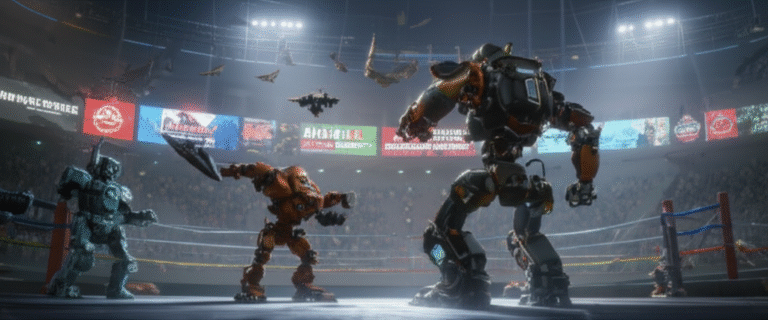
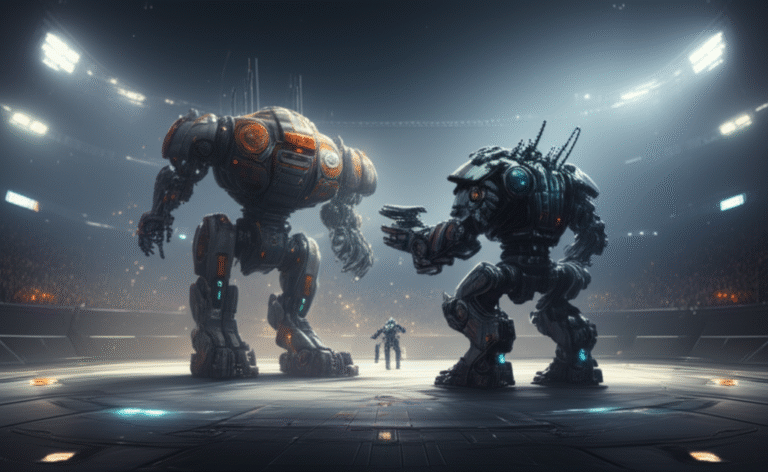




I love it