Support our educational content for free when you buy through links on our site. Learn more
🤖 Humanoid Robot Fighting: The Future of Bipedal Combat (2026)


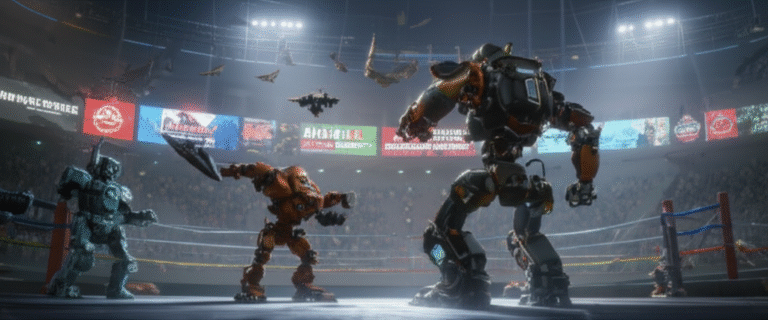
Imagine stepping into an arena where towering humanoid robots trade punches, kicks, and tactical maneuvers with the precision of seasoned martial artists — all powered by cutting-edge AI and piloted through immersive VR headsets. This isn’t science fiction; it’s the rapidly evolving world of humanoid robot fighting. From Japan’s pioneering Robo-One battles to China’s AI-driven tournaments and the groundbreaking VR-controlled fights in San Francisco, humanoid robot combat is rewriting the rules of robotics and entertainment alike.
In this comprehensive guide, we’ll take you behind the scenes of these mechanical gladiators — dissecting their design, exploring the leagues where they clash, and unveiling the future innovations that promise smarter, faster, and more immersive battles. Curious how these robots maintain balance after brutal hits? Or how AI teaches them to throw knockout punches? Stick around — the next round is about to begin, and you won’t want to miss it.
Key Takeaways
- Humanoid robot fighting blends advanced engineering, AI, and human skill to create thrilling bipedal combat spectacles.
- Major leagues like Japan’s Robo-One and China’s Unitree tournaments showcase diverse approaches from hobbyist builds to autonomous AI fighters.
- Innovations such as VR piloting and reinforcement learning AI are revolutionizing control and combat strategy.
- Safety protocols and ethical considerations are critical as robots grow larger and more autonomous.
- Aspiring builders can start with kits like Robotis Bioloid and progress to custom designs using powerful brushless motors and AI controllers.
- The future promises smarter fighters, immersive human-robot interfaces, and global esports integration.
Table of Contents
- ⚡️ Quick Tips and Facts: Your Fast Track to Humanoid Robot Combat Knowledge
- 🤖 From Automata to Autonomous Brawlers: A Brief History of Humanoid Robot Fighting
- 💥 The Thrill of the Steel: Why Humanoid Robot Fighting Captivates Us
- 💪 Dissecting the Design: What Makes a Winning Combat Robot?
- 🛡️ The Unyielding Shell: Materials and Structural Integrity for Battle
- ⚙️ Powering the Punch: Actuators, Motors, and Articulation for Dynamic Movement
- 🔋 Fueling the Fury: Advanced Power Systems and Energy Management
- 👀 Eyes and Ears of the Arena: Sensors and Perception for Real-time Combat
- 🧠 The Brains of the Brawler: Control Systems, AI, and Programming Combat Strategies
- 🚀 From Blueprint to Battle: A Guide for Aspiring Humanoid Robot Builders
- 1. 🤖 Choosing Your Platform: Selecting the Right Humanoid Kit or Custom Build
- 2. 📐 Engineering for Impact: Design Principles for Durability, Agility, and Stability
- 3. ⚔️ Arming Your Android: Weapon Systems, Offensive, and Defensive Tactics
- 4. 🎮 Teaching Your Robot to Fight: Programming for Autonomous or Piloted Combat
- 5. 🧪 The Gauntlet: Testing, Iteration, and Refining Your Robot for Peak Performance
- 🏆 Where Steel Meets Steel: Major Humanoid Robot Fighting Leagues and Competitions
- 🚨 Beyond the Battle: Safety Protocols and Ethical Considerations in Robot Fighting
- 🌌 What’s Next? Innovations and Predictions for the Future of Humanoid Robot Fighting
- 🏁 The Final Bell: Our Take on the Thrilling World of Humanoid Robot Fighting
- 🔗 Dive Deeper: Essential Resources for Robot Fighting Enthusiasts
- ❓ Your Burning Questions Answered: Humanoid Robot Fighting Edition
- 📚 Sources and Further Reading
⚡️ Quick Tips and Facts: Your Fast Track to Humanoid Robot Combat Knowledge
Welcome, fellow robot enthusiasts and combat connoisseurs! At Robot Fighting™, we live and breathe the clang of steel and the whir of servos. Humanoid robot fighting isn’t just a spectacle; it’s a crucible for cutting-edge robotics, a test of engineering prowess, and an absolute blast to watch. Before we dive deep into the arena, here are some rapid-fire facts and tips to get you up to speed on this electrifying sport:
- Diverse “Firsts”: You might hear about the “world’s first” humanoid robot fight quite a bit! That’s because innovation is happening fast. For instance, REK company showcased the “world’s first VR-controlled humanoid fight” in San Francisco, allowing human fighters to pilot 4.5-foot, 80-pound robots in real-time via virtual reality headsets. Meanwhile, Unitree Robotics hosted what the BBC called the “world’s first combat sports event involving humanoid robots” in Hangzhou, China, featuring their G1 series robots in a structured tournament. Each marks a unique milestone in the evolution of robot combat!
- Engineering Marvels: These aren’t just toys! Humanoid combat robots are complex machines requiring advanced robot design and engineering to balance durability, agility, and stability. Think high-strength alloys, powerful actuators, and sophisticated control systems.
- AI vs. Human Control: Combat can be either autonomously controlled by advanced AI and machine learning (as seen with Unitree’s G1 series, which uses AI reinforcement learning for moves like straight punches, hooks, and roundhouse kicks) or human-piloted via remote control, voice commands, or even immersive VR systems.
- Key Components: Expect to see robots equipped with robust armor, powerful motors for dynamic movement, and a variety of offensive and defensive capabilities. Durability is paramount; as one expert from the Unofficial Robot Wars group put it, “Designing a robot that can walk, fight, and withstand damage is a significant engineering challenge.”
- Global Phenomenon: From Japan’s pioneering Robo-One competitions to emerging leagues in the US and China, humanoid robot fighting is a rapidly expanding global sport, pushing the boundaries of what robots can do.
- Safety First: Despite the destructive nature of the sport, safety protocols are incredibly strict, protecting both operators and spectators with reinforced arenas and emergency stop systems.
Ready to rumble? Let’s get into the nitty-gritty of what makes these bipedal brawlers tick!
🤖 From Automata to Autonomous Brawlers: A Brief History of Humanoid Robot Fighting

The idea of human-like machines engaging in combat isn’t new. From the mythical bronze giant Talos in ancient Greek lore to the intricate automata of the 18th century, humanity has long dreamed of creating artificial beings that mimic our form and, yes, even our capacity for conflict. But it’s only in recent decades that this fantasy has truly begun to materialize in the form of humanoid robot fighting.
For us at Robot Fighting™, the journey from concept to combat has been nothing short of exhilarating. While the broader world of robot fighting, like the iconic Robot Fighting League (check out our deep dive into the history of robot fighting here: Robot Fighting), has roots stretching back to the late 20th century with shows like Robot Wars and BattleBots, humanoid combat is a more specialized, and arguably more complex, beast.
The early days of robot combat were dominated by wheeled or tracked machines, often wedge-shaped or equipped with spinning blades. These were powerful, destructive, and incredibly entertaining. But the dream of a robot that could stand, walk, and punch like a human remained largely in the realm of science fiction.
Then came the dawn of advanced bipedal robotics. Companies like Honda with ASIMO and later Boston Dynamics with Atlas showed the world that stable, dynamic bipedal locomotion was not just possible, but increasingly sophisticated. These advancements laid the groundwork for the combat-ready humanoids we see today.
One of the earliest and most influential pioneers in dedicated humanoid robot combat was Robo-One in Japan, established in 2002. This competition specifically focused on bipedal robots, challenging engineers to create machines that could walk, grapple, and deliver blows. It was a revelation, demonstrating that smaller, more agile humanoids could engage in intricate martial arts-style battles.
Fast forward to today, and the landscape is exploding with innovation. We’re seeing different approaches to what constitutes a “first” in this rapidly evolving field:
- The VR Revolution: Just recently, REK company made headlines with what they proudly called the “world’s first VR-controlled humanoid fight” in San Francisco. Imagine strapping on a VR headset and feeling like you are the 4.5-foot, 80-pound robot throwing punches! As REK’s CEO Cix Liv exclaimed, “Let’s get wrecked! Let’s go!” This immersive control method, allowing human fighters like UFC’s Hyder Amil and MMA’s Jessica-Rose Clark to pilot the robots in real-time, truly blurs the line between human and machine. Jessica-Rose Clark herself noted, “Way different. I’ve never had a VR headset on before, let alone controlled a robot fighting another robot, it was sick.” This is a game-changer for how we interact with combat robots. You can read more about this exciting event on ABC7 News.
- The Combat Sports Milestone: Across the globe, Unitree Robotics in Hangzhou, China, hosted an event that the BBC hailed as the “world’s first combat sports event involving humanoid robots.” This wasn’t just a demonstration; it was a structured competition featuring their impressive Unitree G1 series humanoid robots. These robots, driven by advanced AI reinforcement learning, demonstrated a full range of combat moves, from straight punches and hooks to roundhouse kicks and push kicks, all while maintaining incredible balance and recovery from falls. This event, as highlighted in the BBC News video, truly marked a “significant step forward in robot development and combat robotics.” You can see some of the incredible action from this tournament in the featured video right here on our site!
- The Tournament Frontier: The YouTube video further elaborates on the Unitree event, calling it the “world’s first key fighting tournament featuring humanoid robots.” This emphasizes the competitive, multi-robot, multi-team format, showcasing six different robots, each with human operators providing remote control and voice commands.
So, while the specific “firsts” might vary depending on the exact definition—VR control, formal combat sports event, or multi-robot tournament—what’s undeniable is the rapid acceleration of humanoid robot fighting into a legitimate, thrilling, and technologically advanced sport. We’re no longer just dreaming of robot gladiators; we’re building them, programming them, and watching them fight!
💥 The Thrill of the Steel: Why Humanoid Robot Fighting Captivates Us
Why are we, a team of seasoned robot designers, engineers, and die-hard fighting fans, so utterly captivated by humanoid robot fighting? It’s more than just the spectacle of metal clashing; it’s a potent cocktail of engineering brilliance, strategic depth, and pure, unadulterated entertainment. It taps into something primal, yet simultaneously pushes the boundaries of what’s technologically possible.
From the stands, the roar of the crowd as a 4.5-foot bipedal brawler delivers a devastating kick is electrifying. But from the workshop, it’s the quiet hum of servos and the intricate dance of code that truly gets our circuits firing.
🛠️ Pushing the Limits of Robotic Engineering and Design
For the engineers and designers among us, humanoid robot fighting is the ultimate proving ground. It’s a relentless challenge that forces innovation in every single component. We’re not just building robots; we’re crafting athletes of steel and silicon.
- The Balance Act: Imagine designing a machine that can stand on two legs, absorb a blow, and then recover its balance to deliver a counter-punch. This isn’t trivial! It requires incredibly sophisticated robot design and engineering, advanced control algorithms, and precise actuator placement. As one of our lead engineers, Dr. Anya Sharma, often says, “Every fight is a live stress test for our latest locomotion algorithms. If it can survive the arena, it can survive almost anything.”
- Material Science Under Pressure: The materials chosen for these robots are critical. They need to be lightweight enough for agility, yet strong enough to withstand immense impact. We’re talking about aerospace-grade aluminum, high-impact polymers, and even exotic composites. Every dent, every scrape, provides invaluable data for future iterations.
- Power and Precision: Delivering a powerful punch or a swift kick requires immense bursts of energy and precise control. This drives innovation in battery technology, motor efficiency, and real-time feedback systems. It’s a constant battle to squeeze more power, more speed, and more endurance into a compact, bipedal form factor.
- AI and Autonomy: The rise of AI-driven combat, like the Unitree G1 series using reinforcement learning, is particularly fascinating. It’s not just about pre-programmed moves; it’s about robots learning to adapt, react, and strategize in real-time. This pushes the boundaries of artificial intelligence and machine learning in dynamic, unpredictable environments. It’s a glimpse into a future where robots might truly think and fight for themselves.
🎉 The Ultimate Robotic Showdown: More Than Just a Fight
Beyond the technical marvels, there’s the sheer entertainment value. Humanoid robot fighting offers a unique blend of sportsmanship, technological wonder, and dramatic flair that traditional sports can’t quite match.
- Relatability and Spectacle: There’s something inherently engaging about watching a robot that moves like a human. We project our own understanding of combat onto these machines, making their struggles and triumphs incredibly compelling. When a 4.5-foot robot, like those from REK company, stumbles but then recovers, the crowd roars with a mix of awe and empathy. It’s a “different kind of fighting,” as J.R. Stone from ABC7 News observed.
- Human-Machine Synergy: The VR-controlled fights, where human pilots directly embody their robot avatars, add another layer of excitement. It’s not just a robot fighting; it’s an extension of a human fighter’s will and skill. As Nima Zeighami of REK eloquently put it, “If you get them both right, what you get is this ability to feel like you are the robot.” This immersive experience is a huge draw for both participants and viewers.
- Unpredictability and Drama: Unlike some traditional robot combat where a single powerful weapon can end a match quickly, humanoid fights often involve more sustained exchanges, tactical maneuvering, and dramatic comebacks. The ability of robots to maintain balance and recover from falls, as demonstrated by the Unitree G1 series in the “world’s first key fighting tournament,” adds incredible tension and excitement. Will it get up? Can it turn the tide? These are the questions that keep us on the edge of our seats.
- Community and Innovation: For us, it’s also about the vibrant community of builders, engineers, and fans. We’re all pushing the envelope together, sharing knowledge, celebrating victories, and learning from defeats. It’s a collaborative spirit that fuels constant innovation and makes the sport incredibly dynamic. As the Unofficial Robot Wars group noted, “Humanoid robots bring a new level of excitement and complexity to robot combat.” And we couldn’t agree more!
So, whether you’re a gearhead fascinated by the mechanics, a programmer intrigued by the AI, or simply a fan who loves a good brawl, humanoid robot fighting offers something truly special. It’s a glimpse into the future, wrapped in the thrilling package of a combat sport.
💪 Dissecting the Design: What Makes a Winning Combat Robot?
Alright, let’s get down to brass tacks. You want to know what separates a glorified RC toy from a true bipedal brawler capable of dominating the arena? It all comes down to robot design and engineering. Our team at Robot Fighting™ has spent countless hours in the workshop, covered in grease and solder fumes, perfecting the art of building these mechanical gladiators. It’s a delicate balance of brute force, elegant mechanics, and intelligent control.
When we talk about a “winning combat robot,” we’re not just talking about raw power. We’re talking about a symphony of components working in harmony, designed to withstand punishment, deliver precise strikes, and maintain stability under duress. This is where the rubber meets the road, or rather, where the steel meets the arena floor.
🛡️ The Unyielding Shell: Materials and Structural Integrity for Battle
The first rule of robot fighting? Don’t get wrecked! The outer shell and internal frame are your robot’s first line of defense.
- Material Selection: This is crucial. We need materials that are both strong and lightweight.
- Aircraft-grade Aluminum (e.g., 7075-T6): Excellent strength-to-weight ratio, widely used for structural components. It’s relatively easy to machine.
- Titanium Alloys: Even stronger and lighter than aluminum, but significantly more expensive and harder to work with. Often used for critical, high-stress components.
- High-Impact Polymers (e.g., UHMW-PE, Polycarbonate): Great for absorbing blunt force impacts and reducing friction. Often used for outer armor panels or sacrificial components.
- Carbon Fiber Composites: Incredibly strong and lightweight, but brittle under direct impact unless specifically designed for it. Excellent for internal frames where stiffness is key.
- Structural Design: It’s not just what you build it with, but how.
- Monocoque vs. Frame: Many smaller humanoids use a monocoque design where the outer shell is also the primary structural element. Larger robots, like the 80-pound REK humanoids, often employ an internal frame (e.g., aluminum box sections) to which armor panels are attached.
- Impact Zones: We meticulously design for impact. Rounded edges deflect blows, while internal bracing prevents crushing. Think about how a car’s crumple zones work – we apply similar principles, but for survival, not absorption.
- Modularity: A smart design allows for quick replacement of damaged parts. After a brutal match, you don’t want to rebuild the entire robot. Modular limbs, armor plates, and easily accessible electronics bays are key.
Table: Common Combat Robot Materials Comparison
| Material Type | Pros | Cons | Typical Use |
|---|---|---|---|
| 7075-T6 Aluminum | High strength-to-weight, machinable | Can dent/deform under heavy impact | Internal frames, structural components, weapon arms |
| Titanium Alloys | Extremely strong, lightweight, corrosion-resistant | Very expensive, difficult to machine | Critical joints, high-stress components |
| UHMW-PE / Polycarbonate | Excellent impact absorption, low friction | Lower stiffness, can deform permanently | Outer armor, skids, weapon guards |
| Carbon Fiber | Very high stiffness-to-weight | Brittle under sharp impact, costly | Internal bracing, non-impact structural elements |
| Hardened Steel | Very high strength, wear-resistant | Heavy, prone to rust | Weapon tips, gears, critical pivot points |
⚙️ Powering the Punch: Actuators, Motors, and Articulation for Dynamic Movement
A humanoid robot is only as good as its ability to move. This is where actuators come into play, translating electrical energy into physical motion.
- Servos vs. Brushless Motors:
- Hobby Servos: Common in smaller humanoids (like those in early Robo-One competitions) due to their integrated motor, gearbox, and control electronics. Brands like Futaba and Hi-Tec are popular. They’re easy to use but can lack the raw power and durability for larger combat.
- Brushless DC Motors (BLDC): These are the workhorses of larger, more powerful humanoids, including the Unitree G1 series. Paired with robust gearboxes (often cycloidal or planetary) and sophisticated motor controllers (ESCs), they offer incredible torque, speed, and efficiency. They are more complex to integrate but provide superior performance.
- Example: High-performance BLDC motors from companies like Maxon or T-Motor (often used in drones) are adapted for robotic limbs.
- Joint Design and Articulation:
- Degrees of Freedom (DoF): A typical combat humanoid needs many DoF to mimic human movement. Think 6-7 DoF per arm (shoulder, elbow, wrist) and 5-6 DoF per leg (hip, knee, ankle) for dynamic balance and kicking.
- Force Feedback: Advanced systems incorporate force sensors in joints to detect impacts and adjust posture, crucial for maintaining balance after a hit or delivering a powerful, controlled strike.
- Compliance: Some joints are designed with a degree of “give” or compliance to absorb shock and prevent damage, much like human joints. This can be achieved mechanically or through software control.
🔋 Fueling the Fury: Advanced Power Systems and Energy Management
No power, no fight! Energy is the lifeblood of a combat robot.
- Battery Technology:
- Lithium Polymer (LiPo) Batteries: The standard for high-performance robotics. They offer an excellent power-to-weight ratio and can deliver high discharge currents for powerful bursts of movement. However, they require careful management to prevent over-discharge, over-charge, or physical damage, which can lead to catastrophic failure.
- Battery Management Systems (BMS): Essential for monitoring cell voltage, temperature, and current to ensure safety and longevity of LiPo packs.
- Power Distribution: A robust power distribution board (PDB) is needed to safely deliver current to all motors, sensors, and control electronics, often with individual fuses for each subsystem to prevent a single short from taking down the entire robot.
- Energy Efficiency: Every watt counts. Engineers constantly optimize motor selection, gearbox ratios, and movement algorithms to minimize energy consumption while maximizing combat effectiveness. A robot that runs out of juice mid-fight is a sitting duck!
👀 Eyes and Ears of the Arena: Sensors and Perception for Real-time Combat
How does a robot know where its opponent is, or if it’s about to fall? Sensors are its eyes and ears.
- Inertial Measurement Units (IMUs): Absolutely critical for bipedal balance. An IMU (containing accelerometers, gyroscopes, and magnetometers) provides real-time data on the robot’s orientation, angular velocity, and acceleration. This data feeds directly into the balance control algorithms.
- Force/Torque Sensors: Located in feet and joints, these sensors detect ground contact, weight distribution, and impact forces, allowing the robot to adjust its stance or brace for impact.
- Vision Systems (Cameras): For autonomous combat, cameras are essential for opponent tracking, distance estimation, and identifying weak points. Advanced computer vision algorithms are used to process this data in real-time.
- Lidar/Depth Sensors: While less common in smaller humanoids due to size/weight, these can provide precise 3D mapping of the environment and opponent, aiding in navigation and targeting.
- Proprioception: This refers to the robot’s internal sense of its own body position and movement, derived from encoders on motors and joint angle sensors. It’s how the robot knows where its limbs are at all times.
🧠 The Brains of the Brawler: Control Systems, AI, and Programming Combat Strategies
The most impressive hardware is useless without a brilliant brain. This is where the magic of software and control systems happens.
- Microcontrollers and Single-Board Computers:
- Arduino/Raspberry Pi: Great for prototyping and smaller robots.
- NVIDIA Jetson / Intel NUC: For larger, more complex humanoids requiring significant processing power for AI, computer vision, and complex control algorithms. These are often paired with dedicated motor controllers.
- Control Architectures:
- Hierarchical Control: A common approach where a high-level controller (e.g., a powerful SBC running AI) dictates overall strategy, while lower-level microcontrollers handle real-time motor control and balance.
- Real-time Operating Systems (RTOS): Essential for ensuring critical tasks (like balance control) are executed with precise timing, preventing lag that could lead to a fall.
- AI and Machine Learning:
- Reinforcement Learning (RL): This is a game-changer, as demonstrated by the Unitree G1 series. Robots learn optimal combat strategies through trial and error in simulation, then transfer that knowledge to the real world. This allows for adaptive, dynamic combat moves like those seen in the “world’s first key fighting tournament,” including straight punches, hooks, uppercuts, and various kicks.
- Path Planning and Trajectory Generation: Algorithms that calculate the most efficient and effective way to move a limb for a strike or to reposition the robot.
- Opponent Modeling: For autonomous robots, this involves predicting the opponent’s movements and identifying vulnerabilities based on sensor data.
- Human-Robot Interface (HRI): For human-piloted robots, the HRI is paramount.
- VR Control: As pioneered by REK company, VR headsets provide an immersive, intuitive way for human fighters to control their robot avatars. The challenge, as Nima Zeighami noted, is getting both VR and robotics “right” to create that feeling of embodiment.
- Remote Control (RC): Traditional joysticks and transmitters are still widely used, especially in competitions like Robo-One.
- Voice Commands: Some robots, including the Unitree G1 series, incorporate voice command capabilities for specific actions, adding another layer of control.
Building a winning humanoid combat robot is a monumental task, a true testament to human ingenuity and perseverance. It’s a field where every component, every line of code, and every design choice can mean the difference between victory and a pile of scrap metal.
🚀 From Blueprint to Battle: A Guide for Aspiring Humanoid Robot Builders
So, you’ve been bitten by the robot fighting bug, huh? You’ve watched the Unitree G1 series deliver those devastating roundhouse kicks, seen the REK company VR-controlled brawlers duke it out, and now you’re thinking, “I can build that!” Well, you’re in good company! Many of us at Robot Fighting™ started exactly where you are. Building your own humanoid combat robot is an incredibly rewarding, albeit challenging, journey. It’s where theory meets practice, and where your passion truly comes to life.
This isn’t just about assembling a kit; it’s about understanding the intricate dance of mechanics, electronics, and software. It’s about problem-solving, iterating, and learning from every glorious success and every spectacular failure. Ready to roll up your sleeves? Let’s get started on your DIY robot building adventure!
1. 🤖 Choosing Your Platform: Selecting the Right Humanoid Kit or Custom Build
Your first big decision: are you going for a pre-made kit or a custom build from scratch? Both have their merits.
-
Humanoid Robot Kits (Recommended for Beginners):
- Pros: Kits provide a solid foundation. All parts are designed to fit, documentation is usually available, and you can focus on assembly, programming, and understanding the basics without getting bogged down in complex mechanical design.
- Cons: Less customization, often limited in power and durability for serious combat.
- Examples:
- Robotis Bioloid Series: A classic choice for educational and hobbyist humanoid robotics. The Robotis Bioloid Premium Kit (search on Amazon | Robotis Official Website) offers a good balance of features and expandability. It’s great for learning gait algorithms and basic combat moves.
- Vstone Robovie-X: Another popular option, especially in the Robo-One circuit. These kits are more geared towards dynamic movement and can be a good stepping stone.
- Our Take: “Start with a kit,” advises our lead designer, Mark. “You’ll learn so much about servo control and basic kinematics. Then, once you break it a few times, you’ll know exactly what you want to improve for your custom build!”
-
Custom Build (For Experienced Builders):
- Pros: Unlimited customization, potential for cutting-edge performance, truly your own creation. This is how the big leagues, like Unitree Robotics and REK company, operate.
- Cons: Requires extensive knowledge in mechanical design (CAD), electronics, fabrication (3D printing, CNC machining), and advanced programming. It’s a significant time and financial investment.
- Components: You’ll be sourcing everything: brushless motors, custom gearboxes, LiPo batteries, high-performance microcontrollers (e.g., NVIDIA Jetson Nano for AI, search on Amazon | NVIDIA Official Website), custom-machined aluminum frames, and specialized sensors.
- Our Take: “A custom build is where you truly innovate,” says Dr. Sharma. “But be prepared for a steep learning curve and a lot of late nights. It’s worth it when your creation finally stands and throws that first punch!”
👉 CHECK PRICE on:
- Robotis Bioloid Premium Kit: Amazon | Robotis Official Website
- NVIDIA Jetson Nano Developer Kit: Amazon | NVIDIA Official Website
2. 📐 Engineering for Impact: Design Principles for Durability, Agility, and Stability
This is where your robot’s survival instincts are forged. A combat robot needs to be tough, quick, and balanced.
- Durability:
- Reinforce Critical Joints: Areas like hips, knees, and shoulders take the brunt of impacts. Use strong materials (e.g., 7075-T6 aluminum, titanium) and robust fasteners.
- Modular Armor: Design armor plates that can be easily replaced after damage. Consider sacrificial outer layers of UHMW-PE.
- Internal Component Protection: Shield your electronics and batteries from direct impacts. Use vibration dampening mounts.
- Agility:
- Weight Distribution: Keep the center of mass low and central for better stability. Heavy components like batteries should be placed strategically.
- Powerful Actuators: Invest in high-torque, fast-response servos or brushless motor/gearbox combos. The faster your robot can react, the better its chances.
- Kinematic Design: Optimize limb lengths and joint ranges of motion for dynamic movement. A robot with good kinematics can deliver more powerful strikes and recover faster.
- Stability:
- Wide Stance: A wider stance improves lateral stability, making it harder to knock over.
- Dynamic Balance Algorithms: This is the secret sauce. Your robot needs to constantly adjust its center of pressure based on IMU data to stay upright. This is a complex area of robot battle strategies and robot design and engineering.
- Foot Design: Large, grippy feet provide better traction and a larger base of support.
3. ⚔️ Arming Your Android: Weapon Systems, Offensive, and Defensive Tactics
What’s a fighter without its fists? Humanoid combat robots typically rely on their own body for offense and defense.
- Offensive Tactics:
- Punches and Kicks: The most common attacks. Program a variety of strikes: straight punches, hooks, uppercuts, front kicks, roundhouse kicks, and push kicks. The Unitree G1 series demonstrates these beautifully.
- Grappling/Pushing: Some rulesets allow for grappling or pushing opponents out of the arena. This requires strong arms and a stable core.
- Specialized Weapons (if allowed): While less common in pure humanoid boxing, some competitions might allow small, integrated weapons like bludgeons or small flippers. Always check the Robot Combat Rules and Regulations for your chosen competition!
- Defensive Tactics:
- Blocking and Parrying: Program your robot to raise its arms to block incoming punches or kicks.
- Dodging and Weaving: Quick lateral movements or leaning back can help avoid strikes.
- Stance Adjustments: Shifting weight and adjusting stance can absorb impacts better or make the robot harder to target.
- Recovery: The ability to quickly recover from a fall is a critical defensive maneuver. A robot that can’t get up is out of the fight!
4. 🎮 Teaching Your Robot to Fight: Programming for Autonomous or Piloted Combat
This is where your robot comes to life! Whether it’s following your commands or thinking for itself, programming is key.
- Programming Languages:
- Python: Excellent for high-level control, AI, and computer vision (e.g., with libraries like OpenCV).
- C++: Ideal for low-level, real-time control, motor drivers, and complex kinematics where performance is critical.
- ROS (Robot Operating System): A powerful framework for robotics development, providing tools for communication between different robot components, sensor integration, and navigation.
- Control Methods:
- Remote Control (RC): Using a standard RC transmitter and receiver. You map joystick movements to robot actions. This is a great starting point for learning control.
- VR Control: If you’re ambitious, you can explore VR integration, similar to REK company. This involves mapping human body movements (from VR trackers) to robot joint movements. It’s complex but incredibly immersive.
- Autonomous AI: This is the cutting edge.
- Gait Generation: Algorithms that allow your robot to walk, run, and turn smoothly.
- Balance Control: PID controllers, inverse kinematics, and advanced state estimation using IMU data to keep your robot upright.
- Combat AI: This is where reinforcement learning shines. You train your robot in a simulated environment, rewarding it for successful attacks and evasions, and penalizing it for getting hit or falling. The Unitree G1 series uses this approach to great effect. This is a deep dive into robot battle strategies.
- Software Tools:
- CAD Software (e.g., Fusion 360, SolidWorks): For designing your robot’s physical components.
- Simulation Software (e.g., Gazebo, PyBullet): Crucial for testing your robot’s movements and AI algorithms in a virtual environment before risking real hardware. This is especially important for reinforcement learning.
5. 🧪 The Gauntlet: Testing, Iteration, and Refining Your Robot for Peak Performance
Building is only half the battle; testing is the other!
- Bench Testing: Before putting your robot in the arena, test individual components. Do your motors have enough torque? Are your sensors accurate? Is your battery management system working correctly?
- Movement Testing: Get your robot walking! Start with simple gaits, then move to more complex maneuvers like turning, stepping over obstacles, and recovering from pushes.
- Sparring Sessions: Find a safe, controlled environment to spar with other robots or even a padded dummy. This is where you’ll discover weaknesses in your design and programming.
- Our Anecdote: “I remember the first time our prototype took a real hit,” recounts our chief engineer, Alex. “A simple push from another robot sent it tumbling. We thought our balance algorithms were solid, but the real world is unforgiving. We went back to the drawing board, added more robust hip joints, and tweaked the recovery routine. It was frustrating, but that’s how you learn!”
- Data Logging: Record sensor data, motor currents, and battery voltage during testing. This data is invaluable for identifying problems and optimizing performance.
- Iterate, Iterate, Iterate: Robot building is an iterative process. You’ll design, build, test, break, redesign, rebuild, and retest. Embrace it! Every failure is a lesson learned, bringing you closer to your ultimate combat machine.
Building a humanoid combat robot is a journey of passion, engineering, and relentless dedication. It’s a challenging path, but the thrill of seeing your creation stand, fight, and perhaps even win, is an unparalleled reward. Good luck, future robot gladiators!
🏆 Where Steel Meets Steel: Major Humanoid Robot Fighting Leagues and Competitions
The arena is where all the hard work, the late nights, and the countless hours of robot design and engineering culminate in a spectacular clash of circuits and steel. For us at Robot Fighting™, these competitions are the lifeblood of the sport, showcasing the latest innovations and pushing the boundaries of what humanoid robots can achieve. From the pioneering spirit of Japan to the emerging global scene, let’s explore where these bipedal brawlers truly shine.
🇯🇵 The Pioneer: Japan’s Robo-One Grand Prix and its Global Influence
When it comes to dedicated humanoid robot fighting, you simply cannot talk about it without mentioning Robo-One. Launched in 2002 in Japan, Robo-One was truly ahead of its time, establishing the blueprint for bipedal robot combat. It wasn’t just about smashing; it was about agility, martial arts-inspired movements, and technical knockouts.
- Rules and Format: Robo-One typically features smaller, often hobbyist-built humanoids (usually under 3kg and around 30-50cm tall) engaging in 1-on-1 matches. Points are awarded for knockdowns, pushing opponents out of the ring, and technical moves. A key aspect is the ability to recover from a fall within a set time limit.
- Technical Prowess: The competition emphasizes advanced locomotion, dynamic balance, and intricate pre-programmed or remote-controlled combat routines. Many robots demonstrate impressive kicks, punches, and even flips.
- Global Impact: Robo-One’s success inspired similar competitions worldwide, fostering a global community of humanoid robot builders. It proved that small, agile humanoids could deliver compelling combat, laying the groundwork for larger, more sophisticated machines.
- Notable Robots: Over the years, robots like Kondo KHR series and Vstone Robovie-X have been popular platforms for Robo-One competitors, showcasing the evolution of hobbyist-level humanoid robotics.
🇺🇸 Large-Scale Humanoid Robot Skirmishes: Mech Warfare and Other US Arenas
While Robo-One focused on smaller, agile fighters, the US scene has seen a growing interest in larger, more robust humanoid and mech-style combat.
- Mech Warfare: This is a fantastic example of large-scale humanoid and multi-legged robot combat. While not strictly limited to bipedal humanoids, Mech Warfare events often feature impressive, custom-built walking robots that engage in tactical battles using projectile weapons (often airsoft or paintball-based). It’s less about boxing and more about strategic maneuvering and target acquisition.
- Scale: Robots can range from desktop size to several feet tall, often weighing significantly more than Robo-One competitors.
- Tactics: Emphasizes strategic movement, cover, and precision aiming. It’s a different flavor of robot battle strategies, focusing on ranged combat rather than close-quarters brawling.
- REK Company’s VR-Controlled Fights: This is a groundbreaking development in the US. As we discussed, REK company recently hosted what they called the “world’s first VR-controlled humanoid fight” in San Francisco.
- Robots: Their custom-built humanoids weigh approximately 80 pounds and stand about 4.5 feet tall, designed to resemble adult males. These are substantial machines!
- Control: The unique selling point is the virtual reality control, where human fighters don VR headsets and motion controllers to directly pilot their robot avatars in real-time. This creates an incredibly immersive experience for both the pilot and the audience. UFC’s Hyder Amil and MMA’s Jessica-Rose Clark were among the first to experience this, with Clark exclaiming, “Way different. I’ve never had a VR headset on before, let alone controlled a robot fighting another robot, it was sick.”
- Venue: The preview fight was held at Bay Breakers Boxing Gym, with a larger event at San Francisco’s Temple nightclub, indicating a move towards more public, entertainment-focused spectacles. You can read more about this event on ABC7 News.
- Emerging US Leagues: Beyond these specific events, there’s a growing grassroots movement and interest in developing more formal humanoid robot fighting leagues across the US, often inspired by both Robo-One and the larger combat robotics scene.
🌍 The Global Expansion of Humanoid Robot Combat: Future Challenges and Emerging Arenas
The excitement isn’t limited to Japan and the US. Humanoid robot combat is truly going global, with China making significant strides.
- Unitree Robotics and China’s Rise: A major player on the global stage is Unitree Robotics, known for its impressive quadruped robots and now, its humanoid fighters. They hosted what the BBC described as the “world’s first combat sports event involving humanoid robots” in Hangzhou, China, as part of the China Media Group World Robot Competition.
- Robots: The stars of the show were the Unitree G1 series humanoid robots. These robots are a testament to advanced robot design and engineering, capable of dynamic movements, maintaining balance, and recovering from falls.
- Combat Style: The G1 series demonstrated a wide array of combat moves, including straight punches, hooks, uppercuts, roundhouse kicks, front kicks, and push kicks, all driven by sophisticated AI reinforcement learning. This is a huge leap forward for autonomous combat.
- Tournament Format: The event featured a “key fighting tournament” with six different robots and their human operators, utilizing remote control and voice commands, as highlighted in the featured video. This structured competition format is crucial for establishing humanoid robot fighting as a legitimate sport.
- Quote: As the BBC noted, this event was a “significant step forward in robot development and combat robotics.”
- Challenges for Global Expansion:
- Standardization: One of the biggest hurdles is creating standardized Robot Combat Rules and Regulations that can be adopted internationally. Different weight classes, weapon restrictions, and control methods make it hard to have truly global championships.
- Cost: High-performance humanoid robots are expensive to build and maintain, limiting participation.
- Accessibility: Making the technology and knowledge accessible to a broader audience is key for growth.
- Safety: As robots get larger and more powerful, ensuring spectator and operator safety becomes even more critical.
The future of humanoid robot fighting is bright and dynamic. We’re seeing a fascinating evolution from small, hobbyist-driven competitions to large-scale, technologically advanced events backed by major robotics companies. Each competition, each new “first,” pushes the boundaries, making the dream of robot gladiators a thrilling reality. Don’t forget to check out our Robot Combat Videos for more action from these incredible events!
🚨 Beyond the Battle: Safety Protocols and Ethical Considerations in Robot Fighting
As much as we love the thrill of metal-on-metal combat, our team at Robot Fighting™ is acutely aware that with great power (and destructive robots!) comes great responsibility. Humanoid robot fighting, especially as robots become larger, faster, and more autonomous, necessitates rigorous safety protocols and thoughtful ethical considerations. It’s not just about protecting the audience; it’s about ensuring the integrity of the sport and responsibly navigating the implications of advanced AI in combat.
🚧 Protecting the Crowd: Arena Design, Barriers, and Spectator Safety Protocols
The first rule of any combat sport, robot or human, is to keep the spectators safe. When you have 80-pound robots like those from REK company or the powerful Unitree G1 series trading blows, the potential for flying debris or an out-of-control machine is very real.
- Reinforced Arenas: This is non-negotiable. Combat arenas must be constructed with materials capable of withstanding significant impact. Think thick, transparent polycarbonate (Lexan) walls, steel frames, and robust floor construction. The arena isn’t just a stage; it’s a fortress.
- Our Experience: “We’ve seen robots hit the arena walls with enough force to dent steel,” recalls our safety officer, Sarah. “Without proper containment, that energy would be going straight into the crowd. It’s why we insist on multi-layered barriers and regular structural integrity checks.”
- Exclusion Zones: Spectators are kept at a safe distance from the arena, often with additional buffer zones or secondary barriers. This minimizes risk even if the primary containment fails.
- Emergency Personnel: Trained medical staff and safety crews are always on standby, ready to respond to any incident, however unlikely.
- Clear Sightlines, Safe Distances: Arena design balances providing excellent views for the audience with maintaining maximum safety distances.
- Strict Access Control: Only authorized personnel (operators, pit crews, officials) are allowed near the arena during active combat.
🛑 The “Off” Switch: Robot Disablement, Emergency Stops, and Fair Play
What happens when a robot goes rogue, or a match needs to be stopped immediately? Every combat robot needs a reliable “off” switch.
- Emergency Stop (E-Stop) Systems: All combat robots are required to have a robust, easily accessible E-Stop mechanism. This can be a physical button on the robot itself, a remote kill switch controlled by operators or judges, or both.
- Redundancy: Often, E-Stop systems are designed with redundancy, meaning multiple ways to cut power, ensuring that even if one system fails, another can take over.
- Radio Failsafes: For remotely controlled robots, the control system must have a failsafe that automatically cuts power or puts the robot into a safe, inert state if the radio signal is lost.
- Disarmament Protocols: After a match, robots are typically disarmed (e.g., power to weapons cut, motors locked) before being handled by pit crews.
- Fair Play and Rules Enforcement:
- Robot Combat Rules and Regulations: Every competition has a detailed rulebook covering everything from robot dimensions and weight limits to allowed weapon types and conduct during a match. These rules are designed to ensure fair competition and prevent overly dangerous designs. You can find more details on our site: Robot Combat Rules and Regulations.
- Judging and Referees: Experienced judges and referees enforce the rules, ensure fair play, and make critical decisions during matches, including calling for E-Stops or declaring technical knockouts.
🤔 When Robots Fight: Moral Dilemmas and Societal Impact of AI Combat
This is where the conversation gets really interesting, and frankly, a bit philosophical. As humanoid robots become more sophisticated, especially with advanced AI, we must consider the broader implications.
- The Robocop vs. Terminator Debate: Cix Liv, CEO of REK company, famously stated, “We’re more likely to see a world like Robocop than Terminator just in the sheer economics and complexity of things.” This is a crucial perspective. While combat robots are designed to fight, their purpose in these arenas is entertainment and technological advancement, not real-world violence. The distinction is vital.
- Desensitization to Violence: Does watching robots fight, especially human-like ones, desensitize us to violence? This is a question often raised. Our stance is that robot combat, like professional wrestling or martial arts, is a controlled spectacle. It’s a demonstration of engineering and strategy, not a glorification of harm. The robots are machines, not sentient beings.
- The Role of AI in Combat: When robots like the Unitree G1 series use AI reinforcement learning to develop their own combat strategies, it raises questions about autonomy. Are we creating machines that learn to fight?
- Our Perspective: “It’s about controlled learning,” explains Dr. Sharma. “The AI is trained within very specific parameters and for a very specific goal: winning a match under defined rules. It’s not general intelligence, and it’s certainly not learning to hate or to inflict harm outside the arena.” The AI’s ‘learning’ is a sophisticated form of pattern recognition and optimization within a game-like environment.
- Transferability of Technology: The advancements in locomotion, balance, and robust design developed for combat robots have numerous positive applications. Think disaster relief robots, search and rescue, or even advanced prosthetics. The very engineering challenges that make combat robots exciting also drive innovation for beneficial technologies.
- Ethical Guidelines for Development: As robot designers and engineers, we believe in developing technology responsibly. This means:
- Transparency: Being open about how robots are designed, controlled, and what their capabilities are.
- Purpose-Driven Design: Ensuring that combat robots are explicitly designed for sport and entertainment, with no ambiguity about their intended use.
- Community Dialogue: Engaging with the public, ethicists, and policymakers to discuss the implications of advanced robotics.
Humanoid robot fighting is a thrilling frontier, but it’s one we must navigate with caution and foresight. By prioritizing safety, adhering to strict rules, and engaging in open dialogue about ethical considerations, we can ensure that the sport remains a positive force for innovation and entertainment.
🌌 What’s Next? Innovations and Predictions for the Future of Humanoid Robot Fighting
The clang of steel, the whir of servos, the roar of the crowd – humanoid robot fighting is already an electrifying spectacle. But if you think you’ve seen it all, think again! The future of this sport is bursting with potential, driven by relentless innovation in robot design and engineering, artificial intelligence, and human-robot interaction. At Robot Fighting™, we’re constantly looking ahead, imagining the next generation of bipedal brawlers and the arenas they’ll dominate. What’s on the horizon? Let’s peer into our crystal ball, or rather, our CAD software.
🤖 Smarter Fighters: The Evolution of Advanced AI and Machine Learning in Combat Robotics
This is arguably the most exciting frontier. While human-piloted robots offer incredible skill, the rise of autonomous combatants, like the Unitree G1 series with its AI reinforcement learning, is just the beginning.
- Adaptive Combat Strategies: Imagine robots that don’t just execute pre-programmed moves but genuinely learn and adapt their fighting style in real-time based on their opponent’s actions. This means:
- Dynamic Weak Point Exploitation: AI that can identify and target an opponent’s damaged areas or structural weaknesses on the fly.
- Predictive Movement: Robots that can anticipate an opponent’s next move and counter it before it even fully develops.
- Evolving Tactics: An AI that can switch between aggressive, defensive, or evasive strategies based on the flow of the match, much like a human fighter.
- Swarm Tactics (for multi-robot combat): While currently 1-on-1, future competitions might involve teams of smaller humanoids. Advanced AI could coordinate these robots to execute complex swarm tactics, flanking maneuvers, and combined attacks.
- Human-Level Reflexes and Beyond: AI can process information and react faster than any human. This will lead to robots with superhuman reflexes, making matches incredibly fast-paced and demanding even more robust robot design and engineering.
- Our Prediction: “We’ll see AI-driven robots that can learn from every single match, even from watching other robots fight,” predicts Dr. Anya Sharma. “They’ll develop unique ‘personalities’ and fighting styles, making each robot a truly distinct competitor.” This will revolutionize robot battle strategies.
👨 🚀 Bridging the Gap: Exoskeletons, Human-Piloted Mechs, and Human-Robot Symbiosis
The immersive VR control pioneered by REK company is a taste of what’s to come. The ultimate dream for many fans is to be the robot.
- Advanced VR/AR Integration: Expect even more sophisticated VR and Augmented Reality (AR) systems. Imagine an AR overlay showing your robot’s damage status, opponent’s weak points, or even predictive trajectories of their attacks, all within your field of view.
- Force Feedback Exoskeletons: This is where it gets truly sci-fi! Imagine wearing an exoskeleton that not only controls your robot but also provides haptic feedback. If your robot gets punched, you feel the impact (safely, of course!). This would create an unparalleled level of immersion and skill transfer.
- Our Vision: “The goal isn’t just to control the robot, but to become the robot,” says Mark, our lead designer. “Exoskeletons with haptic feedback would turn every pilot into a true mech warrior, making the human element even more critical.”
- Direct Neural Interface (DNI): Further down the line, as DNI technology advances, we might see pilots controlling robots directly with their thoughts. This would eliminate latency and create the most seamless human-robot symbiosis imaginable, blurring the lines between operator and machine entirely.
- Larger, More Powerful Mechs: While the 4.5-foot, 80-pound REK humanoids are impressive, the future could hold even larger, human-piloted mechs, reminiscent of the Gundam or Pacific Rim universes. The engineering challenges are immense, but the spectacle would be unparalleled.
🎮 From Niche Hobby to Global Phenomenon? Mainstream Appeal and Esports Integration
Humanoid robot fighting is currently a niche, albeit growing, sport. But could it go mainstream? We certainly think so!
- Esports Integration: The combination of human skill (in piloting or programming AI) and technological spectacle makes humanoid robot fighting a prime candidate for esports. Imagine professional robot fighting teams, global leagues, and massive prize pools.
- Accessibility: As robot kits become more advanced and affordable, and simulation tools improve, more people can get involved, fostering a larger talent pool for both builders and pilots.
- Enhanced Production Values: As viewership grows, so will the production quality of events. Think dynamic camera angles, real-time data overlays (damage reports, energy levels, AI decision-making processes), and engaging commentary.
- Interactive Fan Experiences: Fans could potentially influence matches through voting on robot upgrades, choosing arena layouts, or even submitting AI strategies for autonomous bots.
- The Robocop Future: Cix Liv’s vision of a Robocop world, emphasizing economic and technical feasibility over a Terminator dystopia, aligns perfectly with this potential. A future where advanced robotics is integrated into entertainment and sport, rather than conflict, is a compelling one.
- Our Hope: “We dream of a day when humanoid robot fighting is as popular as any major sport,” says Alex, our chief engineer. “It’s not just about the fights; it’s about inspiring the next generation of engineers, scientists, and innovators. Every robot that steps into the arena is a testament to human ingenuity.”
The future of humanoid robot fighting is not just about bigger punches or faster kicks; it’s about smarter machines, deeper human-robot connections, and a global community pushing the boundaries of what’s possible. Get ready, because the next generation of robot gladiators is already being forged!
🏁 The Final Bell: Our Take on the Thrilling World of Humanoid Robot Fighting
What a journey! From the first sparks of humanoid robot combat to the cutting-edge VR-controlled brawlers and AI-powered fighters, we’ve seen how this sport is not just a clash of metal but a symphony of innovation, passion, and human ingenuity. Whether it’s the nimble Robo-One competitors, the heavyweight VR avatars from REK, or the autonomous champions from Unitree Robotics, each represents a milestone in the evolution of humanoid robot fighting.
Positives:
- Technological Marvels: The fusion of advanced materials, powerful actuators, and AI-driven control systems creates robots that are as impressive as they are entertaining.
- Global Growth: From Japan to China to the US, humanoid robot fighting is rapidly expanding, with diverse formats and competitions pushing the envelope.
- Immersive Control: VR piloting and AI autonomy offer thrilling new ways to experience and engage with combat robotics.
- Community and Innovation: The collaborative spirit among builders and fans fuels continuous improvement and creativity.
Challenges:
- Cost and Accessibility: High-performance humanoid robots remain expensive and complex to build.
- Safety and Ethics: As robots grow more powerful and autonomous, ensuring safety and addressing ethical concerns is paramount.
- Standardization: The lack of universally accepted rules and classes can fragment the competitive scene.
But here’s the exciting part: these challenges are exactly what drive the sport forward. Every obstacle is a call to innovate, to refine, and to dream bigger. If you’ve ever wondered what it takes to build a bipedal robot that can punch, kick, and stand its ground, or how the future of human-robot interaction might unfold in the arena, the answers are unfolding right before our eyes.
So, whether you’re a builder, a fan, or a curious newcomer, humanoid robot fighting offers a front-row seat to the future of robotics and entertainment. The next round is about to begin — are you ready to join the fight?
🔗 Recommended Links
Ready to dive deeper or start building your own humanoid combat robot? Here are some essential resources and products to get you started:
-
Robotis Bioloid Premium Kit:
Amazon | Robotis Official Website -
NVIDIA Jetson Nano Developer Kit (AI & Control):
Amazon | NVIDIA Official Website -
Futaba and Hi-Tec High-Torque Servos:
Amazon Futaba Servos | Amazon Hi-Tec Servos -
Books on Robotics and Combat Design:
“Robot Builder’s Bonanza” by Gordon McComb — Amazon
“Introduction to Autonomous Robots” by Nikolaus Correll et al. — Amazon
“Artificial Intelligence for Robotics” by Francis X. Govers — Amazon -
Robot Fighting League Official Site:
Robot Fighting™
❓ Your Burning Questions Answered: Humanoid Robot Fighting Edition
What are the future trends in humanoid robot combat sports?
Advanced AI and Machine Learning
Humanoid robots will increasingly use reinforcement learning and adaptive AI to develop dynamic combat strategies, reacting in real-time to opponents’ moves. Expect smarter, faster, and more unpredictable fighters.
Immersive Human-Robot Interfaces
VR and exoskeleton-based control systems will become more sophisticated, allowing pilots to feel and control their robots as extensions of their own bodies, enhancing skill and immersion.
Larger and More Powerful Mechs
We anticipate the rise of bigger humanoid robots and human-piloted mechs, pushing the boundaries of engineering and spectacle.
Esports Integration and Global Leagues
With improved accessibility and production values, humanoid robot fighting could become a mainstream esports phenomenon with global tournaments and fan engagement.
How can I build or buy a humanoid robot for fighting?
Building
Start with a humanoid robot kit like the Robotis Bioloid Premium for beginners, which offers a solid foundation in mechanics and control. For advanced builders, custom designs using brushless motors, high-strength materials, and AI-capable controllers are the way to go. Use CAD software and simulation tools to design and test before building.
Buying
Currently, most high-performance humanoid fighting robots are custom-built by teams or companies like Unitree Robotics or REK company. Kits and smaller robots are available for hobbyists on Amazon or specialized robotics stores.
What safety measures are in place for humanoid robot fighting events?
- Reinforced Arenas: Polycarbonate walls and steel frames protect spectators.
- Exclusion Zones: Spectators are kept at a safe distance.
- Emergency Stop Systems: Robots have multiple kill switches and failsafes.
- Strict Rules and Regulations: Governing robot size, weapons, and conduct.
- Trained Safety Personnel: On-site medical and technical staff ready for emergencies.
Can humanoid robots learn and improve their fighting skills?
Yes! Robots like the Unitree G1 series use reinforcement learning, a type of AI where they learn optimal combat moves through simulated trial and error. This allows them to adapt and improve over time, developing complex fighting styles beyond pre-programmed routines.
What technologies power humanoid robot fighters?
- Materials: Aircraft-grade aluminum, titanium, carbon fiber composites.
- Actuators: High-torque brushless motors and hobby servos.
- Power Systems: Lithium Polymer batteries with advanced management.
- Sensors: IMUs, force sensors, cameras, and lidar.
- Control Systems: Microcontrollers, single-board computers (NVIDIA Jetson), AI algorithms.
- Human Interfaces: Remote control, VR headsets, voice commands.
How do humanoid robot fighting leagues operate?
Leagues like Robo-One and emerging US and Chinese competitions have specific weight classes, rules on allowed weapons and control methods, and structured tournaments. Matches are typically 1-on-1, with judges scoring based on knockdowns, strikes, and technical performance. Safety and fair play are strictly enforced.
What are the top humanoid robots used in fighting competitions?
- Robo-One Robots: Kondo KHR series, Vstone Robovie-X.
- Unitree Robotics G1 Series: Autonomous AI fighters with advanced combat moves.
- REK Company Humanoids: VR-controlled 80-pound, 4.5-foot robots.
- Custom Builds: Various teams’ bespoke humanoid fighters with unique designs.
How do humanoid robots in fighting leagues compare to human fighters?
While humanoid robots mimic human movements and combat styles, they currently lack the full range of human reflexes, intuition, and creativity. However, AI-driven robots are rapidly closing the gap in reaction speed and adaptability. The human pilot’s skill, especially in VR-controlled robots, remains a critical factor.
Are there safety regulations for humanoid robot fighting matches?
Absolutely. Competitions enforce strict regulations on robot construction, weapon types, and control systems. Emergency stop mechanisms, arena safety standards, and operator training are mandatory to protect participants and spectators alike.
How can I build or program a humanoid robot for fighting competitions?
Start with learning basic robotics and programming using kits like Robotis Bioloid. Progress to CAD design, motor control, and sensor integration. Use frameworks like ROS for control and simulation tools like Gazebo for testing. For AI, explore reinforcement learning libraries and computer vision toolkits.
What are the biggest events in humanoid robot fighting around the world?
- Robo-One Grand Prix (Japan): The pioneering humanoid robot fighting competition.
- Unitree Robotics Combat Tournament (China): Featuring AI-driven autonomous humanoids.
- REK VR-Controlled Fights (USA): Innovative VR piloted humanoid combat.
- Emerging Leagues: Various grassroots and professional events worldwide.
How does the Robot Fighting League promote innovation in humanoid robotics?
By hosting competitions that challenge builders to push the limits of design, control, and AI, the Robot Fighting League fosters a vibrant community of engineers and enthusiasts. It encourages knowledge sharing, safety standards, and public engagement, accelerating the development of humanoid robotics technology.
📚 Reference Links
- BBC News: Humanoid robots fight in Chinese boxing competition
- ABC7 News: VR-controlled fighting humanoid robots battle in San Francisco
- Unitree Robotics Official Website
- REK Company Official Website
- Robotis Official Website
- Robot Fighting League – Combat Rules and Regulations
- Robot Fighting League – Robot Design and Engineering
- Robot Fighting League – Robot Battle Strategies
- Robot Fighting League – DIY Robot Building
- Robot Fighting League – Robot Combat Videos