Support our educational content for free when you buy through links on our site. Learn more
🤖 Future of Combat Robotics: What Comes Next? (2026)


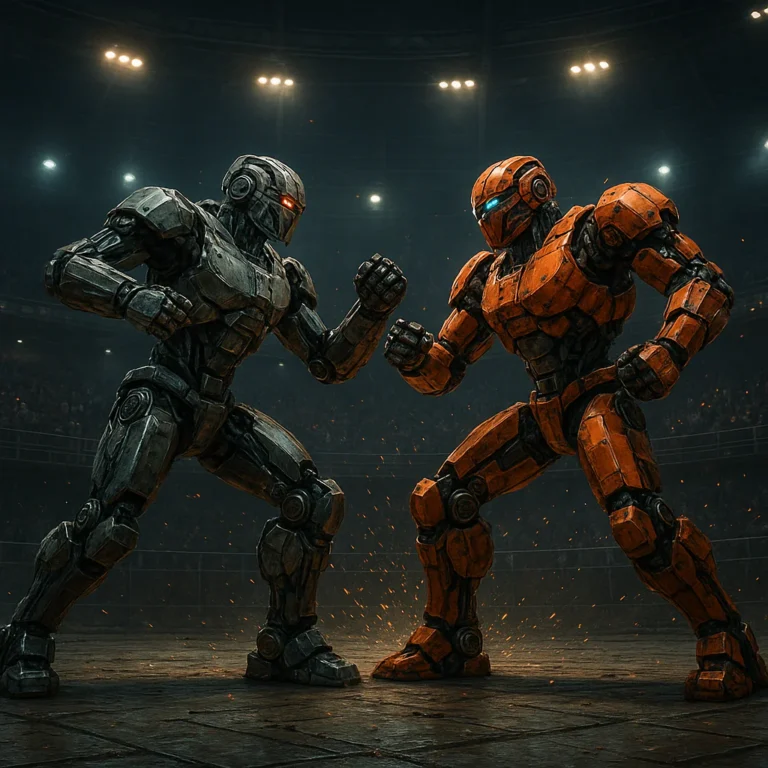
The future of combat robotics is human-supervised teams of specialized machines, not one all-purpose humanoid marching through a battlefield. Expect autonomous navigation, drones, robotic combat vehicles, EOD platforms, logistics carriers, counter-drone systems, and AI-assisted sensing to work alongside people while humans retain meaningful control over critical decisions.
We have already seen this direction in testing at Fort Hood, where cavalry tropers evaluated robotic combat vehicles, autonomous driving, obstacle avoidance, tethered aerial systems, counter-drone jamming, smoke, and remotely operated weapons. The U.S. Army report is revealing precisely because it focuses on soldier feedback and practical field conditions rather than science-fiction promises.
Our robot-fighting teams see the same truth in the arena. A beautifully engineered machine can lose because a connector shakes loose, a battery overheats, or a driver cannot interpret one confusing warning. Reliability, repairability, communications resilience, and operator workload will decide which combat robots matter.
The intriguing part? The most influential advances may come from machines that never fire a weapon: robots that scout, carry supplies, clear hazards, relay communications, or detect threats before people enter danger.
Key Takeaways
- Human-robot teaming will lead the next decade. Robots will extend human reach, endurance, sensing, and protection rather than immediately replace soldiers.
- Specialized platforms will beat universal machines. Wheled, tracked, aerial, maritime, EOD, logistics, and counter-drone robots each solve different problems.
- Supervised autonomy is expanding fastest. Navigation, obstacle avoidance, mapping, sensor fusion, and route planning are more realistic near-term applications than fully autonomous lethal decisions.
- Reliability matters more than spectacle. Batteries, radios, terrain mobility, cybersecurity, cooling, and field repair can decide a mission before artificial intelligence gets a vote.
- Robot swarms will require careful control. More machines create redundancy and coverage, but also raise risks involving jamming, spoofing, operator overload, and escalation.
- Competitive robot fighting remains a valuable test bed. BattleBots, NHRL, and the Robot Fighting League demonstrate lessons in modular armor, impact tolerance, compact power systems, rapid repair, and human-machine interfaces.
- Law and ethics must shape the design. Meaningful human oversight, accountability, testing, and clear limits are essential for autonomous combat systems.
- The biggest near-term growth areas are clear: autonomous logistics, reconnaissance, EOD, counter-drone defense, robotic combat vehicles, and AI-assisted command systems.
Table of Contents
- ⚡ Quick Tips and Facts About the Future of Combat Robotics
- 🤖 What Counts as a Combat Robot?
- 📊 The Biggest Trends Shaping Robotic Warfare and Robot Combat
- 🧭 Combat Robotics Background: From Remote-Controled Machines to Autonomous Systems
- 🏛️ Military Robotics History and the Rise of Uncrewed Platforms
- ⚙️ BattleBots, RoboGames, and the Evolution of Competitive Robot Fighting
- 🛰️ Lessons From Ukraine, Iraq, and Modern Battlefield Robotics
- 🔮 What Will Combat Robots Look Like in 2030, 2040, and Beyond?
- 🦾 Humanoid, Wheled, Tracked, Leged, and Aerial Combat Platforms
- 🧠 Autonomous Weapons, Remote Operation, and Human-on-the-Loop Control
- 🐝 Robot Swarms and Distributed Battlefield Intelligence
- 🌐 Networked Combat Robots and Multi-Domain Operations
- 🔟 15 Breakthrough Technologies Driving the Future of Combat Robotics
- 1. Artificial Intelligence and Machine Learning
- 2. Computer Vision and Real-Time Target Recognition
- 3. Edge Computing for Low-Latency Robot Decision-Making
- 4. Advanced Sensors, Radar, LiDAR, and Thermal Imaging
- 5. Secure Communications and Anti-Jamming Technology
- 6. Autonomous Navigation and Simultaneous Localization
- 7. Battery Technology, Hybrid Power, and Energy Storage
- 8. Lightweight Armor and Advanced Composite Materials
- 9. Modular Payloads and Open-System Architectures
- 10. Additive Manufacturing and Rapid Field Repair
- 11. Electronic Warfare and Spectrum Awareness
- 12. Counter-Drone and Counter-Robot Systems
- 13. Human-Robot Teaming and Swarm Coordination
- 14. Cybersecurity, Authentication, and Software Resilience
- 15. Digital Twins, Simulation, and Synthetic Training Environments
- ⚔️ How Future Combat Robots Will Fight
- 🎯 Reconaissance, Surveillance, and Target Acquisition
- 🛡️ Explosive Ordnance Disposal and High-Risk Inspection
- 🚑 Casualty Evacuation and Combat Search and Rescue
- 🏙️ Urban Combat and Room-Clearing Support
- 🚚 Logistics, Resupply, and Autonomous Convoys
- 🛩️ Counter-Drone Warfare and Air Defense
- 🌊 Maritime, Underwater, and Amphibious Combat Robotics
- 🌌 Space Robotics and Orbital Security
- 🏭 Leading Companies and Programs Building Combat Robots
- 🇺🇸 United States Defense Robotics Programs
- 🇬🇧 European and NATO Combat Robotics Initiatives
- 🌏 Asian and Middle Eastern Military Robotics Development
- 🎬 Commercial Robotics Inspired by BattleBots and Industrial Automation
- ⚖️ Benefits, Risks, and Limits of Autonomous Combat Systems
- ✅ Why Militaries Are Investing in Robotic Combat Vehicles
- ❌ Reliability Problems in Mud, Dust, Smoke, Heat, and GPS-Denied Areas
- 👤 Human Control and the Meaning of Meaningful Human Oversight
- 🔐 Cybersecurity, Hacking, Spofing, and Data Poisoning
- 💥 Escalation Risks and Unintended Autonomous Behavior
- 📜 Laws, Ethics, and International Rules for Robot Warfare
- ⚖️ International Humanitarian Law and Autonomous Weapons
- 🌍 United Nations Discussions and Global Governance
- 🧑 ⚖️ Accountability for Decisions Made by Military AI
- 🛑 Should Fully Autonomous Lethal Weapons Be Banned?
- 🧪 Testing, Training, and Safety Standards for Combat Robots
- 🏜️ Field Testing in Realistic Terrain and Weather
- 🎮 Simulation, Wargaming, and Operator Training
- 📐 Reliability, Maintainability, and Mission-Capable Rates
- 🧰 Repairability, Spare Parts, and Battlefield Logistics
- 🏆 The Future of Competitive Combat Robotics
- 🤖 How BattleBots May Influence Military Robot Design
- 🔧 Weapon Systems, Armor, Drive Trains, and Durable Chassis
- 📡 Autonomous Features in Robot Fighting Competitions
- 👥 Building a Combat Robotics Community and Joining Robot-Fighting Teams
- 🎥 Streaming, Esports, and the Next Generation of Robot Combat Fans
- 🧑 🔬 Skills and Careers in Combat Robotics
- 🛠️ Mechanical Engineering, Mechatronics, and Vehicle Design
- 💻 Robotics Software, AI, and Embedded Systems
- 🔋 Electrical Engineering, Batteries, and Power Management
- 🧠 Human Factors, Interface Design, and Robot Operators
- 🎓 Education, Competitions, and Hands-On Projects
- 💰 Defense Industry, Manufacturing, and the Economics of Robotic Warfare
- 🏗️ Mass Production and Attritable Autonomous Systems
- 🔄 Commercial Off-the-Shelf Components Versus Military Hardware
- 🌍 Supply Chains, Export Controls, and Semiconductor Access
- 📈 How Robotics Could Change Military Strategy and Force Structure
- 🌱 Environmental and Social Impact of Combat Robotics
- ♻️ Energy Use, E-Waste, and Sustainable Robot Design
- 🏘️ Civilian Safety and Post-Conflict Mine Clearance
- 🧑 🤝 🧑 Public Trust, Transparency, and the Psychology of Machine Warfare
- 📋 How to Evaluate a Future Combat Robot
- ✅ Mobility and Terrain Performance
- ✅ Sensing, Awareness, and Identification Accuracy
- ✅ Communications, Autonomy, and Operator Workload
- ✅ Protection, Payload Capacity, and Survivability
- ✅ Maintenance, Cost Effectiveness, and Mission Flexibility
- 🚀 Predictions: The Most Likely Milestones in Combat Robotics
- 📅 Near-Term Developments in the Next Five Years
- 🛰️ Medium-Term Developments Across the Next Decade
- 🌌 Long-Term Possibilities and Science-Fiction Scenarios
- 🎯 What Will Probably Arrive Later Than the Hype Suggests
- ❓ Frequently Asked Questions About the Future of Combat Robotics
- Are Combat Robots Already Being Used by Militaries?
- Will Autonomous Robots Replace Soldiers?
- Can AI Legally Decide Who to Attack?
- What Is the Difference Between a Drone and a Combat Robot?
- How Secure Are Military Robotic Systems?
- What Role Will Humans Have in Future Robot Warfare?
- How Can Students Start Learning Combat Robotics?
- 🏁 Conclusion
- 🔗 Recommended Links
- ❔ FAQ
- 📚 Reference Links
Quick Tips and Facts About the Future of Combat Robotics
Our first stop is the broader world of robot fighting, where a spinning disc, a clever control system, and one badly chosen bolt can turn a masterpiece into confetti. The future of combat robotics is not one single humanoid robot marching across a battlefield. It is a layered ecosystem of remotely operated vehicles, autonomous navigation, AI-assisted perception, drones, counter-drone systems, robotic logistics, and human operators working as a team.
⚡ Quick Takeaways
- Human-supervised autonomy is arriving faster than fully independent lethal decision-making. Robots can navigate, detect objects, map terrain, and recommend actions, but weapon release remains a legal, ethical, and operational flashpoint.
- Small, expendable systems may scale faster than giant armored robots. Commercial drones and low-cost uncrewed vehicles can be produced, modified, and replaced quickly.
- Reliability beats spectacle. A robot that survives dust, rain, radio interference, rough terrain, and a dead battery is more valuable than one with a dazzling laboratory demonstration.
- Combat robotics is already a team sport. The most useful platform may be a sensor carrier, supply mule, scout, jammer, or decoy rather than a robot carrying a large weapon.
- Robot fighting competitions are a living engineering laboratory. Builders in Robot Design and Engineering constantly test modular armor, high-power batteries, compact drives, impact-resistant electronics, and rapid repair.
- The operator interface can decide the outcome. If one person must control five machines while interpreting video, radio status, maps, and threats, the “autonomous” system may simply move the workload rather than reduce it.
- The winner will not necessarily be the most intelligent robot. It may be the platform with the best balance of cost, maintainability, communications resilience, payload flexibility, and human trust.
📊 The Big Facts at a Glance
| Question | Best current answer | Why it matters |
|---|---|---|
| Are combat robots already in use? | ✅ Yes, especially drones, EOD robots, surveillance platforms, and remote vehicles | The future is being assembled from existing technologies |
| Will robots replace soldiers soon? | ❌ No | Machines still struggle with judgment, maintenance, complex rules, and unpredictable environments |
| Is autonomy increasing? | ✅ Yes | Navigation, route planning, object detection, and formation movement are becoming more automated |
| Is fully autonomous lethal targeting widespread? | ❌ No public evidence supports that claim as a normal standard | Policy, law, safety, and trust remain major constraints |
| What limits range and endurance first? | Usually power, communications, terrain, and maintenance | A robot is only useful while it can sense, move, communicate, and recover |
| Which technology matters most? | The complete system, not one component | A brilliant AI cannot rescue a vehicle with poor traction or fragile radios |
| What should fans watch? | Human-robot teaming, swarm control, counter-UAS, and resilient autonomy | These areas connect battlefield robotics with competitive robot engineering |
The U.S. Army’s robotic combat vehicle experimentation offers a useful reality check. Soldiers tested autonomous driving, obstacle avoidance, terrain mobility, a tethered aerial system, counter-drone jamming, smoke systems, and remotely operated weapons. The article does not provide a final production vehicle, formal speed rating, or guaranteed battlefield performance. That restraint matters: testing is not deployment, and a prototype is not a proven capability.
🤖 What Counts as a Combat Robot?
A combat robot is an uncrewed or remotely operated machine designed to support, protect, sense, move, disrupt, or fight in a hostile environment. The term can include:
- Uncrewed ground vehicles (UGVs)
Wheled or tracked platforms for reconnaissance, logistics, communications, engineering, or weapons. - Robotic combat vehicles (RCVs)
Larger armored systems intended to operate alongside crewed formations. - Uncrewed aerial systems (UAS)
Reconaissance drones, loitering systems, counter-drone platforms, and communications relays. - Maritime and underwater robots
Surface vessels and autonomous underwater vehicles for surveillance, mine detection, and security. - EOD and hazardous-duty robots
Machines that inspect suspicious objects, enter dangerous structures, or handle explosives. - Competitive combat robots
Machines built for regulated sport, such as those seen in BattleBots and NHRL.
The distinction between combat robot and drone is fuzzy. A drone is generally an uncrewed vehicle, while combat robotics describes the broader system: vehicle, sensors, software, communications, operator, mission rules, and support crew.
A 3-pound competition robot and a military RCV have wildly different missions, but they share engineering headaches:
- Store energy.
- Convert energy into motion.
- Sense the environment.
- Survive shock, vibration, heat, and interference.
- Maintain a reliable control link.
- Recover from faults.
- Give the human enough information to make a good decision.
That last point is where the shiny science-fiction shell often meets the stubborn reality of engineering.
🧠 The Biggest Trends Shaping Robotic Warfare and Robot Combat
1. From remote control toward supervised autonomy
Traditional teleoperation sends commands from a human to a machine. Supervised autonomy gives the robot limited independence, such as:
- Holding a route.
- Avoiding obstacles.
- Returning to a safe point.
- Maintaining formation.
- Tracking a designated object.
- Sharing sensor data with nearby platforms.
This does not mean the robot understands a battlefield like a human commander. It means the robot handles certain predictable tasks while a person supervises the mission.
The U.S. Department of Defense Directive 300.09 addresses autonomy in weapon systems and emphasizes appropriate levels of human judgment over the use of force. Policies can evolve, but the central engineering lesson is stable: autonomy needs defined boundaries, fail-safes, testing, and accountability.
2. More machines, less individual perfection
The “one exquisite robot” model is giving way to distributed capability:
- Several small scouts instead of one large scout.
- Multiple communications relays instead of one vulnerable link.
- Decoys mixed with genuine sensors.
- Cheap platforms carrying specialized payloads.
- A crewed vehicle directing several robotic teammates.
This approach resembles a robot combat tournament more than a cinematic duel. One machine distracts, another probes, a third attacks the flank, and a fourth stays alive long enough to report what happened. The lesson from our arena experience is blunt: redundancy is not glamorous until the first robot fails. Then it becomes beautiful.
3. Commercial technology is accelerating development
Cameras, processors, motor controllers, batteries, radio modules, and additive-manufactured parts developed for consumer or industrial markets can shorten development cycles. However, commercial availability does not guarantee military suitability.
A racing drone may be fast and inexpensive but vulnerable to:
- Radio-frequency interference.
- Weather.
- Battery-temperature problems.
- Cybersecurity weaknesses.
- Poor supply-chain traceability.
- Fragile connectors.
- Limited electromagnetic compatibility.
The National Institute of Standards and Technology provides cybersecurity guidance that applies broadly to connected systems. For a combat robot, cybersecurity cannot be bolted on after the chassis is complete. A hacked navigation system is not a software inconvenience; it may become a mobility, safety, or mission failure.
4. Counter-robot warfare is growing alongside robot warfare
Every new robotic capability creates a target. Future forces will need:
- Counter-drone detection.
- Electronic warfare.
- Navigation-spofing defenses.
- Physical interception.
- Cybersecurity.
- Camouflage and deception.
- Recovery and forensic analysis.
This is why a robot’s resilience may matter more than its autonomy. A machine that can complete a modest mission under interference may outperform a clever machine that depends on a pristine network.
5. Builder-first communities are becoming innovation engines
Kelly Biderman of the Norwalk Havoc Robotics League describes the organization’s philosophy as “Builder First.” That phrase captures something we see repeatedly in competitive robot combat: innovation comes from people who are close to the machine.
The Forward Obsessed interview about the future of combat robotics also highlights the sport’s unusually committed audience, including fans willing to travel long distances or watch exceptionally long livestreams. The phrase “possibly explode” is an entertaining summary of the sport, but the deeper point is practical: builders iterate quickly because failure is visible, immediate, and measurable.
Military programs can learn from that culture while recognizing the differences:
| Competitive robot combat | Military combat robotics |
|---|---|
| Fast iteration between matches | Slower qualification and certification |
| Clear win/loss result | Complex mission effectiveness |
| Controlled arena | Unpredictable terrain and weather |
| Weight and safety rules | Legal, tactical, and logistical constraints |
| Builder-operated machines | Distributed operators and units |
| Parts can be replaced quickly | Supply chains and field repair matter |
| Spectacle rewards aggression | Military missions may reward silence and endurance |
The real future may emerge where these worlds overlap: modular design, rapid protyping, open interfaces, simulation, and engineers who understand that a robot must be repaired by a tired human wearing gloves.
Combat Robotics Background: From Remote-Controled Machines to Autonomous Systems

The history of combat robotics is less a straight march toward humanoids and more a collection of parallel branches: bomb-disposal machines, remote weapons, industrial automation, drones, autonomous vehicles, and competitive robot fighting.
🏛️ Military Robotics History and the Rise of Uncrewed Platforms
Military robots first gained broad practical value in missions where the risk to a human was immediate and obvious. Explosive ordnance disposal is the classic example. A tracked robot can approach a suspicious object while an operator remains at a safer distance.
Systems such as the Northrop Grumman PackBot helped establish the value of mobile sensing and manipulation in hazardous environments. The machine does not need to “win a battle” to be useful. It only needs to provide an arm, camera, tool, or sensor where a person would face unacceptable danger.
That mission-first approach teaches four durable lessons:
- Start with a specific problem.
- Design around the operator’s actual workflow.
- Treat maintenance as part of the mission.
- Measure success by outcomes, not futuristic appearance.
🛰️ Lessons From Ukraine, Iraq, and Modern Battlefield Robotics
Modern conflicts have demonstrated the importance of small drones, rapid adaptation, electronic warfare, and low-cost systems. Public reporting frequently describes a “drone war,” but that phrase can oversimplify what is happening. Drones depend on operators, reconnaissance networks, batteries, launch teams, repair crews, software updates, and communications.
The featured video’s perspective, available at #featured-video, connects drone proliferation in Ukraine with concerns about future autonomous targeting, Chinese and Russian development, and AI-enabled swarms. It also includes dramatic warnings, including Admiral Samuel Paparo’s phrase about turning the Taiwan Strait into an “unmanned hellscape.” Such language communicates the scale of concern, but it should not be mistaken for a technical forecast or a confirmed operational plan.
Likewise, the reported statement from a surrendered Russian soldier, “It’s a drone war,” reflects an individual battlefield experience. It is valuable testimony, but not a complete measurement of every combat function. We trust systematic defense studies, official testing data, and multiple independent sources more than a single dramatic quote.
⚙️ The Evolution of Competitive Robot Fighting
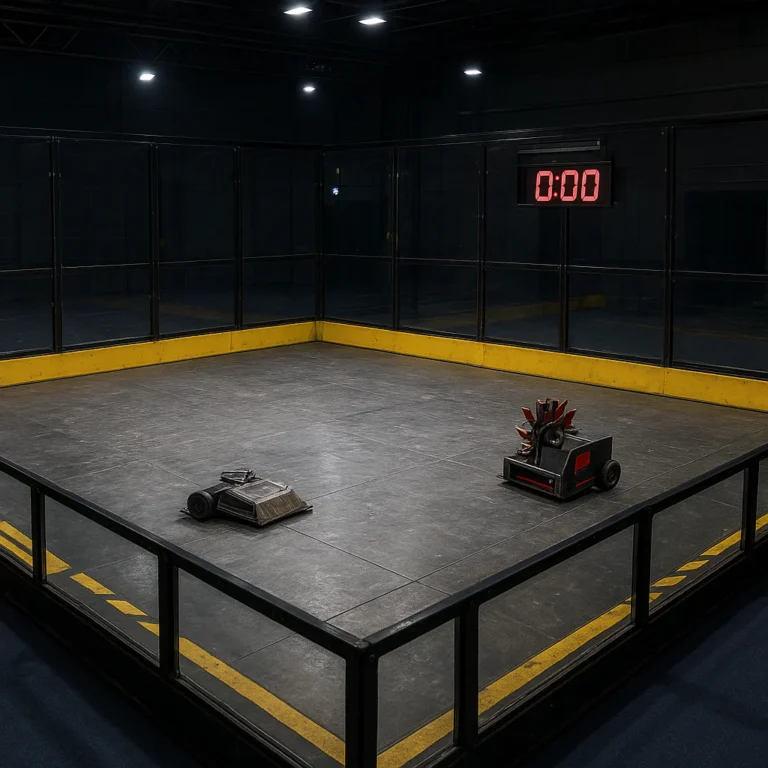
Competitive robot combat developed a different kind of robotics expertise. Events such as BattleBots, NHRL, and the Robot Fighting League force designers to solve problems under brutal time limits:
- How do you protect electronics from impact shock?
- How do you keep traction after armor bends?
- How do you cool motors without exposing them?
- How do you make a weapon powerful without twisting the frame?
- How do you repair the robot between rounds?
- How do you maintain control when the machine is upside down?
A military designer may not copy a vertical spinner or drum weapon into an armored vehicle, but the underlying lessons transfer:
- Modularity reduces downtime.
- Accessible fasteners improve repair speed.
- Low center of gravity improves stability.
- Redundant sensors help when one is damaged.
- Mechanical simplicity often beats clever complexity.
- A visible failure teaches more than a successful demonstration.
What Will Combat Robots Look Like in 2030, 2040, and Beyond?
Forecasting robotics is dangerous territory. Predictions tend to leap from “a robot can follow a waypoint” to “robots will independently conduct war.” The sensible path is incremental.
🦾 Humanoid, Wheled, Tracked, Leged, and Aerial Combat Platforms
Wheled robots
Strengths:
- Efficient on roads and firm terrain.
- Mechanically simpler than leged systems.
- Easier to manufacture and maintain.
- Good payload capacity.
Weaknesses:
- Vulnerable to ditches, rubble, stairs, and soft ground.
- Wheel damage can immobilize the platform.
- Limited ability to cross vertical obstacles.
Tracked robots
Strengths:
- Better traction on loose surfaces.
- Greater obstacle-crossing ability.
- Stable base for sensors and payloads.
Weaknesses:
- More drivetrain wear.
- Higher energy consumption.
- Track damage can be difficult to repair.
- Turning may damage soft terrain or consume substantial power.
Leged robots
Companies such as Boston Dynamics have demonstrated impressive mobility research, while Ghost Robotics has promoted quadruped platforms for security and defense applications. Leged robots can step over obstacles and position sensors at useful heights.
They also bring complications:
- More actuators mean more failure points.
- Walking consumes energy.
- Balance algorithms must handle impacts and uncertain ground.
- Recovery after a fall is not guaranteed.
- Payload and endurance can be constrained.
Humanoid robots
Humanoids attract attention because human environments are built around human bodies: stairs, doors, tools, vehicles, and buildings. But a humanoid shape is not automatically the best combat shape. It has a high center of mass, many joints, complex balance requirements, and vulnerable actuators.
We expect humanoids to appear first in logistics, inspection, maintenance, and controlled industrial environments rather than as universal battlefield replacements.
Aerial systems
UAS platforms offer speed, height, and rapid deployment. Their constraints are familiar:
- Limited endurance.
- Weather sensitivity.
- Radio dependence.
- Difficult recovery.
- Signature management.
- Vulnerability to counter-UAS systems.
The likely future is not “ground robots versus flying drones.” It is mixed teams in which aerial systems scout, ground systems move through cover, and humans coordinate the mission.
🧠 Autonomous Weapons, Remote Operation, and Human-on-the-Loop Control
Three control models help clarify the debate:
| Model | Human role | Typical strengths | Main concern |
|---|---|---|---|
| Remote operation | Human directly commands movement or action | Strong human judgment | High operator workload and communications dependence |
| Human-in-the-loop | System requests human authorization before a critical action | Clear approval point | Delays, connectivity problems, decision pressure |
| Human-on-the-loop | System acts within pre-approved boundaries while human supervises | Faster response and lower workload | Oversight can become superficial |
| Fully autonomous | System selects and executes actions without real-time human approval | Potential speed and persistence | Accountability, identification, escalation, and legal risks |
The International Committee of the Red Cross has raised concerns about autonomous weapon systems and the difficulty of maintaining human control under international humanitarian law. The United Nations Office for Disarmament Affairs provides the wider diplomatic context.
Our engineering position is cautious: autonomy should be task-specific, bounded, explainable enough for operators, and tested against failure conditions. A robot may autonomously maintain a route without autonomously deciding whom to attack. Those are not equivalent capabilities.
🐝 Robot Swarms and Distributed Battlefield Intelligence
A swarm is more than many robots placed in the same area. A functional swarm needs:
- Shared communication.
- Distributed sensing.
- Collision avoidance.
- Task allocation.
- Identity management.
- Navigation without a single point of failure.
- Rules for degraded operation.
Swarms can offer resilience. If one scout fails, others may continue. But they also create difficult problems:
- Radio congestion.
- Conflicting sensor reports.
- Adversarial deception.
- Emergent behavior.
- Difficult operator understanding.
- Rapid escalation.
A useful swarm may resemble a distributed nervous system, but nervous systems do not need to explain their behavior to an international law officer after the fact. That accountability gap is why swarm autonomy will likely expand first in navigation, mapping, surveillance, and logistics.
🌐 Networked Combat Robots and Multi-Domain Operations
Future robots will operate as nodes in a larger system involving:
- Ground vehicles.
- Aircraft.
- Maritime platforms.
- Satellites.
- Electronic warfare tools.
- Human command posts.
- Commercial communications.
- Logistics databases.
The network can multiply capability, but it can also multiply failure. A software update, corrupted map, spoofed location, or damaged relay may affect the entire formation.
The safest design principle is graceful degradation:
- The robot loses high-bandwidth video.
- It switches to lower-bandwidth status messages.
- It loses the primary radio.
- It changes to a secondary channel or returns to a safe behavior.
- It loses positioning data.
- It uses onboard navigation and predefined limits.
- It detects an unsafe state.
- It stops, shelters, returns, or requests human help.
That is less cinematic than a swarm racing through a city, but it is much closer to equipment people can trust.
15 Breakthrough Technologies Driving the Future of Combat Robotics
1. Artificial Intelligence and Machine Learning
AI can classify objects, predict maintenance needs, optimize routes, and assist sensor fusion. It does not magically produce understanding. Models can fail when lighting, terrain, camouflage, weather, or adversarial behavior differs from training data.
Best use: decision support, navigation, anomaly detection, and workload reduction.
Risk: overconfidence in a system that produces a neat answer to a messy question.
The National Institute of Standards and Technology AI Risk Management Framework is a useful reference for evaluating reliability, transparency, and risk.
2. Computer Vision and Real-Time Target Recognition
Cameras, thermal imagers, radar, and LiDAR can help a robot identify obstacles and objects. Target recognition is more difficult than object detection:
- “There is a vehicle” is not the same as “that vehicle is hostile.”
- “There is a person” is not the same as “that person is a lawful target.”
- “The image resembles training data” is not proof of identity.
We recommend treating computer vision as a sensor and recommendation layer, not an unquestioned authority.
3. Edge Computing for Low-Latency Robot Decision-Making
Processing data onboard reduces dependence on distant servers and high-bandwidth links. Edge computing supports:
- Faster obstacle avoidance.
- Local mapping.
- Reduced radio traffic.
- Operation during intermittent connectivity.
- Better privacy and network resilience.
The drawbacks include heat, power consumption, software maintenance, and limited computing capacity. Engineers must choose what the robot can calculate locally and what it should transmit.
4. Advanced Sensors, Radar, LiDAR, and Thermal Imaging
No single sensor works everywhere:
| Sensor | Useful for | Common weakness |
|---|---|---|
| Visible camera | Detail and identification | Darkness, smoke, glare |
| Thermal camera | Heat contrast and night viewing | Limited detail and false positives |
| LiDAR | 3D mapping and obstacle detection | Dust, rain, oclusion, power |
| Radar | Range and movement detection | Lower image detail |
| Inertial measurement unit | Motion and orientation | Drift over time |
| Acoustic sensors | Sound localization | Urban echoes and interference |
Sensor fusion combines multiple imperfect inputs. The robot should also communicate confidence: “obstacle detected with high confidence” is better than pretending every classification is certain.
5. Secure Communications and Anti-Jamming Technology
A robot that cannot communicate may still perform local tasks, but it cannot safely depend on remote commands. Resilient systems may use:
- Multiple communication paths.
- Frequency agility.
- Directional antennas.
- Mesh networking.
- Store-and-forward messaging.
- Authentication.
- Low-bandwidth fallback modes.
Communications resilience is not merely a radio specification. Antenna placement, power budget, terrain, encryption, operator training, and network management all matter.
6. Autonomous Navigation and Simultaneous Localization
Robots need to answer three questions:
- Where am I?
- What is around me?
- Where should I go next?
GPS or GNSS helps, but systems must also handle denied or misleading signals. Simultaneous localization and mapping can build an environmental map while estimating the robot’s position. Visual odometry, inertial data, radar, and LiDAR may work together.
The danger is subtle: a robot can be confidently wrong. Good systems detect uncertainty and adjust behavior rather than continuing at full speed.
7. Battery Technology, Hybrid Power, and Energy Storage
Energy determines endurance, payload, speed, sensors, heating, cooling, and communications. Battery improvements help, but the practical equation includes:
- Battery mass.
- Recharge time.
- Thermal management.
- Cold-weather performance.
- Spare battery logistics.
- Fire safety.
- Charging infrastructure.
- Mission profile.
Military testing at Fort Hood included battery-powered systems, but the public article did not publish a universal endurance figure. That is exactly why we should resist inventing one.
8. Lightweight Armor and Advanced Composite Materials
Future robot armor may combine:
- Aluminum alloys.
- Hardened steel.
- Titanium.
- Ceramic plates.
- Fiber-reinforced composites.
- Energy-absorbing polymers.
- Sacrificial panels.
The best material depends on the threat. Armor must protect electronics without making the robot too heavy to move. In robot fighting, we often see a similar trade-off: armor that protects one area can shift the center of gravity, reduce weapon speed, or overload the drivetrain.
9. Modular Payloads and Open-System Architectures
A modular robot can change roles by swapping payloads:
- Camera mast.
- Radio relay.
- Manipulator arm.
- Smoke generator.
- Medical cargo.
- Counter-UAS sensor.
- Engineering tool.
- Remote weapon station.
Open architectures can reduce vendor lock-in and simplify upgrades. The drawback is integration complexity. A “universal” mounting system still needs power, cooling, software interfaces, structural support, and safe human procedures.
10. Additive Manufacturing and Rapid Field Repair
3D printing can produce brackets, ducts, covers, jigs, and certain replacement parts near the point of need. It cannot automatically replace every load-bearing or safety-critical component.
Good additive manufacturing practice requires:
- Approved materials.
- Validated designs.
- Quality control.
- Traceability.
- Inspection.
- Clear limits on emergency parts.
The competitive robot community has long understood this principle: a rapid repair is only helpful if the replacement part survives the next impact.
11. Electronic Warfare and Spectrum Awareness
Electronic warfare can disrupt, deceive, locate, or protect communications and sensors. Robots need spectrum awareness to understand when their radio environment is changing.
A future combat robot may need to:
- Detect interference.
- Change communication methods.
- Reduce its own emissions.
- Operate autonomously for limited periods.
- Recognize suspicious navigation data.
- Report degraded capability.
Electronic warfare makes the battlefield less like a clean Wi-Fi network and more like a crowded arena where every competitor is trying to jam the referee.
12. Counter-Drone and Counter-Robot Systems
Counter-UAS systems may combine:
- Radar.
- Optical sensors.
- Acoustic detection.
- Electronic disruption.
- Nets or interceptors.
- Directed energy.
- Physical barriers.
The challenge is cost exchange. Defending against a low-cost drone with an expensive interceptor may be necessary, but it is not sustainable alone. Future systems will likely combine passive detection, deception, electronic measures, and layered physical defenses.
13. Human-Robot Teaming and Swarm Coordination
Human-robot teaming works when machines handle scale, persistence, and repetitive sensing while humans handle judgment, intent, ambiguity, and responsibility.
The Army’s Fort Hood experimentation reflects this model. Soldiers evaluated how RCVs could support crewed formations, reduce exposure, and perform movement and reconnaissance. Maj. Cory Wallace described soldier feedback as the foundation for requirements, a principle worth repeating far beyond the Army.
14. Cybersecurity, Authentication, and Software Resilience
Robots need protection against:
- Unauthorized control.
- Malicious firmware.
- Spofed sensors.
- Compromised supply chains.
- Data poisoning.
- Denial-of-service attacks.
- Insider threats.
Security measures should include signed software, secure boot, role-based access, audit logs, key rotation, network segmentation, and tested recovery procedures. The robot must know how to fail safely when security is uncertain.
15. Digital Twins, Simulation, and Synthetic Training Environments
A digital twin mirrors a physical system in software to support design, maintenance, training, and testing. Simulation can expose problems before a field trial:
- Battery depletion.
- Thermal overload.
- Sensor oclusion.
- Wheel slip.
- Communications loss.
- Operator overload.
- Collision risk.
Simulation is powerful but not a substitute for reality. A virtual battlefield does not reproduce every vibration, cable snag, mud layer, glare pattern, or exhausted operator.
How Future Combat Robots Will Fight
The phrase “fight” can mislead. Many of the most valuable combat robots will never fire a weapon. They may locate threats, carry supplies, jam signals, recover casualties, clear routes, or keep humans away from dangerous areas.
🎯 Reconaissance, Surveillance, and Target Acquisition
Robots can provide:
- Persistent observation.
- Thermal surveillance.
- Route reconnaissance.
- Perimeter monitoring.
- Building inspection.
- Terrain mapping.
- Communications relay.
The benefit is not simply more video. It is better information at lower human risk. The drawback is information overload. Ten robots can create ten video feeds, and humans cannot watch everything simultaneously.
Effective systems need:
- Automated cueing.
- Event filtering.
- Geotaging.
- Confidence indicators.
- Shared maps.
- Searchable recordings.
- Clear handoff procedures.
🛡️ Explosive Ordnance Disposal and High-Risk Inspection
EOD robots are among the clearest use cases because the mission is defined: inspect, manipulate, disrupt, or move hazardous objects.
A useful EOD robot needs:
- Stable mobility.
- Fine manipulator control.
- High-quality cameras.
- Low-light and thermal sensing.
- Strong communications.
- Replaceable tools.
- Operator feedback.
- Recovery options if the machine becomes stuck.
The best EOD robot is not the one with the flashiest arm. It is the one the technician can operate accurately after hours of stress.
🚑 Casualty Evacuation and Combat Search and Rescue
Ground robots may carry supplies or evacuate casualties from dangerous areas. They must balance:
- Load capacity.
- Ride comfort.
- Terrain mobility.
- Battery life.
- Noise.
- Medical equipment integration.
- Human supervision.
Autonomous navigation can help the robot follow a route, but a human may still need to choose the safest extraction path when rubble, fire, civilians, or threats complicate the scene.
🏙️ Urban Combat and Room-Clearing Support
Urban environments are especially difficult:
- GPS may be blocked.
- Buildings create radio shadows.
- Dust and smoke obscure vision.
- Stairs and doorways restrict mobility.
- Civilian presence complicates identification.
- Reflections confuse sensors.
- A small mistake can have enormous consequences.
Small tracked robots and throwable or deployable sensors may support reconnaissance. Larger systems may carry tools, shields, or communications equipment. Fully autonomous room clearing remains far more difficult than demonstrations imply because the environment is dense, ambiguous, and legally sensitive.
🚚 Logistics, Resupply, and Autonomous Convoys
Logistics is one of the strongest near-term applications. Robots can carry:
- Ammunition.
- Food and water.
- Batteries.
- Medical supplies.
- Engineering equipment.
- Communications hardware.
The Army’s Fort Hood reporting emphasizes that much combat formation activity involves movement from one point to another over unimproved surfaces. Off-loading routine movement may free crews for other tasks.
Still, autonomous logistics must solve:
- Route changes.
- Vehicle recovery.
- Traffic management.
- Human interaction.
- Camouflage and signature.
- Mechanical repair.
- Secure resupply procedures.
A robot that delivers batteries but cannot recharge itself has only solved half the problem.
🛩️ Counter-Drone Warfare and Air Defense
Counter-drone robotics will become a contest between detection, speed, cost, and adaptability. Systems must identify:
- Birds.
- Friendly drones.
- Commercial aircraft.
- Debris.
- Enemy drones.
- Swarms.
- False signals.
The solution will likely be layered rather than singular. Passive sensors, electronic measures, physical interceptors, and human judgment will all have roles.
🌊 Maritime, Underwater, and Amphibious Combat Robotics
Uncrewed maritime systems can patrol large areas, inspect infrastructure, detect mines, and monitor ports. Underwater systems face challenges that ground robots do not:
- Weak or delayed communications.
- Pressure.
- Limited GPS access.
- Difficult recovery.
- Complex currents.
- Navigation uncertainty.
Autonomy is particularly useful underwater because continuous remote control may be impossible. Yet the system must make conservative decisions when its map or sensor confidence drops.
🌌 Space Robotics and Orbital Security
Space robotics may support inspection, servicing, debris removal, and situational awareness. The military and security implications are serious because satellites provide communications, navigation, timing, and surveillance.
A space robot must handle:
- Extreme temperature changes.
- Radiation.
- Delayed communications.
- Limited repair options.
- Precise manipulation.
- Orbital mechanics.
The future of combat robotics extends above the battlefield, but the engineering rule remains familiar: reliability is survival.
Leading Companies and Programs Building Combat Robots
🇺🇸 United States Defense Robotics Programs
The United States is pursuing multiple robotics paths rather than one universal platform:
- Robotic Combat Vehicles for maned-unmanned teaming.
- EOD robots for hazardous inspection.
- Autonomous logistics vehicles for resupply.
- Counter-UAS systems for defense against drones.
- Uncrewed maritime and aerial platforms for sensing and persistence.
- AI-enabled command and control for managing complex networks.
The Fort Hood article is particularly useful because it shows soldiers evaluating real capabilities and giving feedback rather than simply admiring a prototype. It reports trials involving RCV-Medium platforms, autonomous driving, obstacle avoidance, a tethered UAS, counter-UAS jamming, smoke, and remote weapon systems. It does not establish that every tested capability is ready for universal fielding.
🇬🇧 European and NATO Combat Robotics Initiatives
European programs often emphasize interoperability, safety, modularity, and operation across allied networks. NATO’s robotics future will depend on whether systems can share data securely across different national doctrines, radios, classifications, and procurement standards.
The engineering challenge is not only “Can the robot move?” It is also:
- Can allied units recognize it?
- Can they authenticate it?
- Can they share its map?
- Can they restrict its behavior?
- Can they maintain it with available parts?
- Can they explain its actions?
🌏 Asian and Middle Eastern Military Robotics Development
China, Russia, Israel, South Korea, Japan, and other nations are developing military robotics across aerial, ground, maritime, and autonomous systems. Public claims vary in reliability, and demonstrations may omit failures, operator involvement, or environmental limitations.
We recommend separating:
- Demonstrated prototype capability
- Controlled test capability
- Operational deployment
- Mass-production capability
- Combat-proven performance
Those categories are not interchangeable. A robot that works in a promotional video may still fail in rain, rubble, radio interference, or a crowded urban environment.
🎬 Commercial Robotics Inspired by BattleBots and Industrial Automation
Competitive robot combat brands and suppliers influence the wider ecosystem. BattleBots showcases high-energy weapon design and durable construction. NHRL emphasizes builders, iteration, and community. Industrial robotics companies contribute motion control, machine vision, manipulation, and safety systems.
Our internal design teams often begin with a tournament question: Can a human repair this quickly under pressure? That question transfers beautifully to field robotics.
Benefits, Risks, and Limits of Autonomous Combat Systems
✅ Why Militaries Are Investing in Robotic Combat Vehicles
Robotic systems can potentially:
- Reduce human exposure.
- Extend sensing time.
- Carry heavy loads.
- Operate in contaminated areas.
- Perform repetitive movement.
- Improve reconnaissance.
- Increase formation flexibility.
- Preserve scarce personnel.
- Create decoys and distributed sensors.
The Army’s Fort Hood report identifies expected benefits such as increased situational awareness, more efficient use of personnel, greater flexibility, and reduced risk to soldiers.
❌ Reliability Problems in Mud, Dust, Smoke, Heat, and GPS-Denied Areas
Robots fail for ordinary reasons:
- A connector loosens.
- Mud blocks a cooling path.
- A track throws.
- A camera lens becomes opaque.
- A battery overheats.
- A radio loses line of sight.
- A wheel slips on wet clay.
- A software process crashes.
- A human misinterprets a warning.
Combat environments magnify these failures. Our robot-fighting experience makes us skeptical of any claim that does not mention recovery, repair, and operator training.
👤 Human Control and the Meaning of Meaningful Human Oversight
Human oversight should mean more than a person technically having a stop button. Meaningful control requires:
- Sufficient information.
- Adequate time.
- Clear authority.
- Training.
- Reliable communications.
- Understandable system behavior.
- The ability to intervene.
- Accountability after the mission.
If an operator supervises too many platforms, control may become ceremonial. The machine appears supervised on paper but acts beyond practical human comprehension.
🔐 Cybersecurity, Hacking, Spofing, and Data Poisoning
A robot can be attacked through:
- Control links.
- Sensor inputs.
- Firmware.
- Supply chains.
- Maintenance laptops.
- Cloud services.
- Mapping data.
- Operator credentials.
Security design should include:
- Identify critical functions.
- Separate safety-critical networks.
- Authenticate commands.
- Log system events.
- Detect abnormal behavior.
- Define safe fallback modes.
- Practice recovery under attack.
💥 Escalation Risks and Unintended Autonomous Behavior
Autonomous systems can accelerate decisions. That may reduce reaction time, but it can also compress the time available for verification and de-escalation.
Risks include:
- Misidentifying a platform.
- Responding to a decoy.
- Interpreting a sensor anomaly as an attack.
- Triggering a chain reaction among networked systems.
- Losing human context.
- Creating ambiguity about responsibility.
Speed is not automatically an advantage. Sometimes the best combat robot is the one that pauses, reports uncertainty, and waits.
Laws, Ethics, and International Rules for Robot Warfare
⚖️ International Humanitarian Law and Autonomous Weapons
International humanitarian law requires distinction, proportionality, and precautions in attack. The machine’s sophistication does not remove human responsibility.
The ICRC position on autonomous weapon systems explains why unpredictable autonomous behavior raises serious humanitarian concerns. Engineers should treat legal review as a design input, not paperwork after the prototype is complete.
🌍 United Nations Discussions and Global Governance
The UN Convention on Certain Conventional Weapons is a major forum for discussions about emerging weapons technologies. Governments differ on definitions, acceptable autonomy, and the meaning of human control.
That disagreement explains why headlines can conflict. One source may call a platform “autonomous” because it can navigate independently. Another may reserve the term for independent target selection. Always inspect the definition before comparing claims.
🧑 ⚖️ Accountability for Decisions Made by Military AI
Responsibility may involve:
- The commander who authorizes the mission.
- The acquisition authority.
- The software developer.
- The testing organization.
- The operator.
- The maintenance team.
- The institution deploying the system.
Clear logs, mission boundaries, test records, and operator training are essential. If nobody can reconstruct why a system acted, accountability becomes guesswork.
🛑 Should Fully Autonomous Lethal Weapons Be Banned?
Arguments for restrictions emphasize:
- Human dignity.
- Accountability.
- Unpredictability.
- Escalation.
- Civilian protection.
- The danger of delegating life-and-death decisions to machines.
Arguments against a blanket ban often emphasize:
- Defensive applications.
- Autonomous navigation and interception.
- The difficulty of defining “autonomous.”
- Potentialy lower risk in some constrained missions.
- The need to preserve technological options.
A practical policy path may include prohibited functions, strict testing, human authorization requirements, auditability, geographic limits, and robust international reporting.
Testing, Training, and Safety Standards for Combat Robots
🏜️ Field Testing in Realistic Terrain and Weather
A robot should be tested in:
- Mud.
- Sand.
- Snow.
- Rain.
- Smoke.
- Dust.
- Broken concrete.
- Dense vegetation.
- GPS-denied areas.
- Electromagnetically noisy environments.
- Low-light conditions.
- Crowded human environments.
The Fort Hood experiments included tactical scenarios, situational training, terrain and mobility trials, and weapons testing while moving. That combination is more informative than a clean demonstration on a prepared track.
🎮 Simulation, Wargaming, and Operator Training
Training should cover:
- Normal operation.
- Communications loss.
- Sensor failure.
- Navigation uncertainty.
- Battery emergencies.
- Cybersecurity alerts.
- Friendly-platform identification.
- Recovery and repair.
- Ethical and legal decision-making.
- Handover between operators.
The operator should learn not only how to make the robot move, but how to recognize when the robot’s information is unreliable.
📐 Reliability, Maintainability, and Mission-Capable Rates
Useful metrics include:
| Metric | What it tells you |
|---|---|
| Mean time between failures | How often critical failures occur |
| Mean time to repair | How quickly the platform returns to service |
| Mission-capable rate | How many systems are ready when needed |
| Communications availability | How often operators can connect |
| Navigation success rate | How often the robot completes routes |
| False-positive rate | How often detection creates unnecessary alerts |
| Battery endurance under load | Real mission duration, not idle runtime |
| Recovery rate | Whether disabled robots can be retrieved |
Marketing demonstrations often show peak performance. Field users need average performance under stress.
🧰 Repairability, Spare Parts, and Battlefield Logistics
Design for repair means:
- Standard fasteners.
- Accessible electronics.
- Replaceable wheels or tracks.
- Swappable batteries.
- Clear diagnostic signals.
- Modular payloads.
- Protected connectors.
- Built-in lifting and recovery points.
- Printed or digital service manuals.
In our arena builds, the “best” part is often the one a technician can replace without removing six other components. Combat robots should be designed for the mechanic, not merely the showroom.
The Future of Competitive Combat Robotics
🤖 How BattleBots May Influence Military Robot Design
Competitive combat robotics contributes useful lessons in:
- Impact tolerance.
- Compact packaging.
- Battery protection.
- Motor cooling.
- Modular armor.
- Rapid troubleshooting.
- Human-machine interfaces.
- Behavioral testing under stress.
It also exposes what military designs must avoid copying blindly. A tournament rewards decisive aggression; a military mission may reward low signature, patience, and information gathering.
🔧 Weapon Systems, Armor, Drive Trains, and Durable Chassis
Robot fighting platforms generally balance four major systems:
- Drive: traction, speed, turning, and control.
- Weapon: energy delivery and engagement geometry.
- Armor: protection and weight distribution.
- Control: radio reliability and operator feedback.
A heavy weapon with weak drive becomes a stationary sculpture. A fast robot with poor armor becomes a brief highlight reel. A robust machine with bad control is simply an expensive spectator.
Fans can explore more examples through Robot Battle Strategies and Robot Combat Rules and Regulations.
📡 Autonomous Features in Robot Fighting Competitions
Competitive events may increasingly use:
- Assisted driving.
- Automatic weapon interlocks.
- Health monitoring.
- Telemetry.
- Collision warnings.
- Replay analysis.
- Simulated autonomy challenges.
Safety remains the priority. Any autonomy must respect arena rules, failsafes, remote shutoff requirements, and competition officials. The Robot Combat Rules and Regulations category is a practical starting point for understanding how controlled competition differs from military use.
👥 Building a Combat Robotics Community and Joining Robot-Fighting Teams
A strong community needs more than a spectacle. It needs:
- Accessible events.
- Builder education.
- Mentorship.
- Transparent rules.
- Safe testing spaces.
- Livestreams.
- Volunteer pathways.
- Respect for technicians and crews.
- Opportunities for students.
NHRL’s “Builder First” philosophy is compelling because the machines come from people. Fans can attend Robot Battle Events, study Robot Combat Videos, and learn the practical basics before attempting a heavyweight build.
🎥 Streaming, Esports, and the Next Generation of Robot Combat Fans
Long-form livestreams, behind-the-scenes repair footage, telemetry overlays, and builder interviews can make engineering as exciting as the hit itself. The best broadcast answers questions fans naturally ask:
- Why did the robot lose drive?
- Was the weapon speed falling?
- Did the armor deform?
- Which sensor failed?
- How did the team repair it?
- What design changes are coming next?
That storytelling can grow the sport without sanding away its personality. A robot may explode, but viewers should also understand why it exploded.
Skills and Careers in Combat Robotics
🛠️ Mechanical Engineering, Mechatronics, and Vehicle Design
Useful skills include:
- CAD.
- Structural analysis.
- Mechanism design.
- Bearings and shafts.
- Gear reduction.
- Sealing and ingress protection.
- Materials selection.
- Thermal management.
- Manufacturing tolerances.
A robot designer must think in systems. A stronger weapon shaft may increase frame loads. A thicker armor plate may reduce acceleration. Every improvement sends a bill somewhere else.
💻 Robotics Software, AI, and Embedded Systems
Software careers cover:
- Embedded programming.
- Motion control.
- Sensor fusion.
- Computer vision.
- Path planning.
- Telemetry.
- Cybersecurity.
- Simulation.
- Human-machine interfaces.
The most valuable programmers understand hardware limitations. A beautiful algorithm that requires more power than the battery can provide is a very intelligent way to build a dead robot.
🔋 Electrical Engineering, Batteries, and Power Management
Enginers must calculate:
- Peak current.
- Continuous current.
- Voltage sag.
- Motor efficiency.
- Battery temperature.
- Charging cycles.
- Fuse and connector ratings.
- Electromagnetic interference.
- Emergency isolation.
Our strongest recommendation for new builders: measure current under real load. Do not trust a spreadsheet that has never met a stalled motor.
🧠 Human Factors, Interface Design, and Robot Operators
A good interface should show:
- Robot position.
- Battery state.
- Communications quality.
- Sensor confidence.
- Fault alerts.
- Mission progress.
- Safe-stop controls.
- Nearby friendly systems.
It should hide irrelevant noise. Operators do not need every raw sensor value during a crisis; they need the right warning at the right time.
🎓 Education, Competitions, and Hands-On Projects
Students can begin with:
- FTC and FRC robotics.
- Raspberry Pi and Arduino projects.
- Small combat-robot kits.
- CAD exercises.
- RC vehicles.
- Computer vision experiments.
- Simulation environments.
- Local maker spaces.
- University robotics clubs.
Start small, document failures, and learn electrical safety. A 3-pound robot can teach drivetrain geometry, radio control, battery management, and repair discipline without requiring a warehouse.
Defense Industry, Manufacturing, and the Economics of Robotic Warfare
🏗️ Mass Production and Attritable Autonomous Systems
“Attritable” means a system is designed to be risked or lost without the strategic cost associated with a highly expensive platform. The concept encourages:
- Simpler construction.
- Distributed capability.
- Fast production.
- Modular payloads.
- Rapid software updates.
- Lower repair expectations.
However, low cost alone does not create military value. Training, spares, batteries, operators, radios, and maintenance still consume resources.
🔄 Commercial Off-the-Shelf Components Versus Military Hardware
Commercial components can accelerate innovation, but military hardware often requires:
- Environmental qualification.
- Secure supply chains.
- Shock and vibration resistance.
- Radiation or electromagnetic testing.
- Long-term support.
- Traceability.
- Controlled firmware.
The best approach is often hybrid: use commercial innovation where practical, then qualify, protect, and integrate it properly.
🌍 Supply Chains, Export Controls, and Semiconductor Access
Robotic warfare depends on motors, sensors, batteries, processors, magnets, radios, and machine tools. Supply disruptions can stop production even when the design is complete.
Manufacturers need:
- Multiple suppliers.
- Alternative components.
- Repairable architectures.
- Stockpiled critical parts.
- Secure software dependencies.
- Domestic or allied production options.
📈 How Robotics Could Change Military Strategy and Force Structure
Robots may shift forces toward:
- More distributed sensing.
- Smaller human teams.
- Larger maintenance and software units.
- Specialized autonomy operators.
- Counter-robot formations.
- More frequent software updates.
- New doctrine for human-machine formations.
The Army’s warning about involving soldiers early is broadly applicable. A robot that does not fit unit routines, training, transport, or maintenance will remain parked regardless of its technical promise.
Environmental and Social Impact of Combat Robotics
♻️ Energy Use, E-Waste, and Sustainable Robot Design
Robotics creates environmental costs through:
- Battery production.
- Rare materials.
- Electronics manufacturing.
- Fuel or electricity consumption.
- Damaged components.
- E-waste.
- Training-range contamination.
Design improvements can include:
- Replaceable modules.
- Recyclable materials.
- Battery refurbishment.
- Longer service life.
- Repairable electronics.
- Standardized connectors.
- Recovery and recycling plans.
🏘️ Civilian Safety and Post-Conflict Mine Clearance
Robotics can reduce risk during mine clearance, infrastructure inspection, and post-conflict recovery. The machines do not remove the need for careful human verification, but they can extend reach and provide remote sensing.
Mine-action organizations and humanitarian engineers must prioritize predictable behavior, clear operator control, and documentation. A robot that works in combat may require different testing before entering civilian recovery operations.
🧑 🤝 🧑 Public Trust, Transparency, and the Psychology of Machine Warfare
People react differently when harm is delivered by a machine rather than a human. Public trust depends on:
- Clear rules.
- Visible safeguards.
- Honest reporting.
- Independent review.
- Human accountability.
- Evidence of testing.
- Respect for civilian life.
The phrase “Terminator” appears frequently in discussions because it provides an instant cultural reference. The real danger is less a movie-style android and more a complex network that acts quickly while nobody fully understands its data, limitations, or chain of responsibility.
How to Evaluate a Future Combat Robot
✅ Mobility and Terrain Performance
Ask:
- What surfaces can it cross?
- How does it handle mud and rubble?
- Can it climb slopes?
- Can it recover from a fall?
- What happens when a wheel or track is damaged?
- Is the turning radius practical?
- Can it move quietly when required?
Do not accept a top-speed figure without terrain, payload, and endurance context.
✅ Sensing, Awareness, and Identification Accuracy
Evaluate:
- Sensor range.
- Night capability.
- Smoke and dust performance.
- False positives.
- Confidence reporting.
- Sensor redundancy.
- Mapping accuracy.
- Human interpretability.
A robot that sees everything but communicates nothing useful is not truly aware.
✅ Communications, Autonomy, and Operator Workload
Test:
- Range.
- Latency.
- Loss-of-link behavior.
- Encryption.
- Handover between operators.
- Number of robots per operator.
- Cognitive workload.
- Manual override.
The question is not merely “Can it operate autonomously?” Ask “Can a human understand what it is doing and intervene in time?”
✅ Protection, Payload Capacity, and Survivability
Compare:
- Armor coverage.
- Sensor protection.
- Payload weight.
- Heat signature.
- Noise.
- Electromagnetic signature.
- Recovery options.
- Mission continuation after partial damage.
Survivability is not just armor. It includes concealment, redundancy, mobility, communications, and the ability to complete a mission after something fails.
✅ Maintenance, Cost Effectiveness, and Mission Flexibility
Look for:
- Tool requirements.
- Repair time.
- Spare-part commonality.
- Battery logistics.
- Software update process.
- Payload swaps.
- Training hours.
- Diagnostic tools.
- Lifecycle support.
A flexible robot should not require a completely new support organization for every new mission.
Predictions: The Most Likely Milestones in Combat Robotics
📅 Near-Term Developments in the Next Five Years
Most likely:
- Better counter-drone systems.
- More autonomous navigation.
- Increased robotic logistics trials.
- Expanded EOD and reconnaissance fleets.
- Improved operator interfaces.
- More commercial components with military qualification.
- Greater use of AI for sensor filtering and route planning.
- Stronger cybersecurity requirements.
- More robot-fighting telemetry and analysis.
Less likely: a universal humanoid combat robot replacing conventional formations.
🛰️ Medium-Term Developments Across the Next Decade
We expect:
- Larger maned-unmanned teams.
- More distributed robotic formations.
- Better operation in GPS-denied environments.
- More persistent maritime and aerial surveillance.
- Modular ground robots with multiple mission packages.
- AI-assisted maintenance and mission planning.
- More sophisticated swarm coordination.
- Increased competition between robots and counter-robot systems.
The key unknown is not whether autonomy improves. It will. The key question is how much autonomy organizations will trust under legal, tactical, and communications pressure.
🌌 Long-Term Possibilities and Science-Fiction Scenarios
Possible developments include:
- Highly adaptive multi-robot teams.
- Self-organizing sensor networks.
- Autonomous infrastructure repair.
- Robotic casualty evacuation.
- Long-duration underwater systems.
- Orbital servicing and defense robotics.
- Human-machine interfaces using advanced wearable systems.
These possibilities remain dependent on energy, manufacturing, law, cybersecurity, and public acceptance. The future may be extraordinary, but it will still need spare parts.
🎯 What Will Probably Arrive Later Than the Hype Suggests
Likely overhyped or slower than advertised:
- Fully independent lethal decision-making.
- General-purpose humanoids in chaotic combat.
- Perfect swarm coordination.
- Maintenance-free battlefield robots.
- Universal autonomy across every terrain.
- Reliable identification of intent from sensors alone.
The most realistic future is more practical: many specialized robots, connected carefully, supervised by trained humans, and judged by mission results.
Frequently Asked Questions About the Future of Combat Robotics
Are Combat Robots Already Being Used by Militaries?
Yes. Militaries already use uncrewed aerial systems, EOD robots, surveillance platforms, remote systems, and experimental robotic vehicles. The U.S. Army’s Fort Hood testing shows that robotic combat vehicles are being evaluated for autonomous mobility, reconnaissance support, counter-UAS functions, smoke, and remote weapons.
However, “being tested” does not mean “fully deployed everywhere.” Public sources often blur prototypes, trials, and operational systems, so check the specific mission and maturity level.
Will Autonomous Robots Replace Soldiers?
Not soon. Robots can reduce exposure, carry loads, sense danger, and perform repetitive tasks, but people remain necessary for judgment, maintenance, command, ethics, diplomacy, and complex interactions.
The more likely model is manned-unmanned teaming, where robots extend human capability rather than erase the human role.
Can AI Legally Decide Who to Attack?
The legal answer depends on the system, mission, jurisdiction, and applicable rules, but autonomous targeting raises major concerns under international humanitarian law. The ICRC and United Nations discussions illustrate why this remains contested.
Our engineering recommendation is straightforward: keep human judgment meaningful, define strict operating limits, test extensively, and maintain accountability.
What Is the Difference Between a Drone and a Combat Robot?
A drone is generally an uncrewed vehicle, often aerial but sometimes ground or maritime. A combat robot is a broader system that may include the vehicle, autonomy, sensors, communications, payload, operator, and mission software.
Every combat drone can be part of combat robotics, but not every combat robot is a drone.
How Secure Are Military Robotic Systems?
Security varies widely. Risks include jamming, spoofing, hacking, malicious updates, compromised components, and operator credential theft.
Strong systems use authentication, encrypted communications, secure software, network separation, audit logs, fallback behaviors, and regular testing. No connected system should be treated as impossible to compromise.
What Role Will Humans Have in Future Robot Warfare?
Humans will likely remain responsible for:
- Mission intent.
- Rules of engagement.
- Legal judgment.
- Complex identification.
- System supervision.
- Maintenance.
- Recovery.
- Escalation control.
- Accountability.
The operator’s role may shift from directly driving one robot to managing a team of machines, which makes interface design and training even more important.
How Can Students Start Learning Combat Robotics?
Start with safe, legal, small-scale projects:
- Build a wheled robot.
- Learn CAD.
- Study motor control.
- Program sensors.
- Join a school robotics team.
- Attend a maker event.
- Volunteer at robot competitions.
- Read Robot Design and Engineering.
- Watch matches through Robot Combat Videos.
Learn battery safety and local competition rules before adding high-energy mechanisms.
The Future of Competitive Combat Robotics
How Can Fans Engage With the Future of Robot Fighting Competitions?
Fans can attend events, watch official livestreams, join builder communities, volunteer, support teams, study match footage, and share thoughtful technical analysis. NHRL offers event information through its official league resources, community access through its Discord, and broadcasts through YouTube.
The most valuable fan behavior is not simply cheering for the biggest hit. Ask why a design worked, how the team repaired it, and what trade-off shaped the result.
What Are the Challenges in Developing Next-Generation Combat Robots?
The biggest challenges are:
- Power density.
- Communications resilience.
- Terrain mobility.
- Sensor uncertainty.
- Cybersecurity.
- Operator workload.
- Maintenance.
- Legal compliance.
- Cost-effective production.
- Reliable human oversight.
The hard part is integration. A robot can have excellent AI and still fail because its battery, radio, wheels, or operator interface cannot support the mission.
How Is Machine Learning Improving Robot Fighting Strategies?
Machine learning can analyze match footage and telemetry to identify:
- Weapon engagement patterns.
- Driving errors.
- Opponent movement.
- Battery depletion.
- Thermal trends.
- Favorable attack angles.
- Failure precursors.
In competitive robotics, ML is most useful as analysis and recommendation tool. Human drivers still understand context, rules, and risk better than a model trained on limited matches.
Are There New Safety Regulations for Future Combat Robots?
Safety rules continue to evolve around autonomous systems, remote weapons, batteries, radio control, cybersecurity, and human oversight. In robot combat, organizers also regulate weapon energy, failsafes, arena containment, activation procedures, and inspection.
Consult the current Robot Combat Rules and Regulations and official event rules because requirements vary by league and weight class.
What Role Will Autonomous Robots Play in Combat Sports?
Autonomy may support:
- Training opponents.
- Telemetry.
- Automatic safety interlocks.
- Referee tools.
- Replay analysis.
- Controlled experimental classes.
- Driver-assistance systems.
Fully autonomous weapon behavior requires especially careful rules because safety and fairness must be preserved. Competitive robot combat should remain a test of engineering and strategy, not a loophole for uncontrolled machines.
How Will Virtual Reality Influence Training for Robot Fighting Leagues?
VR can help teams practice:
- Arena driving.
- Camera-only operation.
- Recovery procedures.
- Opponent tracking.
- Pit workflows.
- Remote collaboration.
- Referee and event operations.
It cannot reproduce every physical sensation, vibration, radio glitch, or battery smell. VR is a supplement, not a substitute for real testing.
What Materials Are Shaping the Next Generation of Combat Robots?
Important materials include:
- Aluminum alloys.
- Titanium.
- Hardened steel.
- Carbon-fiber composites.
- UHMWPE.
- Ceramics.
- Elastomers.
- Energy-absorbing foams.
- Advanced battery enclosures.
The correct choice depends on impact, weight, heat, manufacturability, repairability, and rule constraints. More exotic does not automatically mean better.
How Will AI Impact the Future of Robot Fighting Leagues?
AI may improve scouting, match preparation, mechanical diagnostics, broadcasts, judging assistance, and driver training. It may also create disputes over autonomy, data ownership, fairness, and whether a machine is still being controlled by a human competitor.
Leagues should publish clear definitions of allowed assistance and protect competitive integrity.
What Advancements Are Expected in Combat Robotics Technology?
Expect progress in:
- Batteries.
- Motor efficiency.
- Sensor fusion.
- Resilient radios.
- Edge computing.
- Modular payloads.
- Counter-drone tools.
- Autonomous navigation.
- Digital twins.
- Lightweight materials.
- Operator interfaces.
- Rapid repair.
The most meaningful advancements will be the ones that work repeatedly under stress, not merely the ones that look impressive in a controlled demonstration.
Conclusion
The future of combat robotics will be built less like a movie and more like a pit crew’s workbench: one subsystem at a time, tested, repaired, improved, and tested again.
The strongest near-term direction is human-supervised robotic teaming. Ground vehicles, drones, sensors, logistics platforms, EOD machines, and counter-UAS systems will increasingly share information and perform dangerous or repetitive tasks. The Fort Hood experiments show why this path matters: soldiers tested real mobility, autonomy, sensing, jamming, smoke, and remote systems while providing direct feedback. That feedback is more trustworthy than a glossy promise because it exposes what works, what fails, and what remains unresolved.
Competitive robot combat adds another essential perspective. NHRL’s “Builder First” philosophy reminds us that technology grows through skilled people, accessible events, rapid iteration, and communities willing to learn from spectacular failure. In our own robot design work, we have seen the same pattern: the most impressive machine is not always the winner. The winner is often the robot that keeps traction, protects its electronics, communicates clearly, and can be repaired before the next round.
Our Bottom Line
✅ Most promising: logistics robots, EOD systems, reconnaissance platforms, counter-drone defenses, autonomous navigation, and modular human-robot teams.
✅ Most important engineering priorities: reliability, maintainability, cybersecurity, energy management, sensor confidence, and operator workload.
❌ Most dangerous assumption: believing a robot is intelligent simply because it is autonomous.
❌ Most overhyped idea: a universal humanoid that can independently understand and control a chaotic battlefield.
The unresolved question was never simply, “Will robots fight?” They already do, in different forms and missions. The better question is: Who controls them, how much do they understand, how safely do they fail, and can humans remain responsible when the battlefield becomes a network of machines?
Our recommendation is confident: support robotics that protect people, improve information, remain auditable, and keep meaningful human judgment at the center. Build the machine for the operator, test it where the ground is ugly, and never trust a perfect demonstration until the robot survives its first truly bad day.
Recommended Links
-
Combat robotics communities and events
-
Robot design and engineering resources
-
Robot Design and Engineering | Robot Battle Strategies | Robot Combat Rules and Regulations
-
Boston Dynamics Official Website | Ghost Robotics Official Website
-
Books for robotics, AI, and military technology
-
Army of None: Autonomous Weapons and the Future of War on Amazon
-
Products and brands for learning combat robotics
-
Arduino Starter Kits: Amazon | Arduino Official Website
-
Raspberry Pi Robotics Boards: Amazon | Raspberry Pi Official Website
-
VEX Robotics Kits: Amazon | VEX Robotics Official Website
-
Tamiya Educational Robot Kits: Amazon | Tamiya Official Website
-
Turnigy LiPo Batteries: Amazon | HobbyKing Official Website
-
iFlight FPV Components: Amazon | iFlight Official Website
FAQ

What is the future of combat robotics?
The future is likely to involve mixed teams of humans, autonomous ground vehicles, drones, sensors, logistics platforms, and counter-robot systems. Robots will increasingly handle reconnaissance, transport, inspection, communications, and hazardous tasks while humans retain responsibility for intent, judgment, and accountability.
Will BattleBots-style weapons appear on military robots?
Some engineering principles will transfer, especially compact packaging, impact tolerance, modular armor, and rapid repair. However, military robots usually prioritize sensing, mobility, survivability, communications, and logistics over spectacle. A giant spinning weapon may win applause but provide little value for reconnaissance or resupply.
Read more about “Robot Fighting in 2026: The Ultimate Combat Guide 🤖”
What is the biggest technical limitation for combat robots?
There is no single limitation. Power, communications, terrain, maintenance, sensing, cybersecurity, and operator workload interact. A platform can fail its mission because any one of these systems becomes unreliable.
Read more about “15 Next-Gen Combat Robots Changing the Battlefield 🤖 (2026)”
Are swarms the future of military robotics?
Swarms may become important for sensing, mapping, communications, and distributed missions. Their use will depend on reliable coordination, secure communications, collision avoidance, human supervision, and clear rules. A swarm is not simply a large number of drones; it is a coordinated system with difficult failure modes.
Read more about “10 Military Combat Robots Changing Warfare in 2025 🤖🔥”
How can AI improve combat robotics without removing human control?
AI can filter sensor data, suggest routes, detect anomalies, predict maintenance needs, summarize telemetry, and recommend actions. Human control is preserved by restricting AI authority, requiring approval for critical actions, logging decisions, and creating reliable override and safe-stop systems.
Read more about “Robot Fighting News: 15 Battles Shaping 2026 🤖”
What materials are best for combat robots?
There is no universal best material. Aluminum may offer useful weight savings, steel may provide toughness, titanium can balance strength and mass, composites can improve stiffness, and polymers can absorb energy. The correct choice depends on threat, weight, heat, manufacturing, and repair requirements.
Read more about “🥊 Top 10 Pound for Pound Robots That Crushed the Heavyweights (2026)”
What should robot designers prioritize first?
Start with the mission, then define:
- Terrain.
- Payload.
- Endurance.
- Communications.
- Human control.
- Safety.
- Maintenance.
- Recovery.
- Testing.
- Upgrade paths.
Starting with a weapon or flashy AI feature before defining the mission often produces an impressive machine that cannot complete useful work.
Reference Links
- Cavalry Tropers Explore Future of Robotics at Fort Hood – U.S. Army
- Future of Combat Robotics – Forward Obsessed
- Norwalk Havoc Robotics League
- NHRL Event Information
- NHRL YouTube Channel
- BattleBots Official Website
- Boston Dynamics
- Ghost Robotics
- Northrop Grumman PackBot
- U.S. Department of Defense Directive 300.09: Autonomy in Weapon Systems
- International Committee of the Red Cross: Autonomous Weapon Systems
- United Nations Convention on Certain Conventional Weapons
- NIST AI Risk Management Framework
- NIST Cybersecurity Framework
- U.S. Army Robotics and Autonomous Systems
- DARPA Robotics Programs
- NATO Emerging and Disruptive Technologies
- United Nations Institute for Disarmament Research: Autonomous Weapons