Support our educational content for free when you buy through links on our site. Learn more
Robot Fighting News: 15 Battles Shaping 2026 🤖

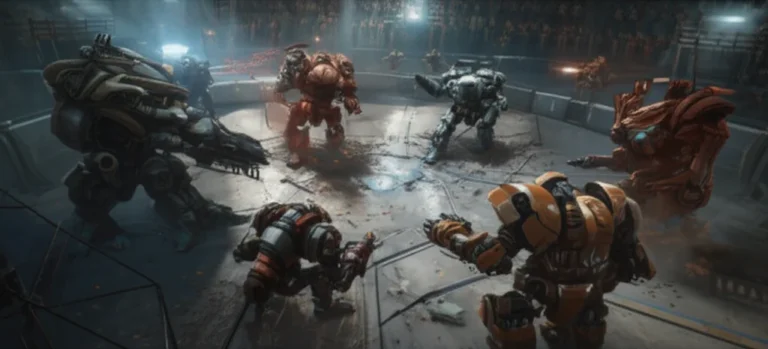
Robot fighting news in 2026 is moving in two directions at once: high-energy BattleBots-style machines and humanoid robots learning to box, kick, balance, and recover. Follow official event sources, complete match footage, and current rulebooks for the most reliable updates—not just viral clips.
The biggest shift is humanoid combat. The BBC reported robots competing in a Chinese kickboxing event, while REK demonstrations in San Francisco let human fighters control humanoid machines through virtual reality. That sounds futuristic until a keyboard lands in the arena and both robots fall over; suddenly, balance and perception become the real headline.
Traditional combat robots remain the more mature competitive format. Teams still win through clever armor, dependable drive systems, weapon timing, battery discipline, and repairs fast enough to beat the tournament clock.
So what should you watch next: the loudest spinner, the smartest humanoid, or the robot that simply refuses to stop moving? The answer is usually hiding in the engineering details.
Key Takeaways
- Robot fighting news now spans two major formats: traditional remote-controlled combat robots and humanoid robot boxing or kickboxing demonstrations.
- Humanoid robot events are often remotely or VR-controlled, so they should not automatically be described as fully autonomous battles.
- BattleBots-style competition still rewards reliability, control, damage, and aggression, not raw weapon power alone.
- The most important emerging technologies include machine vision, balance control, modular armor, brushless motors, high-discharge batteries, and assisted autonomy.
- Official rulebooks and full match videos matter: viral clips can hide the control method, event format, damage context, or safety procedures.
- The future of robot combat will likely favor assisted autonomy, where software handles balance and low-level control while humans make strategic decisions.
Table of Contents
-
📚 From BattleBots to Humanoid Boxing: The History of Robot Combat
-
15. The Future of Robot Combat May Include Autonomous Matches
-
🧠 Robot Fighting Tactics, Driving Skills, and Match Strategy
-
👥 The Teams, Engineers, Builders, and Drivers Making Headlines
-
Women, Youth, and Underepresented Innovators in Robot Fighting
-
The Difference Between Entertainment Robots and Military Systems
-
🛒 Buying or Building a Fighting Robot: What You Need to Know
Quick Tips and Facts About Robot Fighting News
If you want the clearest robot fighting updates, start with the organizer, event rules, and full match footage—not a dramatic 12-second clip with cinematic music. We follow the sport from the workshop to the arena, and the same lesson keeps returning: the robot that survives the boring details usually beats the robot with the flashiest weapon. 🤖
What Counts as Robot Fighting News?
Robot fighting news covers far more than tournament winners. Useful reporting may include:
- Event announcements: BattleBots FaceOffs, Robot Fighting League cards, local antweight tournaments, and live demonstrations.
- Team and robot updates: New chassis designs, weapon systems, driver changes, sponsorships, and repairs.
- Technical breakthroughs: Better motors, batteries, control software, machine vision, balance systems, and armor.
- Rules and safety: Weight limits, weapon lockouts, arena standards, battery procedures, and autonomous-control restrictions.
- Business and media developments: Streaming agreements, live shows, merchandise, and new competition formats.
- Humanoid combat demonstrations: VR-controlled machines and bipedal robots that box, kickbox, or perform choreographed routines.
That last category is attracting enormous attention. The BBC report on Unitree humanoid robots in China described two humanoid robots trading punches before spectators in Hangzhou. Meanwhile, ABC7 News reported on REK humanoids controlled by UFC fighter Hyder Amil and MMA fighter Jessica-Rose Clark.
But a demonstration is not automatically a regulated tournament. A robot may be remotely piloted, VR-controlled, semi-autonomous, or performing a scripted sequence. Those distinctions matter.
The Fastest Ways to Verify a Breaking Story
When a headline claims “world-first,” “unstoppable,” or “fully autonomous,” use this five-step check:
- Find the primary organizer. Check the official BattleBots site, event promoter, team page, or league rulebook.
- Confirm the date and venue. Old match clips frequently reappear as breaking news.
- Identify the control method. Is the machine controlled by a transmitter, VR headset, onboard AI, or a mixture?
- Look for a complete match. Full footage reveals stoppages, falls, arena hazards, repairs, and judging decisions.
- Separate claims from measured results. “Strong impact” is marketing. Knockouts, match records, weight, dimensions, and rules are evidence.
| Question | What to verify | Why it matters |
|---|---|---|
| Is it a competition? | Bracket, officials, rules, recorded results | Demonstrations may not have competitive scoring |
| Is it autonomous? | Human operator, remote link, onboard decision system | “AI robot” can still mean heavily human-controlled |
| Is it a new robot? | Build date, model name, team statement | Viral videos often use older machines |
| Is it safe? | Arena barrier, weapon lock, inspection process | A powerful machine needs controlled containment |
| Is it a world first? | Comparable prior events and independent reporting | Promotional language is not historical proof |
For deeper technical reporting, our Robot Design and Engineering coverage is a better starting point than a social-media caption.
Key Robot Combat Terms Explained
| Term | Meaning |
|---|---|
| BattleBot | A competition robot designed to fight inside a protected arena; “BattleBots” is also the name of a major U.S. competition brand |
| Humanoid robot | A robot with a broadly human-shaped body, often featuring a torso, arms, legs, and head |
| Remote-controlled | Operated by a human through radio, wired, or networked controls |
| VR-controlled | Operated through a virtual-reality headset and motion interface |
| Autonomous | Performs some or all decisions without continuous human commands |
| Spinner | A robot weapon that stores energy in a rotating disk, bar, drum, or shell |
| Flipper | A pneumatic, hydraulic, or electric mechanism that launches an opponent |
| Lifter | A powered arm or fork used to raise, control, or invert another robot |
| Brawler | A compact robot built for direct pushing, striking, and close-range combat |
| Control bot | A design focused on grapling, lifting, pining, or positioning an opponent |
| Active weapon | A powered weapon intended to affect the opposing robot |
| Pit | An arena hazard or lowered area intended to trap a disabled robot |
| Knockout | A victory awarded when an opponent can no longer move or continue safely |
| Technical knockout | A stoppage caused by damage, safety concerns, or inability to continue |
| Weight class | The maximum allowed total mass, including batteries, armor, and weapon |
| Technical inspection | Pre-match verification of weight, safety, radio systems, batteries, and weapons |
✅ Quick accuracy rule: if a report uses “robot boxing” but never identifies the control system, rules, or scoring method, treat it as an event preview—not proof of autonomous combat.
Robot Fighting News: The Current Combat Landscape
Robot fighting now has two distinct but increasingly connected lanes:
- Traditional combat robotics, where teams drive wheled or tracked machines with destructive weapons.
- Humanoid robot fighting, where bipedal machines punch, kick, balance, or perform under human or software control.
The machines may share batteries, motors, sensors, and control algorithms, but their engineering problems are wildly different. A heavyweight spinner wants low center of gravity and brutal rotational energy. A humanoid wants balance, compliant joints, and enough perception to avoid tripping over a keyboard. That difference became impossible to miss in San Francisco.
Combat Robots, Humanoid Robots, and Robotic Exoskeletons
Traditional combat robots
BattleBots-style machines typically use:
- Four-wheel or six-wheel drive
- Hardened armor
- Brushless electric motors
- High-current battery packs
- Spinning, lifting, hammering, or flipping weapons
- A human driver stationed outside the arena
These robots are often compact, low, and wide. That is not an aesthetic accident. A low center of gravity is a survival strategy.
Humanoid robots
Humanoids such as machines developed by Unitree Robotics are built around:
- Two-legged balance
- Jointed arms and hands
- Inertial measurement units
- Cameras and depth sensors
- Real-time motor control
- Dynamic recovery after a shove, stumble, or impact
The BBC’s Hangzhou coverage presented humanoid robots trading punches as a public combat-sports spectacle. That is visually compelling, but the engineering challenge is not equivalent to a BattleBox match. A humanoid that remains standing after contact has already solved a problem that a four-wheeled robot simply avoids.
Robotic exoskeletons
Exoskeletons are worn by humans and amplify or assist movement. They are not normally robot-fighting competitors, but their actuators, balance systems, and human-machine interfaces overlap with humanoid robotics.
| Platform | Main objective | Typical control | Biggest engineering challenge |
|---|---|---|---|
| Heavyweight combat robot | Disable an opponent | Human radio operator | Surviving weapon impacts |
| Humanoid fighter | Strike while staying upright | VR, remote, scripted, or autonomous | Dynamic balance and safe contact |
| Industrial humanoid | Manipulate tools and objects | Software plus human supervision | Reliable perception and dexterity |
| Exoskeleton | Assist a wearer | Human movement plus sensors | Safe force transfer to the body |
Remote-Controled Machines vs. Autonomous Fighting Robots
This is the question everyone asks after seeing a robot throw a punch: Who is really fighting?
The answer may be:
- A human driver.
- A human using a VR interface.
- A human issuing high-level commands while software stabilizes the robot.
- An autonomous control system selecting movement.
- A choreographed sequence triggered by an operator.
ABC7 quoted Jessica-Rose Clark describing the experience as: “Way different. I’ve never had a VR headset on before, let alone controlled a robot fighting another robot, it was sick.” That wording strongly indicates an operator-centered demonstration, not a fully independent machine battle.
REK executive Nima Zeighami explained the appeal: “If you get them both right, what you get is this ability to feel like you are the robot.” That is a powerful entertainment concept. It also creates a useful distinction:
VR control changes the operator’s interface; it does not automatically make the robot autonomous.
| Control type | Human involvement | Strength | Limitation |
|---|---|---|---|
| Traditional radio control | Continuous | Fast tactical judgment | Driver workload and latency |
| VR control | Continuous or near-continuous | Immersion and intuitive motion | Headset fatigue, bandwidth, operator visibility |
| Assisted control | High-level commands | Software can stabilize movement | Harder to define responsibility |
| Autonomous control | Limited during action | Fast reaction and repeatability | Safety, rules, and unpredictable behavior |
| Scripted demonstration | Preplanned | Consistent public presentation | Not representative of open competition |
For match tactics rather than interface theory, see our Robot Battle Strategies archive.
Why Robot Combat Is Expanding Beyond Television
Traditional televised competitions made robot fighting understandable: two machines enter, metal flies, one stops moving. New formats are widening the audience through:
- Free online episodes
- Daily live shows
- VR-controlled humanoid demonstrations
- University and youth competitions
- Short-form social video
- International robotics exhibitions
- Team-building and STEM programs
BattleBots currently promotes FaceOffs as a 10-episode tournament featuring 32 robots, established teams, newcomers, builder stories, and free YouTube distribution. Its Las Vegas Destruct-A-Thon adds a theatrical, family-friendly live format featuring robots such as Witch Doctor, Kraken, Mammoth, HyperShock, and Whiplash.
The audience is no longer choosing between “serious engineering” and “wild entertainment.” The strongest events combine both. The real test is whether a format can preserve competitive credibility while remaining fun for someone who cannot tell a weapon motor from a gearbox.
From BattleBots to Humanoid Boxing: The History of Robot Combat

Robot fighting did not begin with a polished television arena. It grew from hobbyists, engineering clubs, radio-control communities, and builders who thought, quite reasonably, that a machine should be allowed to solve an argument with a spinning blade. ⚙️
The Rise of Robot Wars and BattleBots
Modern combat robotics gained broad public attention through televised formats including Robot Wars and BattleBots. These shows turned engineering decisions into spectator drama:
- Low wedge or tall machine?
- Armor or weapon?
- Reliability or maximum damage?
- Aggressive driving or defensive control?
The entertainment works because each match compresses a complicated design philosophy into a few minutes. When a spinner loses a weapon belt, viewers see failure instantly. When a control bot pins an opponent, they see strategy rather than a spreadsheet.
Our team has made the same mistake more than once: admiring an elegant weapon assembly while overlooking access to the wiring underneath. In the workshop, the “beautiful” robot often becomes a very expensive puzzle box after one hard hit.
How University Robotics Competitions Changed the Sport
University teams brought fresh approaches to:
- Computer-aided design
- Finite-element analysis
- Embedded control
- Battery safety
- Modular construction
- Data logging
- Rapid iteration
Student teams also helped normalize interdisciplinary work. A competitive robot needs mechanical engineering, electrical engineering, software, machining, project management, communications, and a driver who does not panic when the machine is upside down.
The strongest teams treat every match as a test dataset. They record:
- Motor temperature
- Battery voltage sag
- Weapon speed
- Drive current
- Radio performance
- Damage location
- Driver mistakes
- Repair time
That habit separates a durable program from a one-season curiosity.
The Arrival of Humanoid Robot Fighting Competitions
Humanoid robot combat grew from demonstrations and robotics contests rather than the classic wheled-combat tradition. In Hangzhou, China, the BBC reported a World Robot Competition event involving humanoid robots developed by Unitree Robotics.
The format highlighted:
- Bipedal movement
- Punching mechanics
- Balance recovery
- Audience-facing spectacle
- The challenge of making robots behave visibly like athletes
REK’s San Francisco demonstrations added a different angle: human fighters controlling humanoid robots through VR headsets. ABC7 reported that the approximately 80-pound, 4.5-foot-tall robots could produce impacts strong enough to shake the boxing-ring floor, yet both machines fell after stepping on a keyboard thrown into the ring.
That moment is more instructive than it looks. It showed the gap between:
- Controlled performance on a predictable surface
- Robust operation in a messy environment
The future of humanoid robot fighting will not be decided only by punch force. It will be decided by recovery, perception, safe contact, and what happens when the arena refuses to behave.
15 Biggest Robot Fighting News Stories to Watch
The most interesting headlines are not always the loudest ones. Here are 15 developments worth tracking across traditional combat robotics, humanoid machines, events, and engineering.
1. Humanoid Robots Enter Kickboxing and Boxing Events
The BBC’s Hangzhou report described a “world-first combat sports event featuring humanoid robots.” Unitree’s involvement places a recognizable robotics manufacturer inside an entertainment format that ordinary audiences understand immediately.
The key questions are:
- Are strikes fully autonomous?
- Are matches scored by impact, balance, or points?
- Are falls caused by legal contact ordinary locomotion errors?
- Are the machines standardized?
- Can a robot recover after a push?
At the moment, public reports provide strong evidence of humanoid robot combat demonstrations and matches, but not enough detail to treat every event as a standardized autonomous league.
2. BattleBots Teams Reveal New Heavyweight Designs
BattleBots remains a major source of robot fighting news because each new design reveals where builders believe the sport is heading. Teams continue experimenting with:
- Vertical spinners
- Horizontal spinners
- Drum weapons
- Modular armor
- Self-righting systems
- Compact brushless drives
- Fork geometry
- Shock-resistant electronics
The official BattleBots roster includes well-known machines such as Minotaur, Witch Doctor, End Game, HyperShock, Whiplash, SawBlaze, Hydra, HUGE, and Copperhead.
A fresh chassis is not automatically a better chassis. We look for repair access, weapon reliability, radio redundancy, and driving visibility before getting hypnotized by a polished render.
3. Robot Wars and International Combat Events Return
International competition matters because different regions emphasize different formats:
- The United States popularized high-impact televised arena combat.
- The United Kingdom built a strong Robot Wars tradition.
- China is pushing humanoid robotics into public competition.
- Japan continues blending robotics, spectacle, and human-machine interaction.
- Europe supports university, hobby, and engineering-led events.
Check official event calendars rather than relying on reposted clips. Our Robot Battle Events category tracks the practical details fans need: dates, formats, rules, and viewing options.
4. AI-Assisted Driving Transforms Competitive Robot Combat
AI assistance can help with:
- Stabilizing a humanoid
- Holding a heading
- Detecting an opponent
- Managing traction
- Limiting unsafe motor commands
- Automatically recovering from a stumble
But “AI-assisted” should not be confused with “AI-controlled.” A driver may still choose when to attack, while software handles balance and motor coordination.
The biggest competitive advantage may be not a robot that thinks like a human, but one that removes the human’s most difficult low-level tasks.
5. New Weight Classes Create More Room for Small Builders
Large televised robots demand specialist fabrication, extensive testing, and a substantial support crew. Smaller classes lower the barrier to entry and encourage experimentation.
| Weight class example | Typical appeal | Common design focus |
|---|---|---|
| Antweight | Compact, affordable experimentation | Printed armor and simple drive |
| Beetleweight | Strong balance of cost and performance | Brushless drive and active weapons |
| Hobbyweight | More room for batteries and armor | Modular construction |
| Featherweight | Serious combat without heavyweight scale | Efficient motors and robust frames |
| Heavyweight | Maximum spectacle and engineering complexity | Energy management and impact survival |
Exact limits vary by organizer, so always read the event’s current rulebook. The Robot Combat Rules and Regulations section is useful for comparing requirements.
6. Universities Build Faster, Smarter Fighting Robots
University teams are increasingly treating robot combat as a complete engineering laboratory. Their improvements often appear in:
- Lightweight structural design
- Digital motor control
- Rapid protyping
- Sensor fusion
- Battery monitoring
- Modular electronics
- Simulation-driven testing
The benefit reaches beyond the arena. Students learn how a design behaves under vibration, shock, heat, and time pressure—conditions that a classroom CAD model politely ignores.
7. Robot Combat Moves Into Livestreaming and Esports
BattleBots’ official site promotes free YouTube programming for FaceOffs and Pro League content. That matters because online distribution removes a major barrier: fans no longer need a traditional television package or a local venue.
Livestreaming also enables:
- Immediate post-match interviews
- Builder commentary
- Technical breakdowns
- Global audiences
- Community chat
- Archive access
The weakness is discoverability. A full match may be buried under short clips, spoilers, and algorithmic recommendations. Follow official channels and use our Robot Combat Videos coverage for curated viewing.
8. Women Engineers and Youth Teams Gain Visibility
Robot fighting benefits when the team roster reflects the audience and the engineering community. Jessica-Rose Clark’s participation in the REK VR-controlled demonstration showed how combat-sports experience can translate into robot operation.
Youth and family teams contribute something equally valuable: they make technical creativity visible before career choices harden. A teenager who learns to crimp a connector, balance a battery, and troubleshoot a receiver has already gained practical engineering confidence.
9. Robot Combat Safety Rules Face Fresh Scrutiny
Humanoid events introduce safety questions that traditional wheled arenas already understand in a different form:
- What happens if a robot loses balance near a spectator?
- How are arms disabled after a fall?
- Can a VR operator trigger an emergency stop?
- Is the robot’s battery protected during impact?
- What objects are permitted inside the arena?
The keyboard incident reported by ABC7 is a perfect example of why arena inspection matters. A small object can become a trip hazard when a 4.5-foot machine is balancing on two legs.
10. Batteries, Motors, and Weapon Systems Get More Powerful
Battery energy density and brushless motor technology have transformed compact robots. Higher output brings faster weapons and sharper acceleration, but also:
- More heat
- Higher current demand
- Greater connector stress
- More severe battery risks
- Shorter fault-tolerance windows
A strong team designs the power system as a chain:
Battery → fuse or protection → power distribution → electronic speed controllers → motors
One weak connector can turn a championship machine into an expensive paperweight.
11. Modular Robot Platforms Speed Up Repairs
Modularity lets teams replace:
- A weapon module
- A drive pod
- A battery tray
- An armor panel
- A motor controller
- A sensor package
The goal is not merely convenience. Every minute saved between matches is strategic capacity.
We prefer designs where a damaged drive motor can be reached without removing the weapon, battery, and half the armor. If the repair manual resembles a treasure map, the robot is not competition-ready.
12. International Teams Bring New Tactics to the Arena
Different builders prioritize different forms of control:
- Aggressive weapon engagement
- Wedge-and-pin tactics
- High-speed circling
- Defensive counterattacks
- Multi-robot coordination in exhibitions
- Balance-preserving movement in humanoids
Watching international matches broadens a driver’s tactical vocabulary. A robot does not need the biggest weapon if it consistently reaches the opponent’s vulnerable side.
13. Sponsorships and Streaming Deals Reshape Robot Fighting
The sport needs money for:
- Machining
- Batteries
- Travel
- Arena construction
- Insurance
- Safety crews
- Video production
- Replacement parts
BattleBots’ online programming and live Vegas show demonstrate two different commercial models:
| Model | Fan experience | Main advantage |
|---|---|---|
| Free online tournament | Accessible match viewing | Global reach |
| Live theatrical show | In-person spectacle | Ticket and merchandise revenue |
| Traditional broadcast | Polished storytelling | Broad casual audience |
| Team livestream | Direct builder connection | Community engagement |
14. 3D Printing Lowers the Barrier to Entering Competitions
Modern desktop printers let builders prototype:
- Armor contours
- Sensor mounts
- Battery brackets
- Cable guides
- Wheel guards
- Test fixtures
Printed polymer parts should not automatically become weapon-adjacent structural components. Heat, vibration, impact, and layer orientation all matter. Use printing to iterate quickly, then select material and geometry based on the load.
15. The Future of Robot Combat May Include Autonomous Matches
Fully autonomous combat would change the sport dramatically. Drivers would no longer decide every maneuver, and rules would need to address:
- Target identification
- Safe stopping
- Arena boundaries
- Disabled robots
- False positives
- Human override
- Software updates between matches
The likely near-term path is assisted autonomy: human tactical decisions combined with machine balance, traction, and safety functions.
That may be less cinematic than a robot suddenly “becoming alive,” but it is more useful engineering—and far easier to regulate.
Major Robot Fighting Leagues, Events, and Competitions
Robot fighting is not one league with one rulebook. It is an ecosystem of televised tournaments, local clubs, university events, exhibitions, live theater, and humanoid demonstrations.
BattleBots and the Modern Heavyweight Arena
BattleBots remains the reference point for heavyweight arena combat. Its recognizable format combines:
- Enclosed arena
- Builder teams
- Active weapons
- Technical inspections
- Referes and judges
- Knockouts and decisions
- Builder-focused storytelling
The official site promotes BattleBots FaceOffs, a 10-episode tournament with 32 robots, and Pro League coverage featuring knockout rounds. It also promotes Destruct-A-Thon, a Las Vegas live show with machines including Witch Doctor, Kraken, Mammoth, HyperShock, and Whiplash.
BattleBots is excellent for spectacle and accessible storytelling. It is less useful as a perfect guide to every local rule set. Always compare the event’s published regulations before building.
Robot Wars, King of Bots, and Global Competitors
Robot Wars helped establish the arena-combat vocabulary of spinners, flippers, house robots, hazards, and tactical driving. Other international formats, including King of Bots and regional combat events, expand the design culture beyond one production style.
When comparing leagues, look at:
- Weight limit
- Arena dimensions
- Weapon-energy restrictions
- Battery rules
- Match duration
- Judging criteria
- Number of robots per event
- Whether autonomous control is permitted
RoboGames and Multi-Discipline Robot Tournaments
RoboGames has historically presented multiple robotics disciplines, including combat-oriented events alongside other challenges. Multi-discipline gatherings are valuable because they place fighting robots beside sumo, mobility, manipulation, and autonomous systems.
A combat robot may win its match yet teach less about perception than a small autonomous maze-solving robot. Robotics is a broad field; combat simply gives the lessons louder sound effects.
Humanoid Robot Soccer and Combat Demonstrations
Humanoid events often overlap with:
- Robot soccer
- Balance contests
- Obstacle courses
- Manipulation demonstrations
- Boxing or kickboxing exhibitions
Unitree’s presence in the BBC-covered Hangzhou event reflects the push to make humanoid robotics visible to mass audiences. These events should be judged on the right criteria:
✅ Balance and recovery
✅ Repeatable movement
✅ Safety systems
✅ Control latency
✅ Contact handling
❌ Raw punch force alone
❌ A single viral fall
❌ Marketing claims without match rules
Antweight, Beetleweight, and Other Local Events
Small competitions are the best entry point for many builders. Benefits include:
- Lower material requirements
- Faster build cycles
- Easier transportation
- More accessible repairs
- Frequent opportunities to drive
- Direct contact with experienced builders
A small robot also exposes bad design quickly. Loose wiring, poor weight distribution, and fragile connectors do not become better merely because the robot is smaller.
How to Find Upcoming Robot Fighting Events
Use this search routine:
- Check the organizer’s official event calendar.
- Read the current technical rules.
- Confirm registration deadlines.
- Check weight-class availability.
- Verify battery and radio requirements.
- Watch recent matches from the same organizer.
- Contact the event director with safety questions.
Our Robot Battle Events category is a useful companion, but the organizer’s current rulebook always has final authority.
Robot Combat Technology Behind the Headlines
Every exciting match is really a systems-enginering exam. The weapon gets the applause. The connectors, bearings, software limits, and mounting hardware decide whether the applause lasts more than one exchange.
Brushless Motors, Gearboxes, and Drive Systems
Competitive robots commonly use high-power brushed or brushless motors. Brushless systems offer:
- High power-to-weight ratio
- Efficient operation
- Programmable electronic speed controllers
- Strong acceleration
- Good performance in compact packages
But they require careful setup. A drive system must match:
- Robot weight
- Wheel diameter
- Desired top speed
- Surface traction
- Gear reduction
- Motor thermal limits
- Battery voltage
A fast robot that cannot turn under load is not fast in a useful way. It is a projectile with opinions.
LiPo Batteries, Power Distribution, and Thermal Management
Lithium-polymer batteries provide high discharge rates, making them popular in RC combat robotics. They also demand disciplined handling. The U.S. Fire Administration provides general lithium-battery safety guidance, while event-specific rules may impose additional requirements.
A responsible power system includes:
- Correct cell count
- Secure battery mounting
- Protected connectors
- Appropriately rated wiring
- Fusing or current protection where required
- Battery voltage monitoring
- Charging in a suitable safety container
- A clearly accessible power disconnect
Step-by-step battery checklist
- Inspect the pack for swelling, punctures, or damaged leads.
- Confirm cell count and voltage before connection.
- Secure the pack so impact cannot crush it.
- Keep high-current wires short and protected.
- Verify connector polarity.
- Test under controlled load.
- Monitor heat after a short drive.
- Disconnect and store safely after use.
Spinning Weapons, Lifters, Flippers, and Hammers
| Weapon | Best strength | Common weakness |
|---|---|---|
| Vertical spinner | Launches opponents upward and exposes underside | Can damage its own frame during impact |
| Horizontal spinner | Attacks wheels and side armor | Vulnerable to recoil and arena walls |
| Drum spinner | Compact energy delivery | Sensitive to bearing and tooth damage |
| Flipper | Controls the opponent’s position | Needs reliable gas, hydraulic, or electric actuation |
| Lifter | Can pin, invert, or shove | May struggle against low wedges |
| Hammer | Targets top armor and electronics | Requires accurate timing |
| Grapler | Restricts movement | Difficult against flexible or highly mobile designs |
Weapon design is a compromise between energy, reliability, controllability, and serviceability. The biggest weapon is rarely the best weapon if it destroys its own bearings or drains the battery before the match ends.
Armor Materials: Titanium, Steel, Aluminum, and Composites
- Titanium: Strong, relatively light, and useful for armor; machining can be demanding.
- Steel: Tough and accessible, but heavy.
- Aluminum: Lightweight and easy to machine; alloy and thickness matter.
- Polycarbonate: Useful for visibility panels and some protective structures; vulnerable to certain impact patterns.
- Engineering polymers: Helpful for brackets, guards, and sacrificial components.
- Composites: Can deliver excellent stiffness-to-weight performance when designed and manufactured correctly.
There is no universal “best” material. The right choice depends on:
- Impact direction
- Expected weapon type
- Mass budget
- Manufacturing method
- Repair access
- Electrical isolation
- Temperature exposure
Radio Control, Telemetry, and Signal Reliability
A robot needs predictable communication under vibration, electrical noise, and arena shielding. Teams should test:
- Receiver placement
- Antenna protection
- Failsafe behavior
- Emergency stop
- Motor direction
- Weapon lockout
- Range
- Interference response
Never test a weapon at full speed without proper containment. A loose spinner does not care about your confidence.
Artificial Intelligence and Machine Vision in Robot Combat
Machine vision could help a robot identify:
- Opponent position
- Arena boundaries
- Hazards
- Orientation
- Disabled status
- Safe engagement zones
But combat arenas are difficult visual environments. Lighting changes, smoke, sparks, debris, reflective armor, and rapid motion can confuse cameras and classifiers.
A practical development sequence is:
- Stabilize basic drive control.
- Add reliable position sensing.
- Test opponent detection with static targets.
- Add movement prediction.
- Limit autonomous actions with safety boundaries.
- Keep human override available.
- Test failure modes repeatedly.
For design methodology, visit Robot Design and Engineering.
Robot Fighting Tactics, Driving Skills, and Match Strategy
A robot can have extraordinary hardware and still lose because the driver enters the wrong angle, fires too early, or forgets that the arena wall is not an opponent. We have watched beautiful machines lose to ordinary wedges because the wedge arrived first and stayed calm.
How Drivers Control a Robot Under Pressure
Good drivers practice:
- Straight-line acceleration
- Reverse driving
- Pivot turns
- Corner escapes
- Weapon timing
- Orientation recovery
- Arena awareness
- Manual failsafe procedures
A practical training progression
- Drive slowly around marked lanes.
- Practice stopping with the robot square to a target.
- Reverse without overcorrecting.
- Add controlled turns at increasing speed.
- Drive around stationary obstacles.
- Add a moving training target.
- Practice with the weapon disabled.
- Enable the weapon only after movement is predictable.
- Rehearse a lost-orientation recovery.
- Review video and identify repeated mistakes.
The Robot Battle Strategies section covers these fundamentals in greater depth.
Weapon Timing, Positioning, and Arena Control
The ideal attack usually combines:
- A favorable approach angle
- Traction
- Weapon readiness
- Knowledge of the opponent’s vulnerable zone
- An exit plan
A weapon hit without an exit plan can be self-inflicted damage. The robot may connect beautifully, rebound into the wall, and lose its drive.
Humanoid combat adds another layer: foot placement. A punch is only useful if the robot can remain stable through the force transfer. A strong strike from an unstable stance is just a dramatic way to sit down.
Countering Spinners, Flippers, Hammers, and Control Bots
| Opponent type | Useful countermeasures |
|---|---|
| Vertical spinner | Keep low, protect wheels, attack from the sides, avoid feeding the weapon |
| Horizontal spinner | Use sacrificial armor, control engagement angle, avoid exposed wheels |
| Flipper | Reduce accessible edges, maintain traction, prepare self-righting |
| Hammer | Protect top electronics, stay mobile, attack during recovery |
| Control bot | Use anti-grapling geometry, keep drive redundancy, avoid corners |
| Humanoid striker | Target balance and foot placement in regulated formats; prioritize safe distance in demonstrations |
Why Reliability Often Beats Raw Weapon Power
A reliable robot benefits from:
- More usable match time
- Fewer emergency repairs
- Better driving confidence
- Stable battery performance
- More consistent tournament results
The “maximum power” design may produce one spectacular hit. The reliable design keeps moving after the spectacle ends.
This is why we inspect:
- Bearing support
- Fastener retention
- Wire routing
- Motor cooling
- Battery restraint
- Weapon braking
- Access panels
- Self-righting reliability
How Judges Score Robot Combat Matches
Scoring differs by event. Common criteria include:
- Damage: How significantly did each robot impair the opponent?
- Control: Which driver dictated position and engagement?
- Aggression: Which robot consistently attempted meaningful attacks?
BattleBots publishes current event information and formats through its official platform. Never assume a scoring formula from one event applies everywhere.
A robot that dominates movement but causes little damage may win under one rule set and lose under another. That is why builders must design for the actual rulebook, not the most memorable clip.
How Fighting Robots Are Designed, Built, and Tested
The design process starts long before metal is cut. The best teams define the mission, constraints, failure modes, and repair plan before choosing a weapon.
Choosing a Weight Class and Robot Configuration
Start with four decisions:
- Weight class: How much total mass is allowed?
- Drive layout: Two-wheel, four-wheel, six-wheel, tracks, or legs?
- Weapon type: Spinner, flipper, lifter, hammer, grapler, or none?
- Competition rules: What is legal, safe, and practical?
A beginner-friendly design often prioritizes:
- Simple drive
- Protected wheels
- Accessible electronics
- Passive wedge or modest lifter
- Replaceable armor
- Easy battery access
CAD Design, Prototyping, and 3D Printing
A sound CAD workflow:
- Establish the weight budget.
- Place batteries and motors first.
- Define the center of gravity.
- Reserve space for wiring and connectors.
- Add armor around vulnerable systems.
- Check fastener access.
- Simulate weapon travel.
- Inspect interference and pinch points.
- Create service panels.
- Export manufacturing drawings.
Do not wait until final assembly to discover that the battery cannot be removed because the weapon motor occupies the only opening. We have seen this design crime wearing beautiful anodized aluminum.
Fabrication, Wiring, and Assembly
A clean build uses:
- Strain relief on heavy wires
- Protected connectors
- Mechanical retention for batteries
- Thread-locking where appropriate
- Labeled cables
- Separate signal and high-current routing where practical
- Replaceable sacrificial parts
- Clear power-disconnect access
Wiring inspection checklist
- ✅ Correct polarity
- ✅ No exposed conductor near armor edges
- ✅ No wire rubbing against a spinning component
- ✅ Receiver and antenna protected
- ✅ Motor leads secured
- ✅ Emergency stop tested
- ✅ Failsafe verified
- ✅ Weapon lockout confirmed
Bench Testing Before the First Match
Test in stages:
- Power the receiver without motors.
- Confirm transmitter binding.
- Test each motor at very low output.
- Verify steering direction.
- Test failsafe with wheels off the ground.
- Check current draw.
- Test the weapon without full energy.
- Inspect heat after short runs.
- Secure the robot in a proper test fixture.
- Perform a full system inspection after vibration.
Never skip the “boring” test because the robot looks ready. The arena has a talent for finding the one thing you forgot.
Repair Planning Between Tournament Rounds
Pack:
- Spare motors
- Belts or chains
- Bearings
- Fasteners
- Connectors
- Wire
- Soldering equipment
- Replacement armor
- Spare speed controllers
- Battery-safe charging equipment
- Cleaning tools
- Printed technical drawings
A tournament robot is not finished when it enters the arena. It is finished when the team can restore it quickly after damage.
The Teams, Engineers, Builders, and Drivers Making Headlines
Robot fighting is often described as machine versus machine, but the real contest is team versus time. A robot may have a brilliant chassis and still lose because its crew cannot diagnose a dead receiver between rounds.
Profiles of Notable Robot Combat Teams
BattleBots’ official roster includes recognizable teams and machines such as:
- Witch Doctor
- Minotaur
- End Game
- HyperShock
- Whiplash
- SawBlaze
- Hydra
- HUGE
- Copperhead
- Riptide
- Tombstone
- BETA
- Lock-Jaw
- Malice
Treat roster appearance as evidence of participation, not proof of current form. Teams evolve quickly, and a robot’s latest revision may differ substantially from the version fans remember.
The Roles Behind a Championship Robot
A strong team usually divides responsibilities among:
- Lead mechanical designer
- Electrical and battery specialist
- Weapon engineer
- Software or controls engineer
- Driver
- Pit crew
- Safety lead
- Logistics and documentation coordinator
- Media or sponsorship contact
Small teams combine roles, but the responsibilities still exist. Someone must know the wiring. Someone must know the rulebook. Someone must know where the spare bearings are hiding.
How Family Teams and Student Builders Compete
Family and student teams often win advantages through:
- Fast communication
- Shared ownership
- Strong motivation
- Flexible design cycles
- Willingness to learn in public
Their common challenge is limited access to machining, testing space, and travel support. Community makerspaces, university labs, sponsors, and local clubs can close that gap.
Women, Youth, and Underepresented Innovators in Robot Fighting
A wider builder community improves the sport’s ideas and its audience. Participation grows when events provide:
- Clear safety training
- Beginner classes
- Mentorship
- Accessible technical documentation
- Inclusive pits and judging
- Youth-safe workshop policies
- Recognition beyond televised winners
Jessica-Rose Clark’s REK demonstration is one example of a combat-sports professional bringing a different skill set to robot operation. A boxer’s sense of distance and timing can be useful, but the machine still demands technical fluency.
Robot Fighting Safety, Rules, and Event Regulation
Robot combat is controlled risk, not careless chaos. The arena, inspection process, emergency procedures, and team discipline matter more than the promotional language.
Arena Safety Systems and Operator Protection
A serious arena may include:
- Polycarbonate viewing barriers
- Steel framing
- Overhead protection
- Lockable access doors
- Remote power shutdown
- Fire-suppression equipment
- Dedicated officials
- Controlled test areas
- Spectator separation
The Occupational Safety and Health Administration provides general machine-guarding principles that are relevant to thinking about moving hazards, although competition organizers may apply more specific rules.
Weapon Lockouts, Power Limits, and Technical Inspections
Before a match, officials may verify:
- Robot weight
- Physical dimensions
- Weapon lock
- Radio failsafe
- Battery security
- Sharp-edge protection
- Emergency power disconnect
- Arena compatibility
- Operator control
A weapon lockout prevents accidental activation while the robot is outside the active combat area. It is a simple feature with life-saving value.
Battery Handling and Fire Prevention
Lithium batteries can deliver tremendous current and must be managed accordingly. Follow the organizer’s rules and consult reputable safety guidance such as the U.S. Consumer Product Safety Commission’s lithium-ion battery resources. Never use a visibly swollen, punctured, or overheated pack.
Why Autonomous Weapons Require Extra Safeguards
An autonomous system can react faster than a human, but speed is not judgment. Safeguards should include:
- Human emergency override
- Defined arena boundaries
- Target confirmation
- Safe-stop behavior
- Weapon disable on communication loss
- Software version control
- Repeatable testing
- Clear accountability
Autonomy should increase predictability, not merely remove the driver.
How Robot Combat Rules Differ Around the World
Rules vary by:
- Weight class
- Weapon energy
- Battery chemistry
- Radio frequency
- Arena design
- Match duration
- Fire or heat restrictions
- Autonomous operation
- Recovery after immobilization
- Judging criteria
Always use the current organizer’s regulations. A robot legal at one event may be rejected at another.
Where to Watch Robot Fighting News and Full Matches
A good viewing strategy combines official sources with technical commentary. Short clips are entertaining; full matches teach you why a robot won.
Television Broadcasts and Official Streaming Platforms
Start with official league pages:
- BattleBots for FaceOffs, Pro League, roster updates, and Destruct-A-Thon information.
- Robot Wars for program and archive information where available.
- Official event organizers for schedules, brackets, and live-stream links.
BattleBots promotes FaceOffs and Pro League episodes through YouTube, making the content accessible to a worldwide audience.
YouTube Channels and Team Livestreams
Search for:
- Full match footage
- Pit interviews
- Builder diaries
- Post-match repairs
- Technical walkarounds
- Event livestream archives
Use the Robot Combat Videos category to find analysis rather than relying entirely on recommendation algorithms.
Podcasts, Newsletters, and Robotics Publications
Look for sources that provide:
- Named teams
- Match dates
- Rule references
- Technical specifications
- Direct quotes
- Complete context
A report that simply says “the robot was powerful” is less useful than one that identifies its weapon, drive system, control method, and result.
How to Avoid Spoilers While Following Tournament Results
- Mute event names on social media.
- Watch official uploads in chronological order.
- Avoid thumbnails if you care about results.
- Subscribe to newsletters rather than browsing random clips.
- Check whether an event page labels knockout results clearly.
- Save full matches before reading comment sections.
How Social Media Is Changing Robot Combat Coverage
Social platforms are excellent at showing sparks, flips, and dramatic falls. They are less reliable at explaining why a robot stopped moving.
Finding Reliable Breaking Robot Fighting Updates
Follow:
- Official league accounts
- Event organizers
- Verified team pages
- Recognized robotics publications
- Builders who post technical evidence
- Venue announcements
Cross-check claims against the organizer’s rulebook or event page.
Separating Viral Clips From Complete Match Context
Ask:
- Was the clip edited?
- Does it show the start and finish?
- Was the robot already damaged?
- Was the event a demonstration?
- Was the opponent remotely controlled?
- Did officials stop the action?
- Is the caption newer than the footage?
The REK keyboard incident is a useful reminder: a short clip could show a spectacular fall, while the complete report explains the environmental cause and the current limits of the system.
Following Teams, Organizers, and Technical Experts
For the best signal-to-noise ratio, build a feed containing:
- One or two major leagues
- Several active teams
- A safety-focused organizer
- A technical engineering publication
- A match-analysis channel
- A local event group
That mix gives you headlines, expertise, and practical opportunities to attend or compete.
The Global Growth of Robot Fighting
Robot combat has become a global conversation because it combines engineering, sport, entertainment, and national robotics ambitions.
Robot Combat in the United States
The U.S. scene is strongly associated with BattleBots, local combat-robot clubs, university teams, and maker communities. The country’s major strengths include:
- Established television production
- Large builder networks
- Multiple weight classes
- Strong online communities
- High-impact arena design
- Professionalized live entertainment
Chinese Humanoid Boxing and Kickboxing Events
The BBC’s Hangzhou report placed humanoid robot combat inside a major public robotics event. China’s robotics ecosystem is also home to companies such as Unitree Robotics, which develops quadruped and humanoid platforms.
The important development is not simply that robots can punch. It is that humanoid machines are being presented through sports language, allowing audiences to evaluate balance, movement, reaction, and control in familiar terms.
European Robot Wars and Engineering Competitions
Europe has a deep culture of robotics competitions, makerspaces, university engineering, and televised robot combat. Regional events often emphasize technical creativity and community participation alongside spectacle.
Japanese Robotics Culture and Humanoid Machines
Japan’s robotics history includes extensive work in humanoid research, entertainment robotics, industrial automation, and human-machine interaction. Organizations such as ROBO-ONE have helped popularize small humanoid robot competitions involving movement and combat-style contests.
Emerging Robot Fighting Scenes Worldwide
New scenes often begin with:
- University clubs
- Maker fairs
- Robotics exhibitions
- Local RC communities
- STEM programs
- Small weight classes
- Online build communities
A local beetleweight event may be less famous than a televised heavyweight final, but it is often where the next major builder learns the basics.
What Robot Fighting Reveals About Robotics Innovation
Robot fighting is entertainment, but it is also a brutally honest stress test. It exposes weak assumptions quickly.
Lessons for Industrial Robots and Autonomous Vehicles
Combat robotics teaches:
- Vibration-resistant electronics
- Modular serviceability
- Redundant sensing
- Fast fault detection
- Thermal management
- Mechanical protection
- Human-machine control
- Safe shutdown behavior
An industrial robot does not need to survive a spinner, but it does need to keep working despite vibration, dust, heat, and unexpected events.
Advances in Materials, Batteries, and Motor Control
The competition pushes teams toward:
- Lighter armor
- More efficient motors
- Better battery monitoring
- Improved shock isolation
- Compact gearboxes
- Stronger fasteners
- Smarter controllers
These advances often move sideways into hobby robotics, remote vehicles, and educational kits.
The Difference Between Entertainment Robots and Military Systems
Arena fighting robots are not automatically military robots. They differ in:
- Mission
- Rules
- Human oversight
- Targeting
- Safety environment
- Legal requirements
- Reliability standards
- Consequences of failure
Entertainment robotics should not be used as shorthand for battlefield autonomy. The engineering may overlap, but the objectives and ethical obligations are very different.
Ethical Questions Around Autonomous Machine Combat
As autonomy increases, ask:
- Who is responsible for a wrong identification?
- Can the system explain its decision?
- How does a human override it?
- Is the robot’s behavior predictable?
- What testing is required before public use?
- Are spectators adequately protected?
Keeping a human meaningfully responsible is not a brake on innovation. It is what makes innovation deployable.
Robot Fighting Games, Simulators, and DIY Alternatives
You do not need a heavyweight machine, machine shop, or arena lease to start learning robot combat.
Robot Combat Video Games Worth Playing
Games can teach:
- Weapon timing
- Positioning
- Arena awareness
- Build tradeoffs
- Risk management
- Match pacing
They cannot fully teach battery safety, radio interference, or the sensation of a real weapon transferring force through a frame. Use them as tactical practice, not mechanical certification.
RC Robot Simulators for New Drivers
A simulator can help new drivers practice:
- Steering under pressure
- Reversing
- Orientation recovery
- Target approach
- Corner escapes
- Timing attacks
The best transition from simulation to hardware is gradual: start with a low-power test robot before enabling a high-energy weapon.
Build-and-Battle Kits for Beginners
Beginer-friendly options include small educational platforms from brands such as:
These are not substitutes for regulated combat robots, but they teach programming, motor control, sensors, and mechanical assembly.
How to Practice Without Owning a Full-Size Fighting Robot
Try:
- Joining a makerspace
- Voluntering at an event
- Driving a team’s practice machine
- Building a non-weapon wedge
- Using a simulator
- Designing a CAD-only concept
- Testing a low-voltage platform
- Studying match footage frame by frame
Buying or Building a Fighting Robot: What You Need to Know
The best first robot is rarely the most aggressive. It is the one you can understand, repair, transport, and safely test.
Ready-to-Run Robots vs. Custom Builds
| Option | Benefits | Drawbacks | Best for |
|---|---|---|---|
| Ready-to-run educational robot | Fast setup and structured learning | Limited combat capability | Beginners and classrooms |
| Kit-based combat robot | Guided assembly and known compatibility | Less design freedom | First competition project |
| Custom small robot | Full control over design | More troubleshooting | Makers with workshop access |
| Full custom heavyweight | Maximum performance potential | Complex, costly, demanding | Experienced teams |
Essential Tools, Spare Parts, and Workshop Equipment
A practical workshop may need:
- Hex drivers
- Torque drivers
- Soldering station
- Multimeter
- Battery checker
- Crimping tools
- Heat-shrink tubing
- Thread locker
- Digital calipers
- Drill press or access to one
- 3D printer
- Protective eyewear
- Fire-safe battery storage
- Secure test fixture
Common Beginner Mistakes to Avoid
❌ Spending the entire mass budget on the weapon
❌ Routing wires beside moving parts
❌ Forgeting battery restraint
❌ Ignoring repair access
❌ Testing a weapon without containment
❌ Assuming a simulator equals real driving
❌ Skipping the event rulebook
❌ Building a robot that cannot self-right or be safely recovered
❌ Using unverified battery packs
❌ Designing for one perfect hit instead of a complete match
A Practical First Robot Build Checklist
- Choose an event and read its rules.
- Select a manageable weight class.
- Build a weight budget spreadsheet.
- Choose a simple drive system.
- Protect batteries and electronics.
- Add a legal active weapon only if the platform is reliable.
- Make major components replaceable.
- Test low-power movement.
- Test failsafe and emergency stop.
- Practice driving without a weapon.
- Inspect after every test.
- Register only when the machine passes your own safety checklist.
The Business, Media, and Future of Robot Fighting
Robot fighting succeeds when it delivers three things at once: credible competition, understandable storytelling, and safe spectacle.
Sponsorships, Merchandising, and Team Fundraising
Teams commonly seek support through:
- Engineering sponsors
- Local businesses
- University grants
- Crowdfunding
- Merchandise
- Workshop partnerships
- STEM outreach
- Demonstration events
BattleBots promotes merchandise through BattleBots.Shop, showing how recognizable teams and robot designs can extend beyond match footage.
How Streaming Could Expand the Audience
Streaming offers:
- Worldwide distribution
- Lower barriers to entry
- Rapid uploads
- Multiple camera angles
- Builder-focused bonus content
- Community discussion
- Searchable archives
Free access can grow the audience, while premium live experiences can support production and venues. The most sustainable model may use both.
Will Autonomous Robot Battles Become Mainstream?
Probably not in the fully independent form immediately. The likely progression is:
- Human-controlled combat robots remain dominant.
- Software assists traction, balance, and camera-based tracking.
- Humanoids use VR and motion capture for immersive control.
- Limited autonomous behaviors appear in demonstrations.
- Standardized autonomous divisions emerge if safety and fairness mature.
The crucial question is not whether software can move a robot. It is whether organizers can define fair, safe, inspectable behavior.
The Next Breakthroughs to Watch
Watch for:
- Better humanoid balance
- Safer high-energy batteries
- Standardized autonomous rules
- Faster modular repairs
- Machine-vision-assisted driving
- Smaller high-performance actuators
- More accessible competition formats
- Live interactive broadcasts
- Crossovers between esports and physical robot events
FAQ

How do teams design and build competitive fighting robots?
Teams begin with the rulebook and weight limit, then define the robot’s role: spinner, flipper, lifter, wedge, grapler, or brawler. They create a weight budget, place batteries and motors, design armor around vulnerable systems, prototype in CAD, fabricate the frame, install electronics, and test progressively.
A competitive build must balance:
- Weapon effectiveness
- Drive control
- Battery capacity
- Armor
- Reliability
- Repair access
- Safety compliance
Our Robot Design and Engineering resources cover the process from concept to testing.
When is the next Robot Fighting League tournament scheduled?
Tournament dates depend on the specific Robot Fighting League event calendar and organizer announcements. Check the official Robot Battle Events category and the league’s current event page before making travel plans.
Do not rely on an old social post. Confirm:
- Event date
- Venue
- Registration status
- Weight classes
- Spectator access
- Livestream information
- Current rules
What new technologies are being used in robot fighting battles?
Notable technologies include:
- VR control interfaces
- Humanoid balance systems
- Brushless motors
- High-discharge lithium batteries
- Machine vision
- Modular armor
- Telemetry
- Digital motor controllers
- 3D-printed prototypes
- Software-assisted driving
REK’s VR-controlled humanoid demonstrations show how immersive interfaces can make an operator feel connected to the robot. Unitree’s humanoid machines, covered by the BBC, show the growing public interest in bipedal combat demonstrations.
Read more about “🤖 AI in Robot Fighting: The Hybrid Revolution of 2026”
How can I watch live robot fighting events online?
Start with official league websites and verified YouTube channels. BattleBots promotes free FaceOffs and Pro League content through its official site. You can also follow event organizers, team streams, and the Robot Combat Videos category.
Before watching, check whether the stream is:
- Live or recorded
- Official or fan-produced
- Spoiler-free
- Complete or highlight-only
- Supported in your country
Read more about “⚔️ 10 Middleweight Robots That Will Dominate the 2026 Arena”
Who are the top contenders in the Robot Fighting League this season?
Current contenders depend on the season, division, and published standings. In the wider BattleBots ecosystem, official roster and event coverage frequently highlights teams and machines such as Minotaur, Witch Doctor, End Game, HyperShock, Whiplash, SawBlaze, Hydra, HUGE, Copperhead, and Riptide.
Use official results rather than reputation alone. A famous robot may be redesigned, injured, or absent from the current bracket.
Read more about “🏆 The True Home of Robot Fighting League: 2026 Guide to NHRL Havoc”
What are the latest updates in robot fighting competitions?
The largest developments include:
- BattleBots FaceOffs featuring 32 robots
- BattleBots Pro League knockout coverage
- The live Destruct-A-Thon show in Las Vegas
- Humanoid robot combat events in China
- VR-controlled REK humanoid demonstrations in San Francisco
- Growing use of online video distribution
- Increased interest in assisted autonomy and balance systems
Because schedules and episodes change, verify updates through BattleBots, official event pages, and reputable reporting such as ABC7 News and the BBC.
Read more about “🤖 The Ultimate Guide to Beetleweight Robots: Build, Battle, & Dominate (2026)”
Are there any upcoming robot fighting tournaments or events scheduled for this year?
Events are announced throughout the year across heavyweight, small-weight, university, and humanoid categories. Check official calendars, including RoboGames, BattleBots, local combat-robot organizers, and our Robot Battle Events section.
Confirm the current year, because event pages and video uploads can remain online long after a tournament ends.
What are the different weight classes in robot fighting and how are they determined?
Weight classes set the maximum legal mass of the complete robot, usually including:
- Frame
- Armor
- Motors
- Batteries
- Weapon
- Electronics
- Fasteners
- Any competition-installed equipment
Common examples include antweight, beetleweight, hobbyweight, featherweight, and heavyweight. Exact limits vary by organizer. The rulebook controls, not the nickname.
How do I watch live robot fighting matches and where are they streamed?
BattleBots promotes online episodes through YouTube, while live events may use official streams, venue broadcasts, or team channels. Check:
- The league website
- Organizer social accounts
- Official YouTube pages
- Venue announcements
- Event registration pages
- The Robot Combat Videos category
For the best experience, watch the full match and read the event rules afterward.
Read more about “Is Robot Fighting Real? 🤖 The Truth Behind the Metal Mayhem (2026)”
Can I build my own robot for the Robot Fighting League competition?
Yes, provided the event accepts your chosen class and your robot meets its technical and safety requirements. Begin with a small weight class, simple drive system, protected electronics, and a clear repair plan.
Before registering:
- Read the current rules.
- Confirm legal materials and weapons.
- Build within the weight limit.
- Test failsafe and emergency stop.
- Practice driving.
- Arrange safe transport and battery handling.
- Contact the organizer with any uncertainty.
Read more about “🏆 Top 10 Robotics Competitions for Students (2026)”
What are the most popular robot fighting teams and their records?
Popular teams include Witch Doctor, Minotaur, End Game, HyperShock, Whiplash, SawBlaze, Hydra, HUGE, Copperhead, and others listed through the official BattleBots roster. Records change by season and event, so consult official brackets and results rather than relying on a static list.
How do robot fighting leagues work and what are the rules?
Most leagues use:
- Weight classes
- Technical inspection
- Controlled arenas
- Match time limits
- Human operators or approved control systems
- Weapon lockouts
- Emergency stops
- Knockout rules
- Judge decisions when necessary
Scoring commonly considers damage, control, and aggression, but the exact formula varies. Read the current rules through Robot Combat Rules and Regulations.
Read more about “🤖 How Robot Fighting Tournaments Work: The Ultimate 2026 Guide”
What is the latest update on the Robot Fighting League season?
The latest update depends on the specific league and season. For reliable information, check official standings, event announcements, verified team accounts, and current reporting. Our Robot Battle Events and Robot Combat Videos sections help connect schedules with match coverage.
Read more about “🤖 5 Robot Fighting Rule Changes Speculation That Could Shatter the Arena (2026)”
Conclusion

Robot fighting news is no longer limited to televised spinners and arena hazards. The biggest story now is the widening definition of combat robotics: BattleBots teams refining heavyweight machines, small builders entering local events, and humanoid robots learning to punch, balance, and recover in front of international audiences.
The evidence points to three clear trends:
- Human-controlled combat robotics remains the most mature competitive format.
- VR-controlled humanoids are creating a new entertainment experience, but they should not be confused with fully autonomous fighters.
- Humanoid competitions are exposing balance, perception, and recovery problems that wheled robots largely avoid.
Our confident recommendation is simple: follow official event sources, watch complete matches, read the rulebook, and judge a robot by reliability as well as spectacle. The robot that survives a bad landing, protects its battery, and can be repaired between rounds is usually more impressive than the machine that produces one glorious explosion.
The unresolved question from San Francisco—what happens when a humanoid encounters an unexpected object—has answer now: real robot fighting will be won by robust perception and recovery, not punch power alone. That is where the next generation of headlines will come from. 🤖
Recommended Links
👉 CHECK PRICE on:
- Makeblock robotics kits: Amazon | Makeblock Official Website
- VEX Robotics kits: Amazon | VEX Robotics Official Website
- LEGO Education robotics: Amazon | LEGO Education Official Website
- Sphero educational robots: Amazon | Sphero Official Website
- LiPo battery safety bags: Amazon
- RC battery chargers: Amazon
- Digital multimeters: Amazon
- Soldering stations: Amazon
- Robot combat tools and parts: Amazon
👉 Shop robot combat and event brands on:
- BattleBots: Official Website | BattleBots Shop | Amazon Search
- Unitree Robotics: Official Website
- RoboGames: Official Website
- Robot Wars: Official Website
- ROBO-ONE: Official Website
Recommended robot and engineering books:
- Robot Building for Beginners: Amazon
- Robot Combat Engineering: Amazon
- Make: Electronics: Amazon
- Arduino robotics books: Amazon
- Raspberry Pi robotics books: Amazon
FAQ

How do teams design and build competitive fighting robots?
Teams begin with the event rulebook, select a weight class, create a mass budget, choose a drive layout and weapon, then model and test the design. Competitive teams prioritize reliability, serviceability, safe power handling, and driver control alongside weapon performance.
When is the next Robot Fighting League tournament scheduled?
The schedule depends on the league’s current announcements. Check Robot Battle Events and the organizer’s official event calendar for the confirmed date, venue, registration deadline, and livestream details.
What new technologies are being used in robot fighting battles?
Current developments include VR control, balance assistance, brushless motors, high-discharge batteries, machine vision, telemetry, modular armor, and 3D-printed prototypes. Humanoid events are especially focused on dynamic balance and recovery.
How can I watch live robot fighting events online?
Use official league websites, verified YouTube channels, event livestream pages, and team broadcasts. BattleBots promotes FaceOffs and Pro League content through its official website.
Who are the top contenders in the Robot Fighting League this season?
The answer changes by season and division. For broader BattleBots coverage, follow official results involving teams such as Witch Doctor, Minotaur, End Game, HyperShock, Whiplash, SawBlaze, Hydra, HUGE, Copperhead, and Riptide.
What are the latest updates in robot fighting competitions?
Recent coverage includes BattleBots FaceOffs, Pro League knockout rounds, Destruct-A-Thon live shows, Chinese humanoid robot competitions, and REK VR-controlled humanoid demonstrations in San Francisco.
Are there any upcoming robot fighting tournaments or events scheduled for this year?
Yes, events are announced across multiple weight classes and regions. Verify current dates through BattleBots, RoboGames, local organizers, and Robot Battle Events.
What are the different weight classes in robot fighting and how are they determined?
Weight classes define the maximum mass of the complete robot. Common categories include antweight, beetleweight, hobbyweight, featherweight, and heavyweight, but exact limits vary by event rules.
How do I watch live robot fighting matches and where are they streamed?
Check official YouTube channels, league pages, team accounts, venue pages, and event announcements. Avoid unofficial clips when you need complete results or reliable match context.
Can I build my own robot for the Robot Fighting League competition?
Yes. Start small, follow the current technical rules, protect batteries and electronics, test failsafes, and practice driving before enabling an active weapon.
What are the most popular robot fighting teams and their records?
Popular teams include Witch Doctor, Minotaur, End Game, HyperShock, Whiplash, SawBlaze, Hydra, HUGE, and Copperhead. Verify current records through official event brackets because team performance changes between seasons.
How do robot fighting leagues work and what are the rules?
Leagues divide robots by weight, inspect them for safety, place them in controlled arenas, and determine winners through knockouts or judging. Criteria often include damage, control, and aggression.
What is the latest update on the Robot Fighting League season?
Check the league’s current standings and verified event announcements. Robot Fighting™ also tracks competition news through Robot Combat Videos and Robot Battle Events.
Reference Links
- BattleBots Official Website
- BattleBots FaceOffs and Pro League Updates
- BattleBots Shop
- BBC: Humanoid robots fight in Chinese kick-boxing competition
- ABC7 News: VR-controlled humanoid robots battle in San Francisco
- Unitree Robotics Official Website
- RoboGames Official Website
- Robot Wars Official Website
- ROBO-ONE Official Website
- U.S. Fire Administration: Lithium-Ion Battery Safety
- U.S. Consumer Product Safety Commission: Lithium-Ion Battery Safety
- OSHA: Machine Guarding
- Robot Fighting™
- Robot Design and Engineering
- Robot Battle Strategies
- Robot Combat Rules and Regulations
- Robot Combat Videos
- Robot Battle Events