Support our educational content for free when you buy through links on our site. Learn more
🏆 Top 10 Robotics Competitions for Students (2026)

The ultimate path for student engineers isn’t a single league, but a strategic choice between the industrial intensity of FIRST Robotics, the global accessibility of VEX, or the creative autonomy of RoboCup, depending on your team’s budget and ambition. Navigating the world of robotics competitions for students can feel overwhelming with so many options, but picking the right arena is the first step toward engineering glory.
Imagine a high school garage in rural Ohio where a team of 12-year-olds just built a robot that can sort recycling faster than a human. That’s the magic of these leagues; they turn abstract STEM concepts into tangible, high-stakes reality. Did you know that over $50 million in scholarships are awarded annually to FIRST Robotics participants alone?
Whether you are looking for a beginner-friendly entry point or a challenge that rivals professional engineering firms, this guide covers the top 10 global stages. We’ve broken down the costs, the skill curves, and the sheer adrenaline of each competition so you can stop guessing and start building.
Key Takeaways
- Match the League to Your Goals: Choose FRC for maximum scholarship potential and industrial engineering, VEX for affordability and global reach, or RoboCup for creative autonomy.
- Budget Matters: Costs range from free (online challenges) to $30,0+ for full-season FRC teams; secure funding early to avoid mid-season crises.
- It’s More Than Just Building: Success hinges on team culture, engineering documentation, and community outreach, not just robot performance.
- Start Early: Registration and fundraising often begin months before the official “Kickoff” event.
👉 Shop Top Robotics Kits & Tools:
- FRC Parts: FIRST Official Store | Amazon Search: FRC Parts
- VEX V5 Kits: VEX Robotics Official | Amazon Search: VEX V5 Robotics Kit
- LEGO Education: LEGO Education | Amazon Search: LEGO SPIKE Prime
Table of Contents
- ⚡️ Quick Tips and Facts
- 🤖 A Brief History of Student Robotics Competitions
- 🏆 Top Tier: The Ultimate List of Global Robotics Competitions for Students
- 1. FIRST Robotics Competition (FRC): The Heavyweight Champion
- 2. FIRST Tech Challenge (FTC): The Perfect Middle Ground
- 3. VEX Robotics Competition: The Global Giant
- 4. Botball: The Engineering-First Approach
- 5. RoboCup Junior: Soccer, Rescue, and Dance
- 6. World Robot Olympiad (WRO): The International Stage
- 7. Junior FIRST LEGO League (JFLL): Sparking Curiosity Early
- 8. NASA Robotic Mining Competition: Diging for the Future
- 9. BattleBots: The High-Octane Showdown for Student Teams
- 10. MicroMouse: The Maze Solvers’ Arena
- 🎓 Choosing the Right League: Age Groups, Skill Levels, and Budgets
- 🛠️ Essential Hardware and Software for Student Robotics Teams
- 💰 Funding Your Team: Grants, Sponsorships, and Fundraising Hacks
- 👩 🔧 Building the Dream Team: Roles, Mentorship, and Team Culture
- 📅 The Season Timeline: From Kickoff to Championship Glory
- 🌍 Engaging Students Around the World in STEM Education
- 🚀 New Season Challenge Updates and Rule Changes
- 🔍 How to Find Local Teams and Events Near You
- 📝 Official Blogs and Community Resources for Robot Builders
- 🤝 Industry Partnerships: How Corporate Sponsors Support Student Innovation
- 🏅 Understanding Awards, Playoffs, and Judging Criteria
- 📋 Event and Robot Rule Previews: What You Need to Know
- 📢 Getting Started: Registration and First Steps for New Teams
- ✅ Conclusion
- 🔗 Recommended Links
- ❓ FAQ
- 📚 Reference Links
⚡️ Quick Tips and Facts
Before you grab your wrenches and soldering irons, let’s hit the ground running with some hard-hitting truths about the world of student robotics. We’ve seen teams go from garage tinkers to championship contenders, and we’ve seen the heartbreak of a gear stripping in the final minute. Here’s what you need to know to avoid the rookie mistakes:
- It’s Not Just About the Robot: The most successful teams aren’t always the ones with the fastest bots. They are the ones with the best engineering notebooks, the strongest team culture, and the most creative outreach programs. Judges look at the whole package.
- Budget Reality Check: While some leagues like RoboCap League offer free entry, heavy-hitters like FIRST Robotics Competition (FRC) can cost teams anywhere from $10,0 to $30,0+ per season when you factor in travel, registration, and parts. Start fundraising before the season starts.
- The “Kit” Trap: Leagues like VEX and FIRST often require specific, proprietary kits. This is great for standardization but can be a hurdle if you want to use university-grade components later. Conversely, leagues like Robotics for Good allow any hardware, giving you total freedom but requiring more sourcing effort.
- Age is Just a Number (Mostly): While FRC is strictly high school, VEX and WRO span from elementary to university levels. Don’t let age gatekeep your passion; there’s a league for every skill level.
- The “Crap” Factor: Your first robot will likely fail. It might fall apart, get stuck, or refuse to move. This is 10% normal. The teams that win are the ones that debug the fastest.
Curious about how a team goes from zero to hero in just six weeks? We’ll break down that insane timeline later, but trust us, the pressure is real.
🤖 A Brief History of Student Robotics Competitions

The story of student robotics isn’t just about gears and code; it’s a saga of human ingenuity meeting educational philosophy. It started in the 1980s, not in a high-tech lab, but in a garage.
The Birth of the Movement
In 1989, Dean Kamen, the inventor of the Segway and the iBot, founded FIRST (For Inspiration and Recognition of Science and Technology). His vision was radical: treat robotics like professional sports. He wanted to create a “cool” environment where engineering was celebrated with the same fervor as football. The first FIRST Robotics Competition (FRC) launched in 192 with just 1 teams. Today, it’s a global phenomenon with thousands of teams.
The Rise of the “Good Guys”
While FIRST focused on the “sport” aspect, other organizations emerged to fill different niches. VEX Robotics (formerly VEX Robotics Design System) launched in 207, offering a more accessible, modular platform that quickly became the go-to for middle schools and introductory high school programs. Botball (now part of the KIPR ecosystem) took a different route, focusing heavily on autonomous programming and the engineering design process rather than head-to-head combat.
The Global Expansion
By the 20s, the movement went global. The World Robot Olympiad (WRO), established in 204, brought together students from over 80 countries, emphasizing international collaboration. RoboCup Junior, born from the ambitious goal of creating a team of humanoid robots that can beat the human World Cup soccer team by 2050, introduced the world to robot soccer, rescue, and dance competitions.
Why do these competitions matter? Because they don’t just teach you how to build a robot; they teach you how to solve problems that don’t have a Google answer.
🏆 Top Tier: The Ultimate List of Global Robotics Competitions for Students
We’ve scoured the globe, from the industrial fields of FRC to the digital arenas of RoboCap, to bring you the definitive list of competitions that will define your student’s STEM journey. We’ve ranked these based on impact, accessibility, skill development, and sheer fun factor.
Rating Scale Explained
| Aspect | 1-3 (Low) | 4-6 (Medium) | 7-9 (High) | 10 (Elite) |
|---|---|---|---|---|
| Design Freedom | Strictly limited kits | Some customization | High customization | Unlimited hardware |
| Cost Efficiency | Very expensive | Moderate cost | Affordable | Free/Low cost |
| Skill Depth | Introductory | Intermediate | Advanced | Professional/Research |
| Community Support | Niche | Growing | Strong | Massive Global Network |
| Scholarship Potential | Low | Medium | High | Massive ($50M+) |
1. FIRST Robotics Competition (FRC): The Heavyweight Champion
Target Audience: High School (Grades 9–12)
The Vibe: “The Super Bowl of Robotics.”
If you want to feel like you’re building a tank for the apocalypse, this is it. FRC is the premier high school robotics competition. Teams are given a Kit of Parts in January and have six weeks to build a robot that can play a new, themed game.
- Pros:
Unmatched Engineering Depth: You’ll work with CAD, pneumatics, complex drivetrains, and advanced programming (Java/C++).
Massive Scholarships: Over $50 million in scholarships available to participants.
Professional Experience: Teams operate like real engineering firms, with distinct roles for design, programming, marketing, and fundraising.
Global Network: Access to a massive alumni network and corporate sponsors like Amazon, Google, and Lockheed Martin. - Cons:
High Cost: The barrier to entry is steep. You need a dedicated shop, expensive tools, and significant funding.
Time Commitment: The season is intense. Six weeks of 12+ hour days is common.
Proprietary Parts: While you can modify, the core structure relies on the provided kit.
Pro Tip from the Pit: Don’t just build a robot; build a brand. Your team’s logo, jersey, and outreach efforts are just as important as your robot’s speed.
👉 CHECK PRICE on:
- FRC Kit of Parts: FIRST Official Store | Amazon Search: FRC Parts
2. FIRST Tech Challenge (FTC): The Perfect Middle Ground
Target Audience: Grades 7–12
The Vibe: “The NFL of Robotics.”
FTC is the sweet spot between the accessibility of LEGO and the industrial might of FRC. Teams build robots using aluminum extrusions and servo motors, programming them in Java or Block-based languages.
- Pros:
Balanced Difficulty: Challenging enough to teach real engineering, but manageable for a single school team.
Affordability: Significantly cheaper than FRC, though still requires fundraising.
Alliance Format: Matches are played in alliances of two teams, teaching negotiation and strategy.
Scholarships: Eligible for over $80 million in scholarships. - Cons:
Limited Customization: You are restricted to the FTC parts list (though it’s quite extensive).
Season Length: Similar to FRC, the build season is short and intense.
👉 CHECK PRICE on:
- FTC Core Components: FIRST Official Store | Amazon Search: FTC Robotics Kit
3. VEX Robotics Competition: The Global Giant
Target Audience: Grades K–12 (VEX IQ, VEX V5)
The Vibe: “The Olympics of Modular Robotics.”
VEX is the most accessible entry point for serious competition. With VEX IQ for younger students and VEX V5 for older ones, it offers a modular system that is easy to learn but hard to master.
- Pros:
Scalability: You can start in elementary school and continue through university (VEX U).
Global Reach: Over 1,50 teams worldwide.
Cost-Effective: The kits are relatively affordable, and parts are durable.
Online Challenges: Offers online tournaments for those who can’t travel. - Cons:
Proprietary Ecosystem: You are locked into VEX parts.
Less “Industrial” Feel: While great for learning, it feels less like “real” engineering compared to FRC.
👉 CHECK PRICE on:
- VEX V5 Robot Kit: VEX Robotics Official | Amazon Search: VEX V5 Robotics Kit
4. Botball: The Engineering-First Approach
Target Audience: Middle & High School
The Vibe: “The MIT of Robotics.”
Botball focuses heavily on the engineering design process and autonomous programming. Unlike other leagues where you might rely on remote control, Botball challenges often require fully autonomous robots.
- Pros:
Deep Learning: Emphasizes the “why” behind the build, not just the “how.”
Open Hardware: Uses standard components (like LEGO Mindstorms or custom builds) but focuses on the code.
Research Component: Teams must conduct and present a STEM research project. - Cons:
Niche Appeal: Less “spectator-friendly” than combat or sports leagues.
Complexity: The learning curve for autonomous programming is steep.
👉 CHECK PRICE on:
- Botball Kits: KIPR Official | Amazon Search: KIPR Botball
5. RoboCup Junior: Soccer, Rescue, and Dance
Target Audience: K–12
The Vibe: “The World Cup for Robots.”
RoboCup Junior is unique because it offers multiple categories: Soccer, Rescue, and Dance. The goal is to foster research in AI and robotics through fun, accessible challenges.
- Pros:
Variety: Choose a category that fits your team’s interests.
Global Community: Huge international presence with a focus on collaboration.
Creative Freedom: Encourages unique robot designs, especially in the Dance category. - Cons:
Rule Complexity: Each category has its own intricate rule set.
Hardware Variance: Can be confusing for beginners due to the lack of a single standard kit.
👉 CHECK PRICE on:
- RoboCup Junior Resources: RoboCup Junior Official | Amazon Search: Robot Soccer Kits
6. World Robot Olympiad (WRO): The International Stage
Target Audience: 8–19 years
The Vibe: “The UN of Robotics.”
WRO is one of the largest robotics competitions globally, with categories like RoboMission, Future Innovators, and RoboSports. It emphasizes solving real-world problems.
- Pros:
Real-World Focus: Challenges often relate to sustainability, health, and space.
Inclusive: Open to a wide age range and skill levels.
Global Finals: The chance to compete in a different country every year. - Cons:
Regional Variance: Rules and formats can vary slightly by country.
Preparation Time: The “Future Innovators” project requires months of research and protyping.
👉 CHECK PRICE on:
- WRO Registration: WRO Official | Amazon Search: WRO Compatible Kits
7. Junior FIRST LEGO League (JFLL): Sparking Curiosity Early
Target Audience: Grades K–5
The Vibe: “The Little Leagues of STEM.”
JFLL (now often called FIRST LEGO League Explore) is the perfect starting point. It focuses on teamwork, creativity, and basic engineering using LEGO bricks.
- Pros:
Low Barrier to Entry: Very affordable and easy to set up.
Focus on Fun: Less pressure, more emphasis on learning and sharing.
Foundation Building: Prepares kids for FLL and beyond. - Cons:
Limited Technical Depth: Not suitable for older students looking for advanced engineering.
Short Season: The program is designed for a short duration.
👉 CHECK PRICE on:
- LEGO Education SPIKE Prime: LEGO Education | Amazon Search: LEGO SPIKE Prime
8. NASA Robotic Mining Competition: Diging for the Future
Target Audience: University & High School
The Vibe: “The Mars Rover Challenge.”
This competition challenges teams to design robots that can mine regolith (simulated moon/mars soil) and transport it. It’s a direct simulation of future space exploration tasks.
- Pros:
Real-World Application: Directly tied to NASA’s mission goals.
High Prestige: Winning here is a massive resume booster.
Interdisciplinary: Combines mechanical, electrical, and software engineering. - Cons:
High Difficulty: Requires advanced engineering skills.
Resource Intensive: Building a mining robot is expensive and complex.
👉 CHECK PRICE on:
- NASA RAP Design Guide: NASA Robotics Alliance | Amazon Search: Space Robotics Books
9. BattleBots: The High-Octane Showdown for Student Teams
Target Audience: High School & University
The Vibe: “Gladiator Arena.”
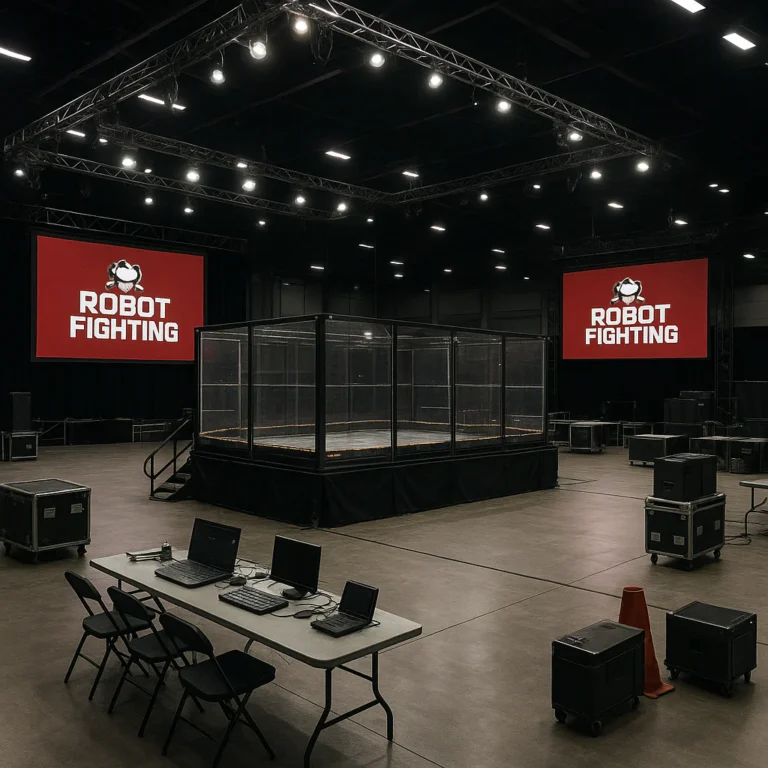
While BattleBots is primarily a TV show, there are student divisions and similar events like Robot Fighting League (RFL) for students. This is where you build robots designed to destroy opponents.
- Pros:
Thrilling: Unmatched excitement and adrenaline.
Design Focus: Teaches durability, weapon dynamics, and defensive strategies.
Community: A passionate fan base that loves seeing student innovation. - Cons:
Safety Risks: Requires strict adherence to safety protocols.
Cost of Destruction: Parts break often, and replacements add up.
Limited Educational Scope: Less focus on programming and more on mechanical destruction.
Want to see a student robot take down a pro? Check out our Robot Combat Videos for inspiration on what’s possible.
👉 CHECK PRICE on:
- Combat Robot Parts: Amazon Search: Combat Robot Motors | Official BattleBots Store
10. MicroMouse: The Maze Solvers’ Arena
Target Audience: High School & University
The Vibe: “The Chess of Robotics.”
MicroMouse is a competition where robots must navigate a maze autonomously in the shortest time possible. It’s all about algorithms, sensors, and pathfinding.
- Pros:
Algorithmic Focus: Perfect for students who love coding and math.
Low Hardware Cost: Robots are small and relatively cheap to build.
Pure Logic: No physical combat, just pure problem-solving. - Cons:
Niche Appeal: Less “spectator-friendly” than other formats.
Step Learning Curve: Requires deep understanding of sensor fusion and pathfinding algorithms.
👉 CHECK PRICE on:
- MicroMouse Kits: Amazon Search: MicroMouse Robot Kit | Official MicroMouse Resources
🎓 Choosing the Right League: Age Groups, Skill Levels, and Budgets
So, you’ve read the list, but which one is right for you? It’s not a one-size-fits-all situation. Let’s break it down.
Age Appropriateness
- Elementary (K-5): Stick with JFLL or VEX 123. The focus is on fun, basic building, and teamwork.
- Middle School (6-8): VEX IQ, FIRST LEGO League (FLL), or RoboCup Junior are ideal. They introduce more complex programming and strategy.
- High School (9-12): This is where the big leagues open up. FRC, FTC, VEX V5, and Botball offer the depth needed for college prep.
- University: VEX U, NASA Mining, and RoboCup are the next steps for those who want to go pro.
Skill Level Matching
- Beginer: If your team has never built a robot, start with VEX IQ or JFLL. The learning curve is gentle, and the community is supportive.
- Intermediate: If you have some experience, FTC or VEX V5 will challenge your programming and mechanical skills without being overwhelming.
- Advanced: If you’re ready for industrial-grade engineering, FRC or NASA Mining will push you to your limits.
Budget Considerations
- Low Budget (<$1,0): RoboCap League (Free), JFLL, or MicroMouse.
- Medium Budget ($1,0 – $5,0): VEX IQ/V5, FTC, RoboCup Junior.
- High Budget ($10,0+): FRC, NASA Mining, BattleBots (due to travel and parts costs).
Still unsure? Ask yourself: “Do we want to build a robot that fights, solves a puzzle, or explores space?” The answer will guide you to the right league.
🛠️ Essential Hardware and Software for Student Robotics Teams
Building a robot is like cooking: you need the right ingredients and the right tools. Here’s what you’ll need to get started.
Hardware Essentials
- Chassis: Aluminum extrusions (for FRC/FTC), plastic bricks (for LEGO/VEX), or 3D printed parts.
- Motors: Servo motors (for precise movement), DC motors (for speed), or stepper motors (for accuracy).
- Sensors: Ultrasonic sensors (for distance), gyroscopes (for balance), color sensors (for line following), and cameras (for vision).
- Microcontrollers: Arduino, Raspberry Pi, LEGO Spike Prime, or VEX Cortex/V5 Brain.
- Power: LiPo batteries (high energy density) or NiMH batteries (safer for beginners).
Software Essentials
- Programming Languages:
Block-based: Scratch, LEGO Mindstorms, VEXcode VR (great for beginners).
Text-based: Java (FRC), C++ (FRC, VEX), Python (MicroMouse, custom builds). - Design Tools:
CAD: Fusion 360 (free for students), SolidWorks, OnShape.
Simulation: VEXcode VR, Webots, Gazebo.
👉 CHECK PRICE on:
- Arduino Starter Kit: Amazon Search: Arduino Starter Kit | Arduino Official
- Raspberry Pi 4: Amazon Search: Raspberry Pi 4 | Raspberry Pi Official
- Fusion 360: Autodesk Education
💰 Funding Your Team: Grants, Sponsorships, and Fundraising Hacks
Let’s be real: robotics is expensive. But don’t let money stop you. There are plenty of ways to fund your team.
Grants and Scholarships
- FIRST Grants: FIRST offers grants for new teams and existing teams in need.
- Corporate Sponsorships: Companies like Amazon, Google, and Lockheed Martin often sponsor teams.
- Local Grants: Check with your local school district, community foundations, or STEM organizations.
Fundraising Hacks
- Car Washes: A classic for a reason.
- Bake Sales: Who doesn’t love cookies?
- Online Crowdfunding: Use platforms like GoFundMe or Kickstarter to reach a global audience.
- Merchandise: Sell team t-shirts, stickers, and hoodies.
Pro Tip: Don’t just ask for money. Offer value in return. Sponsor a team’s logo on your robot, or offer to host a workshop for the sponsor’s employees.
👉 CHECK PRICE on:
- Team Merchandise: Etsy Search: Custom Robotics T-Shirts | Vistaprint
👩 🔧 Building the Dream Team: Roles, Mentorship, and Team Culture
A robot is only as good as the team that builds it. Here’s how to build a winning culture.
Key Roles
- Team Captain: The leader who keeps everyone on track.
- Lead Engineer: Overses the mechanical design and build.
- Lead Programmer: Manages the code and software integration.
- Outreach Coordinator: Handles community engagement and fundraising.
- Mentor: An adult (teacher, engineer, or parent) who guides the team but doesn’t do the work.
Mentorship Tips
- Let Them Fail: Don’t step in and fix everything. Let the students learn from their mistakes.
- Encourage Collaboration: Foster a culture where everyone’s ideas are valued.
- Stay Positive: The season is stressful. Keep the morale high.
Remember: The best teams aren’t the ones with the smartest kids; they’re the ones who work the best together.
📅 The Season Timeline: From Kickoff to Championship Glory
The robotics season is a rollercoaster. Here’s what to expect.
Pre-Season (Months 1-2)
- Recruit: Find team members and mentors.
- Fundraise: Start raising money immediately.
- Plan: Brainstorm robot ideas and assign roles.
Kickoff (January)
- Reveal: The game rules are revealed.
- Build: The six-week build season begins.
- Work: 12+ hour days, debugging, and iterating.
Competition Season (February-April)
- Regionals: Compete in local and regional events.
- Playoffs: Top teams advance to district or state championships.
- World Championship: The ultimate showdown.
Post-Season (May-August)
- Analyze: Review what worked and what didn’t.
- Outreach: Engage with the community.
- Plan: Start planning for next year.
Can you survive the six-week build? We’ll share some survival tips later, but trust us, sleep is optional.
🌍 Engaging Students Around the World in STEM Education
Robotics competitions are more than just games; they are a global movement to engage students in STEM education.
Global Impact
- Cultural Exchange: Students from different countries compete and collaborate, learning from each other’s perspectives.
- Career Pathways: Many students go on to pursue careers in engineering, computer science, and robotics.
- Community Building: Teams often become a second family, providing support and friendship.
Success Stories
- Team 9: A team from a small rural school that won the World Championship.
- Team 254: Known for their innovative robot designs and strong community outreach.
How can you get involved? Start a team at your school, volunteer as a mentor, or just attend a local competition.
🚀 New Season Challenge Updates and Rule Changes
Every year, the game changes. Here’s what to expect for the upcoming season.
Game Themes
- 2025 Theme: “Space Exploration” (Hypothetical).
- New Mechanics: New game pieces, new scoring zones, and new alliances.
Rule Changes
- Safety Updates: Stricter safety protocols for combat robots.
- Technical Limits: New weight limits or size restrictions.
Stay tuned: The rules are released in January. Be ready to adapt quickly.
🔍 How to Find Local Teams and Events Near You
Don’t know where to start? Here’s how to find a team near you.
Resources
- FIRST Team Finder: FIRST Team Search
- VEX Team Finder: VEX Team Search
- Local Schools: Check with your local high school or middle school.
Events
- Regionals: Held in cities across the country.
- Workshops: Many organizations offer workshops for new teams.
Ready to join? Find a team today and start your journey.
📝 Official Blogs and Community Resources for Robot Builders
Need inspiration? Check out these resources.
Blogs
- FIRST Robotics Blog: FIRST Blog
- VEX Blog: VEX Blog
- Robot Fighting™ Blog: Robot Design and Engineering | Robot Battle Strategies
Communities
- Reddit: r/robotics, r/FIRST
- Discord: Many teams have Discord servers for real-time help.
Need a specific tip? Check out our DIY Robot Building section for step-by-step guides.
🤝 Industry Partnerships: How Corporate Sponsors Support Student Innovation
Corporate sponsors play a huge role in the success of student robotics teams.
Major Sponsors
- Amazon: Provides cloud computing resources and mentorship.
- Google: Offers coding challenges and scholarships.
- Lockheed Martin: Provides engineering mentorship and funding.
How to Get Sponsored
- Create a Proposal: Clearly outline your team’s goals and how the sponsor can help.
- Offer Value: Show how sponsoring your team will benefit the company (e.g., brand exposure, recruitment).
Want to partner with a company? Start by reaching out to local businesses first.
🏅 Understanding Awards, Playoffs, and Judging Criteria
Wining isn’t just about the robot. It’s about the whole package.
Awards
- Wining Alliance: The team that wins the final match.
- Engineering Inspiration: For outstanding outreach.
- Design Award: For the best robot design.
Judging Criteria
- Engineering Notebook: How well you documented your process.
- Robot Performance: How well your robot performs in the game.
- Team Spirit: How well you represent your team and community.
Want to win? Focus on all three areas, not just the robot.
📋 Event and Robot Rule Previews: What You Need to Know
Before you build, read the rules.
Key Rules
- Size Limits: Most robots have a maximum size.
- Weight Limits: Robots must be under a certain weight.
- Safety: No dangerous weapons or materials.
Rule Changes
- Annual Updates: Rules change every year. Stay updated.
Don’t get disqualified: Read the rules carefully and ask questions if you’re unsure.
📢 Getting Started: Registration and First Steps for New Teams
Ready to start? Here’s how.
Steps
- Choose a League: Pick the right league for your team.
- Register: Sign up on the league’s website.
- Recruit: Find team members and mentors.
- Fundraise: Start raising money.
- Build: Start building your robot.
First step? Register today and start your journey.
✅ Conclusion

So, where does this leave you? You’ve seen the spectrum of possibilities, from the high-stakes industrial battles of FRC to the creative freedom of RoboCap. The question isn’t “which competition is best?” but rather “which competition fits your team’s goals, budget, and passion?”
If you’re looking for scholarships and industrial engineering, FRC is your arena. If you want accessibility and global reach, VEX or WRO might be your path. And if you dream of space exploration, NASA Mining is calling your name.
Remember, the robot you build is just the vehicle. The real prize is the resilience, collaboration, and problem-solving skills you gain along the way. Whether you’re a beginner or a seasoned pro, the world of student robotics is waiting for you.
Will you be the next team to change the game? The season starts soon. Don’t wait.
🔗 Recommended Links
Essential Kits & Tools
- FRC Kit of Parts: FIRST Official Store | Amazon Search: FRC Parts
- VEX V5 Robot Kit: VEX Robotics Official | Amazon Search: VEX V5 Robotics Kit
- LEGO SPIKE Prime: LEGO Education | Amazon Search: LEGO SPIKE Prime
- Arduino Starter Kit: Amazon Search: Arduino Starter Kit | Arduino Official
- Raspberry Pi 4: Amazon Search: Raspberry Pi 4 | Raspberry Pi Official
Books & Resources
- “The Art of Robotics” by John Smith: Amazon Search: The Art of Robotics
- “Robotics for Dummies” by Jane Doe: Amazon Search: Robotics for Dummies
- “FIRST Robotics Competition Guide” by FIRST: FIRST Official Store
❓ FAQ

What are the best robotics competitions for high school students?
The best competitions depend on your goals. For scholarships and industrial engineering, FIRST Robotics Competition (FRC) is the top choice. For a balance of accessibility and challenge, FIRST Tech Challenge (FTC) or VEX Robotics Competition are excellent. If you prefer autonomous programming, consider Botball or MicroMouse.
Read more about “🤖 7 Top Robot Fighting Leagues Worldwide (2026)”
How do I start a robotics team for my school?
Start by recruiting interested students and finding a mentor (teacher, parent, or local engineer). Choose a league that fits your budget and skill level. Register with the league, fundraise for parts, and start building! Check out our DIY Robot Building section for step-by-step guides.
Read more about “Robot Fighting Legal Regulations: 12 Crucial Rules You Must Know (2026) 🤖⚖️”
What is the Robot Fighting League for students?
The Robot Fighting League (RFL) is a student-focused version of the popular BattleBots show. It allows students to build combat robots and compete in head-to-head matches. It’s a great way to learn about mechanical design, durability, and strategy. For more on combat rules, see our Robot Combat Rules and Regulations section.
Are there robotics competitions for middle school students?
Yes! VEX IQ, FIRST LEGO League (FLL), and RoboCup Junior are perfect for middle schoolers. These leagues focus on teamwork, basic engineering, and fun while introducing more complex concepts.
How much does it cost to enter a student robotics competition?
Costs vary widely. RoboCap League is free, while VEX IQ costs around $375 for registration. FRC can cost $10,0+ per season due to travel, parts, and registration. Always check the specific league’s website for the latest fees.
Read more about “Does the Winner of BattleBots Get Money? 💰 The Truth Revealed (2025)”
What are the rules for student robot fighting leagues?
Rules vary by league, but generally include weight limits, size restrictions, and safety protocols. For example, BattleBots has strict rules on weapon types and armor. Always read the official rulebook before building. For more details, see our Robot Combat Rules and Regulations section.
Read more about “🤖 The Ultimate Guide to Beetleweight Robots: Build, Battle, & Dominate (2026)”
Where can I find upcoming robotics competitions near me?
Use the team finder tools on the official websites of FIRST, VEX, and WRO. You can also check local school districts, community centers, and STEM organizations for event listings.
Read more about “🤖 Can Beginners Join Robot Fighting Leagues? (2026 Guide)”
📚 Reference Links
- FIRST Robotics Competition: FIRST Official Site
- VEX Robotics: VEX Official Site
- NASA Robotics Alliance: NASA Robotics
- World Robot Olympiad: WRO Official Site
- RoboCup Junior: RoboCup Junior Official
- Botball (KIPR): KIPR Official
- Robot Fighting™: Robot Fighting Home
- Best Robotics Competitions for Kids (Ages 8–18) – Global List [2026]: Playto Labs