Support our educational content for free when you buy through links on our site. Learn more
🤖 12 Ways to Boost Robot Combat Fan Engagement

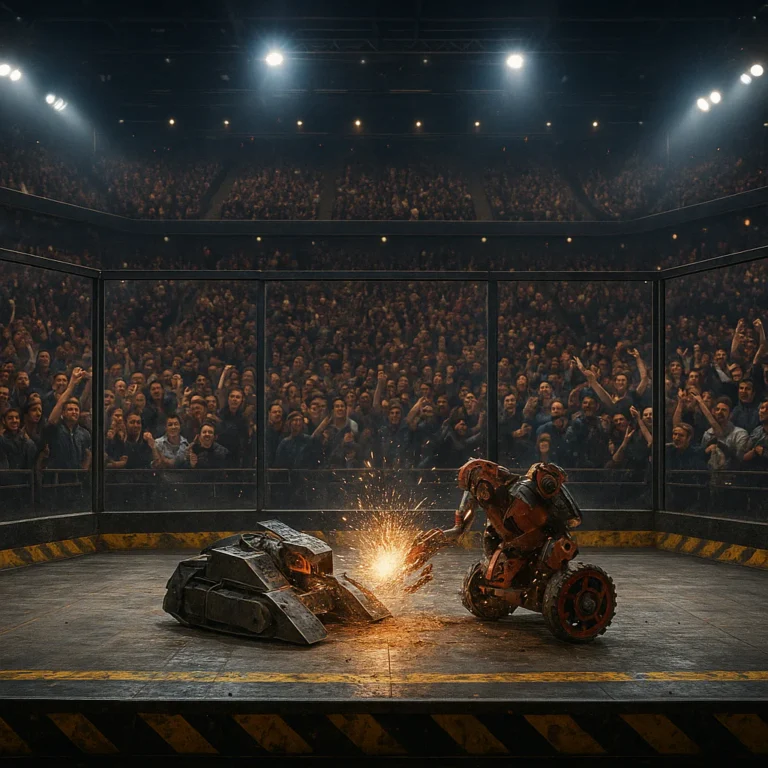
Robot combat fan engagement grows when people can understand the fight, connect with the builders, and take part in the community. Give fans more than a spectacle: offer clear explanations, welcoming events, and ways to keep the conversation going after the final bell.
We’ve seen how one simple builder explanation can change a match from “two robots smashing around” into a story about strategy, engineering, and a team’s split-second decisions. That’s the sweet spot: make the action exciting, then help fans see what makes it special.
Key Takeaways
- Explain the robots and rules so newcomers can follow the action without an engineering degree.
- Make participation easy and safe with polls, Q&As, meet-and-grets, and clearly defined fan activities.
- Tell the builders’ stories through interviews, behind-the-scenes content, and post-match analysis.
- Use social media and livestreams to build community, not just collect views.
- Measure what matters: returning fans, useful feedback, and meaningful participation—not likes alone.
Table of Contents
- ⚡ Quick Tips and Facts: Robot Combat Fan Engagement
- 🤖 What Robot Combat Fan Engagement Really Means
- 📜 How Robot Fighting Built Its Fan Community
- From DIY robot wars to televised competitions
- How BattleBots and local leagues grew their audiences
- 🎯 Why Fan Engagement Matters to Robot Combat
- 🧑 🤝 🧑 Understanding Robot Combat Fans
- Newcomers, builders, families, and longtime fans
- What audiences want from events and online communities
- 🚀 12 Ways to Increase Robot Combat Fan Engagement
- 1. Make the robots and teams easy to meet
- 2. Explain the rules, strategy, and robot technology
- 3. Turn live events into interactive experiences
- 4. Build meaningful social media conversations
- 5. Share behind-the-scenes content
- 6. Invite fans to vote and participate
- 7. Create memorable team and robot identities
- 8. Welcome families and younger fans
- 9. Support fan art, cosplay, and community creativity
- 10. Offer accessible livestreams and event coverage
- 11. Keep fans engaged between competitions
- 12. Make merchandise and memberships part of the community
- 📣 Social Media and Digital Community Strategy
- Choosing channels: YouTube, Instagram, TikTok, Facebook, and Discord
- Content ideas for posts, video, livestreams, and newsletters
- Moderation, safety, and respectful fan discussion
- 🎟️ Creating a Better Live Robot Combat Experience
- Before the event: tickets, schedules, and audience expectations
- At the venue: sightlines, commentary, sound, and accessibility
- After the fights: meet-and-grets, photos, and follow-up
- 📺 Livestreams, Broadcasts, and Robot Combat Storytelling
- Making matches easy to follow on screen
- Commentary that explains tactics without slowing the action
- Short-form highlights and replay-friendly content
- 🛠️ Fan Engagement for Builders, Teams, and Event Organizers
- Builder outreach, pit access, and technical demonstrations
- Sponsorships and community partnerships
- Youth STEM programs and educational outreach
- 📊 Measuring Robot Combat Fan Engagement
- Useful metrics: attendance, watch time, shares, and return visits
- Using surveys and fan feedback to improve events
- ⚠️ Common Fan Engagement Mistakes to Avoid
- 🔮 The Future of Robot Combat Fan Communities
- ❓ Frequently Asked Questions About Robot Combat Fan Engagement
- How do robot combat events attract new fans?
- How can fans support their favorite robot teams?
- What makes a robot fighting livestream engaging?
- How can organizers engage fans between events?
- Conclusion
- Recommended Links
- Reference Links
⚡ Quick Tips and Facts: Robot Combat Fan Engagement
The best robot-combat communities make fans feel like more than spectators. Give people something to watch, something to learn, and a way to take part. That might mean a live match, a builder Q&A, a fan poll, or simply a clear explanation of why one robot’s weapon stopped working.
If you’re new to the sport, start with our guide to robot fighting, then explore Robot Battle Events and Robot Combat Videos to see how the action and community fit together.
| Fan-engagement idea | Why it works | A practical first step |
|---|---|---|
| Explain the robots | Technical context makes a fight easier to follow | Introduce each robot’s weapon, armor, and strategy before a match |
| Give fans a voice | Participation creates a reason to return | Run a prediction poll or invite questions for builders |
| Show the people behind the machines | Builders give fans a story to follow | Share a short team profile or pit-area interview |
| Make events welcoming | Clear information reduces first-timer anxiety | Publish schedules, accessibility details, and event rules |
| Keep the conversation going | The community shouldn’t vanish after the final bell | Post highlights, results, and next-event details |
Quick facts
- Robot combat fan engagement can happen in the arena, online, and between events.
- A fan poll is not the same as a competition vote: explain whether it is for fun or affects an official result.
- Behind-the-scenes stories can build interest without revealing sensitive design or safety information.
- BattleBots promotes fan discussions around favorite highlights and championship outcomes, while its FaceOffs series pairs fights with builder stories and behind-the-scenes footage.
- Best starting point for organizers: ask fans what they want to understand, see, or do next—and make the answer visible.
🤖 What Robot Combat Fan Engagement Really Means
Fan engagement is the set of experiences that help people connect with robot combat and its community. It includes watching a match, learning how a robot works, cheering for a team, meeting builders, sharing a clip, or returning to the next event.
That connection matters because a robot fight is more than a machine striking another machine. Fans follow rivalries, clever engineering, comeback stories, and the humans making split-second decisions from behind the barriers. Our Robot Design and Engineering and Robot Battle Strategies guides offer useful context for those stories.
| Engagement level | What fans do | Example |
|---|---|---|
| Discover | Find the sport and understand the basics | Watch an introductory match video |
| Follow | Choose teams, robots, or builders to support | Track a team’s progress through a season |
| Participate | Ask questions, attend events, or join discussions | Submit a question during a livestream |
| Contribute | Help create or sustain the community | Volunteer, build, make fan art, or share event coverage |
| Return | Keep up with the sport over time | Watch recaps and attend another event |
Engagement is not just a view count. A video can rack up views while leaving viewers unsure what happened. Better signs include people asking informed questions, attending again, sharing clips with context, and welcoming newcomers into the conversation.
Engagement for fans, builders, and organizers
- Fans want a fun, understandable experience and a way to show enthusiasm.
- Builders want their work and decisions understood, not reduced to “that robot went boom.”
- Organizers need safe, accessible events that earn trust and bring audiences back.
- Sponsors and community partners benefit when participation feels genuine rather than like a billboard with wheels.
These goals overlap, but they are not identical. A builder may want to explain an unusual weapon design; a first-time fan may just want to know which robot is winning. Good event communication serves both.
📜 How Robot Fighting Built Its Fan Community
Robot combat grew through a mix of hands-on engineering, competition, spectacle, and storytelling. The format is unusually good at creating a shared moment: a countdown, a clash, a sudden malfunction, and an audience reacting together. The same match can delight a mechanical engineer and a kid who simply came to see a spinning robot. 🤖
From DIY robot wars to televised competitions
At its roots, the sport is a practical engineering challenge: build a machine, manage its power and movement, protect vulnerable components, and compete under a ruleset. That blend gives robot combat a built-in educational angle without requiring the audience to arrive with an engineering degree.
Rules matter to the fan experience, too. Weight classes, weapon restrictions, arena design, and match judging shape what competitors can build and how fights unfold. For background, explore Robot Combat Rules and Regulations alongside the official BattleBots site.
How BattleBots and local leagues grew their audiences
Televised and streaming competitions can introduce the sport to a broad audience; local events give fans a closer connection to builders and the machines. These are complementary experiences, not rivals. A polished broadcast can deliver dramatic storytelling, while a community event lets spectators see the scale, craftsmanship, and careful preparation up close.
BattleBots’ official site describes FaceOffs as a YouTube-exclusive tournament featuring established robots and newcomers, with builder stories and behind-the-scenes segments. Its Destruct-A-Thon presents robot combat as a live, family-friendly show in Las Vegas. Those examples illustrate two different engagement routes: watch online or experience the spectacle in person.
The details of programs, availability, and event schedules can change. Check the organizer’s official channels before sharing dates or access information.
🎯 Why Fan Engagement Matters to Robot Combat
A lively fan community helps the sport grow, but it also improves the experience for people already involved. Fans who understand what they’re seeing can appreciate strategic wins, not just dramatic knockouts. Builders who can explain their work help audiences connect engineering choices to match outcomes.
| Benefit | What it can improve |
|---|---|
| Clearer storytelling | Fans understand the stakes and remember teams |
| More repeat attendance | Visitors have a reason to come back |
| Better online discussion | Viewers share context, not just reaction |
| Stronger local community | Builders, volunteers, schools, and fans meet |
| More useful feedback | Organizers learn where new audiences get stuck |
The caveat: engagement should never come at the cost of safety, fairness, or honest communication. A fan vote can choose a favorite entrance song; it should not be presented as an official judging result unless the rules explicitly say so. For competitive context, see Robot Battle Strategies.
🧑 🤝 🧑 Understanding Robot Combat Fans
Robot combat audiences are not one big, uniform crowd. Some fans love the engineering. Others come for the drama, the teams, the spectacle, or a shared family outing. If organizers try to speak to only one group, they risk making the sport feel either too technical or too shallow.
Newcomers, builders, families, and longtime fans
| Audience | Likely question | Helpful response |
|---|---|---|
| First-time fans | “What am I looking at?” | Explain robot names, weapons, match format, and basic rules |
| Engineering fans | “Why did that design work?” | Share technical breakdowns and post-match analysis |
| Families | “Is this appropriate and easy to follow?” | Explain event format, safety boundaries, accessibility, and age guidance |
| Builders | “Will my work be represented accurately?” | Invite team input and credit design contributions |
| Longtime fans | “What’s new this season?” | Offer updates, strategy discussion, and fresh matchups |
| Online viewers | “Where do I watch and join in?” | Provide reliable schedules, official links, and clear moderation rules |
What audiences want from events and online communities
Fans often value the same basics: clear information, a welcoming tone, a good view, and a reason to care about the next match. They also want to know what is official and what is just speculation.
A useful audience check is to ask three questions after an event:
- What was the most exciting moment?
- What was confusing or hard to see?
- What would make you come back or watch again?
Keep answers anonymous if that helps people respond honestly. Then publish at least one change made in response. A feedback form that vanishes into a digital black hole is not engagement; it’s paperwork wearing a robot costume.
🚀 12 Ways to Increase Robot Combat Fan Engagement
These ideas work for local leagues, livestreams, clubs, and major productions. Choose a few that fit your budget and audience; doing three well beats launching twelve and abandoning them after a week.
1. Make the robots and teams easy to meet
Introduce each robot with a short, consistent profile:
- Robot and team name
- Main weapon and movement style
- A simple design fact
- One team detail or fun personality note
- A link to the match schedule or team’s official page
Use accurate descriptions and get team approval before publishing technical claims. A builder might describe a weapon as a “vertical spinner,” while a general audience may need “a spinning blade that hits upward.” Use both: precise term first, plain-language explanation second.
2. Explain the rules, strategy, and robot technology
New fans do not need a full engineering lecture before the opening bell. They do need enough context to understand why a robot is turning, retreating, or trying to line up a hit.
A simple explainer can cover:
- What each robot is designed to do.
- What the match objective is.
- What the visible hazards or safety boundaries mean.
- How judges or officials determine a result when a match ends without a knockout.
- Where to read the event’s official rules.
Link explanations to the organizer’s current rules and our Robot Combat Rules and Regulations category. Never assume rules are identical across leagues.
3. Turn live events into interactive experiences
Participation does not have to mean handing fans control of a dangerous machine. Safer, useful options include:
- Pre-match predictions
- Audience questions for builders
- Robot-name or mascot votes
- Family-friendly design challenges
- Trivia between matches
- A fan-choice award clearly separate from official competition judging
In our experience, the strongest activities have simple rules, a short time window, and a visible result. “Submit a question now; we’ll ask one team after the next fight” works better than a vague invitation to “get involved.”
4. Build meaningful social media conversations
Ask questions that invite a real answer, not just a like. For example:
- “Which team made the smartest adjustment?”
- “What would you like the builder to explain?”
- “What was the turning point in this match?”
BattleBots’ official website encourages fans to discuss favorite highlights and championship outcomes. That is a useful model, but local organizations should tailor the conversation to their own teams and audience. Keep posts linked to official results and moderate harassment promptly.
5. Share behind-the-scenes content
A short builder interview can answer the questions that a fight alone cannot: What failed during testing? Why choose this weapon? What changed after the last event?
Behind-the-scenes access should be agreed with teams, and organizers should avoid exposing private information or unsafe handling practices. For technical inspiration, direct curious readers to Robot Design and Engineering.
6. Invite fans to vote and participate
Use voting for clearly defined, low-stakes choices:
- Fan-favorite robot
- Best team entrance
- Most inventive repair
- Crowd-favorite highlight
State when voting opens and closes, how votes are counted, and whether results are official. Do not blur audience opinion with match judging. That small distinction protects both the sport’s integrity and the fun.
7. Create memorable team and robot identities
Names, colors, logos, and team stories help people remember who they’re cheering for. Encourage teams to tell authentic stories rather than forcing everyone into a manufactured character. A robot can have personality without pretending its builder is a cartoon villain.
8. Welcome families and younger fans
Make family information easy to find:
- Event length and expected breaks
- Sound and sensory considerations
- Venue accessibility
- Safety rules and viewing boundaries
- Age guidance from the event organizer
- Whether food, rest areas, or quiet spaces are available
For youth activities, prioritize supervised, age-appropriate demonstrations and established safety procedures. Oregon State University’s student-organization page is not a robot-combat resource, but its description of a “welcoming space” for students connecting and finding support is a useful general reminder: community access matters as much as the main event. See Oregon State University Experiential Learning & Activities.
9. Support fan art, cosplay, and community creativity
Fan-made posters, costumes, robot sketches, and match recaps can make the community feel co-created. Set clear guidelines for permission, attribution, safety, and use of team or league logos. Celebrate creativity without implying that fan work is official merchandise or an official team design.
10. Offer accessible livestreams and event coverage
A livestream should make the action understandable even when the camera misses a detail. Useful features include:
- A readable match schedule and results
- Clear audio and commentary
- Captions where available
- Robot name graphics
- Replays of pivotal moments
- Links to official rules and team profiles
For more video ideas and match coverage, explore Robot Combat Videos.
11. Keep fans engaged between competitions
The off-season is a chance to show repairs, testing, team changes, and lessons learned. Try a sustainable rhythm rather than flooding every channel:
- Weekly or monthly team spotlight
- Match recap with one strategic takeaway
- Builder question-and-answer session
- Calendar update when dates are confirmed
- Fan-art or community feature with permission
12. Make merchandise and memberships part of the community
Merchandise can help fans show support, but it is only one option. BattleBots maintains an official shop for branded apparel and accessories; fans should check official channels for current availability.
Make participation inclusive by also offering free ways to connect: mailing lists, public discussion spaces, volunteer opportunities, and event updates. A community should never feel like an admission fee in disguise.
📣 Social Media and Digital Community Strategy
A strong digital community starts with a clear purpose. Decide whether a channel is for schedule updates, match discussion, builder education, video, or all of those—and make the mix easy to recognize.
Choosing channels: YouTube, Instagram, TikTok, Facebook, and Discord
| Channel | Good use | Watch out for |
|---|---|---|
| YouTube | Full matches, livestreams, recaps, tutorials | Long gaps without updates |
| Photos, short video, team snapshots | Important information hidden in a temporary post | |
| TikTok | Fast highlights and short explainers | Clips that lose necessary match context |
| Event pages, community updates, local groups | Unmoderated comment threads | |
| Discord | Ongoing fan and builder discussion | Confusing channels or inconsistent moderation |
| Email newsletter | Reliable schedules, results, and announcements | Sending too often or burying key details |
Choose platforms based on where your audience already participates. You do not need to be everywhere. A well-moderated community on two channels is healthier than six abandoned accounts.
Content ideas for posts, video, livestreams, and newsletters
A balanced content mix can include:
- Explain: match rules, robot parts, or strategy
- Introduce: teams, volunteers, announcers, and builders
- Show: highlights, repairs, and preparation
- Ask: predictions, questions, and fan feedback
- Report: schedules, verified results, and changes
For instance, Discovery’s “The Best KO Moments on BattleBots” video offers a fast, exciting highlight reel. It can help newcomers understand why knockout moments attract attention; a follow-up explainer can add the engineering and strategic context that a montage cannot provide on its own.
Moderation, safety, and respectful fan discussion
Publish community guidelines before a problem appears. A practical policy should cover personal attacks, threats, spam, misinformation, and private information. Moderators should distinguish energetic disagreement from harassment.
When a result is controversial:
- Link the official result or applicable rule.
- Explain what is known and what remains uncertain.
- Give teams and officials time to respond.
- Remove abuse, not good-faith questions.
- Correct mistakes publicly.
That approach builds more trust than deleting every uncomfortable comment or letting a thread turn into a wrecking ball with Wi-Fi.
🎟️ Creating a Better Live Robot Combat Experience
Live competition offers a special kind of connection: the crowd feels the impacts, hears the arena react, and sees the teams that built the machines. But excitement needs good logistics. Fans cannot cheer confidently if they do not know where to sit, when matches begin, or what they are allowed to do.
Before the event: tickets, schedules, and audience expectations
Before publishing event information, confirm:
- Date, venue, and schedule
- Ticketing and entry instructions
- Accessibility details and venue policies
- Whether the schedule may change
- Official event rules and spectator boundaries
- Contact information for questions
Use the event organizer’s official channels for current details. For event ideas and coverage, visit Robot Battle Events.
At the venue: sightlines, commentary, sound, and accessibility
A useful live experience combines clear views with clear explanations. Announcers should identify robots, explain what just happened, and keep technical detail in proportion to the pace of the action. Organizers should also communicate safety boundaries and accessibility arrangements before the crowd arrives.
Builder perspective: do not let commentary invent technical explanations when a team can verify the facts. Fan perspective: do not make every announcement so technical that newcomers feel locked out. A good announcer translates without talking down.
After the fights: meet-and-grets, photos, and follow-up
Post-match activities can turn a fun afternoon into a lasting connection:
- Offer a supervised, clearly organized meet-and-greet if teams agree.
- Tell fans which robots or teams are available to meet.
- Share results and approved photos afterward.
- Thank volunteers, builders, and attendees.
- Announce the next confirmed event or reliable update channel.
Never assume every robot is safe to approach or touch. Follow team and organizer instructions, and keep fans outside marked safety zones.
📺 Livestreams, Broadcasts, and Robot Combat Storytelling
A broadcast has to tell two stories at once: the action in the arena and the engineering decisions behind it. Do that well and viewers understand not just who won, but why the match turned.
Making matches easy to follow on screen
Useful broadcast elements include:
- Consistent robot names and team labels
- A clear match card before the fight
- A visible timer or status display where appropriate
- Replay of important action
- Result confirmation from the organizer
- On-screen links to current rules and event information
Commentary that explains tactics without slowing the action
A simple commentary pattern works well:
- Identify: name the robots and teams.
- Describe: explain what the audience can see.
- Interpret: offer a tactical explanation, clearly marked as analysis.
- Verify: confirm technical details with teams or officials when needed.
- Recap: summarize the decisive moment after the match.
The distinction between verified fact and commentator interpretation matters. If a weapon stopped spinning, that is observable. The reason it stopped may require team confirmation.
Short-form highlights and replay-friendly content
Short clips can bring new viewers in, but the caption should identify the teams and explain the moment. Link highlights to full matches or recaps when possible, and respect rights and permissions for footage. The best clip answers one question—“What just happened?”—and gives viewers a reason to ask the next.
🛠️ Fan Engagement for Builders, Teams, and Event Organizers
Builders are not just competitors; they are the sport’s most credible guides to how the machines work. Organizers can help them share that expertise without adding excessive workload.
Builder outreach, pit access, and technical demonstrations
Start with low-lift formats:
- A short, recorded robot introduction
- A post-match question from the audience
- A labeled, non-operational component display
- A written explanation of one design choice
- A supervised pit visit where the event permits it
Do not invite spectators into restricted work areas unless organizers and teams have approved access and safety procedures. Our Robot Design and Engineering resources can help frame technical topics for different audiences.
Sponsorships and community partnerships
Good partnerships support the event and add value for fans. Examples include educational demonstrations, volunteer support, accessible event materials, or team-building activities. Disclose sponsorships clearly, and keep commercial messages separate from official rules and results.
Youth STEM programs and educational outreach
Robot combat can spark interest in mechanics, electronics, programming, and teamwork. Educational outreach should focus on safe, age-appropriate learning, not on encouraging unsupervised weapon construction. Schools, clubs, and organizers should follow their institution’s policies and applicable safety guidance.
Oregon State University’s student organizations and experiential learning page describes campus opportunities and community spaces, but it does not provide robot-combat-specific guidance. Treat it as an example of general student engagement, not evidence about robot leagues or engineering competition.
📊 Measuring Robot Combat Fan Engagement
A useful measurement plan starts with a goal. “Get more engagement” is too vague; “increase the share of first-time attendees who return” is something an organizer can investigate.
Useful metrics: attendance, watch time, shares, and return visits
| Goal | Possible metric | What it can tell you |
|---|---|---|
| Help newcomers understand | Survey responses or question themes | Which rules or terms need explanation |
| Improve event experience | Repeat attendance or post-event feedback | Whether the experience earned another visit |
| Grow video viewing | Watch time and returning viewers | Whether content holds attention over time |
| Encourage community activity | Meaningful comments, questions, and contributions | Whether fans are participating, not just scrolling |
| Improve event access | Accessibility-related feedback and resolved issues | Whether information and venue arrangements are working |
Metrics are signals, not verdicts. A spike in views may come from one dramatic clip; it does not prove long-term community growth. Compare data across similar events, protect personal information, and explain how you use surveys or analytics.
Using surveys and fan feedback to improve events
Keep surveys short and action-focused. Ask what fans enjoyed, what confused them, and what they want next. Then share a brief “you said, we changed” update. Fans do not expect every suggestion to be adopted; they do expect a sign that someone read it.
⚠️ Common Fan Engagement Mistakes to Avoid
- Using unexplained jargon: define terms before or during the action.
- Promising access you cannot deliver: verify dates, streams, meet-and-grets, and team participation.
- Treating every social metric as success: look for repeat interest and useful conversation.
- Mixing fan votes with official results: label each clearly.
- Ignoring accessibility and safety: publish practical information before the event.
- Posting highlights without context: identify teams and link to full coverage.
- Overloading builders: coordinate interviews and content requests around competition responsibilities.
- Leting harassment masquerade as rivalry: set and enforce discussion standards.
🔮 The Future of Robot Combat Fan Communities
Robot combat can grow through richer video, more accessible event information, fan-led storytelling, and stronger links between builders and audiences. Technology helps, but the human layer remains the draw: teams make hard choices, repair under pressure, and learn from the next fight.
The most promising future is not simply bigger crowds. It is more informed, welcoming, and connected communities—where a first-time viewer can follow the action, a builder can share expertise, and a longtime fan can still find something new.
How to keep engagement authentic as the audience grows
- Put safety and accurate information ahead of hype.
- Credit builders, volunteers, and fan contributors.
- Make participation accessible without requiring purchases.
- Explain how polls, judging, and competition rules differ.
- Use community feedback to improve the next event, not just promote it.
❓ Frequently Asked Questions About Robot Combat Fan Engagement
How can fans get involved in robot combat events?
Start by checking the event organizer’s official website or social channels for attendance, volunteer, and participation information. Fans can also support teams online, ask questions during approved Q&As, share event coverage, or help with community activities. Follow venue and organizer safety instructions; never enter restricted areas or touch a robot without explicit permission.
Where can fans watch Robot Fighting League matches live?
Check Robot Fighting League and event-organizer channels for current livestream announcements. Availability can vary by event, so rely on official pages rather than assuming every match is streamed. You can also browse Robot Combat Videos for available coverage and highlights.
What makes robot combat competitions exciting for fans?
It is the combination of imediate action and real engineering stakes. A team may have a clever strategy, but one impact can change the match. Fans also connect with the builders, rivalries, repairs, and design choices behind each robot. Highlight reels show the spectacle; interviews and analysis explain why a moment mattered.
How can fans vote for their favorite combat robots?
Use polls or voting features only when an organizer provides them, and check what the vote affects. A fan-favorite award is different from an official match result. Organizers should publish the voting window and counting method so the process stays clear and fair.
Are there ways to meet robot builders at events?
Some events offer builder Q&As, meet-and-grets, demonstrations, or supervised pit access. Check the event’s official schedule, since availability and safety rules vary. Be considerate of teams preparing for a match, and ask before taking photos or handling any equipment.
What interactive activities are available for robot combat fans?
Depending on the event, activities may include predictions, trivia, fan-choice awards, builder questions, educational demonstrations, and team introductions. The best activities are clearly explained and do not interfere with competition safety or official judging.
How can fans join the Robot Fighting League community?
Follow official Robot Fighting League and event-organizer channels, attend public events, and join discussion spaces linked by those organizations. Use official announcements to verify schedules and community guidelines. You can also follow Robot Battle Events for event coverage and Robot Design and Engineering to learn more about the machines.
What should organizers measure to know if fan engagement is working?
Measure outcomes tied to clear goals: returning attendance, livestream watch time, useful questions, survey feedback, or participation in approved activities. No single metric tells the whole story. Pair numbers with feedback, protect personal information, and tell fans what changed because of their input.