Support our educational content for free when you buy through links on our site. Learn more
Is Robot Fighting Real? 🤖 The Truth Behind the Metal Mayhem (2026)

Ever wondered if those jaw-dropping robot battles on TV are more than just Hollywood spectacle? Are the sparks, crashes, and flying debris actually happening live, or is it all CGI wizardry? At Robot Fighting™, we’ve been deep in the trenches—building, battling, and cheering on these mechanical gladiators for years. Spoiler alert: Robot fighting is very real, and the science, engineering, and sheer adrenaline behind it might surprise you.
In this article, we’ll take you on a wild ride through the history of combat robotics, dissect the anatomy of these destructive machines, and reveal the iconic bots that have defined the sport. Plus, if you’re itching to get your hands dirty, we’ll guide you step-by-step on how to build your own battle-ready robot and stay safe while doing it. Curious about the future? We’ll also peek into how AI and autonomous tech are reshaping the arena. Ready to separate fact from fiction? Let’s dive in!
Key Takeaways
- Robot fighting is a legitimate, high-tech sport with real machines battling inside reinforced arenas.
- The sport spans multiple weight classes—from tiny 1lb bots to 250lb heavyweights smashing with incredible force.
- Iconic bots like Tombstone and Bite Force have proven the sport’s authenticity with jaw-dropping destructive power.
- Beginners can start building combat robots today using kits like the FingerTech Viper, learning essential engineering skills.
- Safety is paramount: battles happen inside Lexan BattleBoxes to protect drivers and spectators from flying debris.
- The future is bright with AI and autonomous combat bots entering the fray, pushing the limits of what’s possible.
Ready to see the sparks fly for real? Keep reading to uncover everything you need to know about the thrilling world of robot fighting!
Is it just movie magic? Are those sparks flying on your TV screen actually the result of clever CGI and a team of overworked animators in a basement? We get asked this all the time at Robot Fighting™. Whether you’ve spent your Friday nights screaming at the TV during BattleBots or you’re a newcomer wondering if Real Steel was a documentary, we’re here to pull back the curtain.
Spoiler alert: The smell of ozone and the sound of shattering AR500 steel are very, very real. But how does it all work? And can you actually build one of these mechanical monsters yourself? Stick around, because by the end of this guide, you’ll know exactly how to join the ranks of the metal-mashing elite.
⚡️ Quick Tips and Facts
- ✅ Yes, it’s real! Robot combat is a legitimate sport involving remote-controlled (and occasionally autonomous) machines designed to disable or destroy one another.
- ✅ Weight Classes Matter: Battles range from “Antweights” (1 pound) to “Heavyweights” (250 pounds).
- ✅ Physics is King: The most dangerous robots use “Kinetic Energy”—storing power in spinning weapons to deliver hits equivalent to a car crash.
- ❌ It’s Not Just “Remote Control Cars”: These are high-end engineering marvels using brushless motors, lithium-polymer (LiPo) batteries, and aerospace-grade materials.
- ✅ Safety First: Real robot fighting happens inside a “Lexan” (polycarbonate) box to prevent flying shrapnel from turning the audience into Swiss cheese.
- Fact: The hit show BattleBots has been aired in over 150 countries.
- Fact: A heavyweight spinner like Tombstone can rotate its blade at over 250 mph.
Table of Contents
- ⚡️ Quick Tips and Facts
- 🛠 The Evolution of Metal Mayhem: A History of Combat Robotics
- 🤖 Robot Fighting Is Here | REAL STEEL In Real Life
- 🏗 The Anatomy of a Destroyer: What Makes a Combat Robot?
- ⚖️ From Ants to Giants: Understanding Weight Classes
- ⚔️ 10 Most Iconic BattleBots That Proved the Sport is Real
- 🎮 How to Get Started: Your Path to the BattleBox
- 🛡 Safety and the “BattleBox”: Why You Can’t Do This at Home
- 📈 The Future of the Sport: AI and Autonomous Combat
- 🏁 Conclusion
- 🔗 Recommended Links
- ❓ FAQ
- 📚 Reference Links
🛠 The Evolution of Metal Mayhem: A History of Combat Robotics

Before we had the high-definition carnage of modern television, robot fighting was a grassroots movement born in the smoky underground of 1990s San Francisco. It all started with Marc Thorpe, a designer at Lucasfilm, who had a simple, brilliant idea: what if we made remote-controlled cars fight to the death?
The first “Robot Wars” event took place in 1994, and it wasn’t long before the concept exploded. We saw the rise of legendary builders who transitioned from hobbyists to household names. The sport survived network cancellations, legal battles over intellectual property, and the transition from NiCad batteries to the high-output LiPo powerhouses we use today.
What started as “wedges on wheels” has evolved into a sophisticated engineering discipline. Today, organizations like NHRL (National Havoc Robot League) and BattleBots represent the pinnacle of this evolution, proving that the desire to see machines smash each other is a universal human trait.
🤖 Robot Fighting Is Here | REAL STEEL In Real Life
You’ve seen the movie Real Steel, right? Hugh Jackman coaching a humanoid robot to boxing glory? While we aren’t quite at the “Shadow Mode” humanoid boxing stage yet (mostly because legs are incredibly difficult to keep upright when a 250-pound horizontal spinner is aiming for your shins), the spirit is identical.
In the real world, “Real Steel” manifests as Combat Robotics. These aren’t just toys; they are custom-engineered gladiators. When you see a robot like Minotaur or Witch Doctor hit an opponent, the force is enough to send a quarter-ton of steel flying ten feet into the air.
We often get asked: “Why aren’t they all humanoids?” The answer is simple: Physics. A low-profile, wheeled box with a massive spinning disc is the most efficient way to deliver destructive energy. However, with the rise of companies like Boston Dynamics and the increasing interest in bipedal movement, the gap between Hollywood and the arena is shrinking every year.
🏗 The Anatomy of a Destroyer: What Makes a Combat Robot?
Building a fighting robot is like building a race car that is designed to be crashed. Here is what’s under the hood of a typical modern combatant:
| Component | Purpose | Real-World Example/Brand |
|---|---|---|
| Chassis | The “skeleton” that holds everything together. | AR500 Steel or 6061 Aluminum |
| Drive Motors | Provides movement and torque. | Maxon or AmpFlow Motors |
| Weapon Motor | Powers the spinning blade, flipper, or hammer. | Brushless Outrunners (Scorpion or Castle Creations) |
| ESC | The “brain” that tells motors how fast to spin. | VEX Robotics or FingerTech |
| Batteries | The fuel source. | MaxAmps LiPo Batteries |
| Radio System | How the driver communicates with the bot. | Spektrum or Futaba |
Pro Tip: If you’re building your first bot, don’t skimp on the Electronic Speed Controllers (ESCs). A cheap ESC will literally catch fire under the stress of combat. We’ve seen it happen more times than we can count! 🔥
⚖️ From Ants to Giants: Understanding Weight Classes
You don’t have to be a millionaire to start robot fighting. The sport is divided into weight classes to keep things fair and accessible.
- Fairyweight (150g): Tiny, 3D-printed terrors. Perfect for your desk.
- Antweight (1 lb): The most popular entry-level class. You can build one for a few hundred dollars.
- Beetleweight (3 lbs): The “sweet spot” of destruction. They are fast, violent, and fit in a backpack.
- Hobbyweight (12 lbs): A step up in power and cost.
- Featherweight (30 lbs): Very popular in the UK and at events like NHRL.
- Lightweight (60 lbs): A rarer class nowadays but still packs a punch.
- Middleweight (120 lbs): The bridge to the big leagues.
- Heavyweight (250 lbs): The stars of BattleBots. These require a forklift to move and a massive budget to maintain.
⚔️ 10 Most Iconic BattleBots That Proved the Sport is Real
If you still doubt the reality of the sport, look no further than these legendary machines that have left a trail of wreckage across the arena:
- Tombstone: The “King of Kinetic Energy.” Ray Billings’ masterpiece is a horizontal spinner that has ended more careers than a bad contract.
- Bite Force: The GOAT. With multiple championships, Paul Ventimiglia’s vertical spinner is the gold standard for reliability.
- Minotaur: The Brazilian beast. Its drum spinner makes a “death hum” that will haunt your dreams.
- Witch Doctor: A fan favorite that combines incredible durability with a devastating vertical disc.
- Hydra: The king of flippers. It uses high-pressure hydraulics to launch 250-pound opponents 15 feet into the air.
- Bronco: The legendary inertial flipper that defined the “out of the arena” (OOTA) win.
- Razor: A classic from the Robot Wars era, famous for its hydraulic beak that could pierce 10mm of steel.
- Hypershock: Known for its speed and the time it used a literal rake to swat a drone out of the air.
- SawBlaze: A “megatont” saw that can cut through top armor like butter.
- BioHazard: The low-profile wedge that dominated the early 2000s, proving that control often beats raw power.
🎮 How to Get Started: Your Path to the BattleBox
Ready to stop watching and start smashing? Here is the expert-approved path to becoming a builder:
- Step 1: Research. Watch “Event Reports” on YouTube from channels like NHRL or Team Panic.
- Step 2: Start Small. Do not try to build a 250lb bot first. You will fail, and it will be expensive. Start with a 1lb Antweight.
- Step 3: Buy a Kit. We highly recommend the FingerTech Robotics Viper Combat Robot Kit. It’s the “Gold Standard” for beginners.
- Check it out here: FingerTech Viper Kit on Amazon.com (Note: Ensure you select the version with electronics if you’re a total newbie!)
- Step 4: Join a Community. Head over to the SPARC.tools website to find rules and local events near you.
- Step 5: Iterate. Your first bot will likely lose. That’s okay! Take the broken pieces, figure out why they broke, and build it better.
🛡 Safety and the “BattleBox”: Why You Can’t Do This at Home
We cannot stress this enough: Robot fighting is dangerous.
A 3lb Beetleweight spinner has enough energy to take off a finger. A 250lb Heavyweight spinner has enough energy to kill a person instantly. This is why “The Arena” exists.
The BattleBox is enclosed in thick sheets of Lexan (Polycarbonate). Unlike glass, Lexan doesn’t shatter; it deforms and absorbs the impact of flying metal. When we are testing bots in the shop, we use “test boxes” or “weapon locks” to ensure the bot can’t accidentally activate.
❌ Never spin up a weapon-equipped robot outside of a safety enclosure. ✅ Always have a “kill switch” or a removable link to cut power to the bot.
📈 The Future of the Sport: AI and Autonomous Combat
Is the future of robot fighting purely human-controlled? Not necessarily. We are seeing a massive influx of STEM students bringing AI into the arena.
Some bots are now using Lidar and Computer Vision to automatically track their opponents, allowing the “driver” to focus on timing the weapon hit while the bot handles the steering. As processing power gets cheaper and lighter, the “Real Steel” dream of fully autonomous mechanical gladiators is becoming a reality.
🏁 Conclusion

So, is robot fighting real? Absolutely. It is a high-stakes, high-cost, and high-adrenaline sport that combines the engineering of NASA with the showmanship of the WWE. It’s a community of the smartest people we know, spending their weekends breaking things just to learn how to fix them better.
Whether you’re interested in the physics of a vertical spinner or just want to see some sparks fly, there has never been a better time to get involved. So, what are you waiting for? Grab a soldering iron, pick a weight class, and we’ll see you in the arena!
🔗 Recommended Links
- BattleBots Official Site
- NHRL – National Havoc Robot League
- SPARC – Standardized Procedures for the Advancement of Robotic Combat
- FingerTech Robotics – Best Beginner Kits
- RioBotz Comat Robot Tutorial (The Bible of Robot Building)
❓ FAQ

Q: How much does it cost to build a BattleBot? A: For a 1lb Antweight, expect to spend $200-$500. For a 250lb Heavyweight, teams often spend between $20,000 and $50,000 per robot, including spare parts!
Q: Do the winners get prize money? A: Yes, major televised tournaments like BattleBots and leagues like NHRL offer significant prize purses, though most builders do it for the glory (and the giant trophies).
Q: Can I use fire or water as a weapon? A: Fire (flamethrowers) is generally allowed if it uses an approved fuel like propane. Water is strictly ❌ Forbidden because it creates a mess and can short out the arena’s electronics.
Q: Are there any “illegal” weapons? A: Yes. You cannot use EMPs, jamming signals, untethered projectiles (in most leagues), or anything that creates “excessive smoke” to obscure the view.
📚 Reference Links
- The History of Robot Wars – Wikipedia
- Understanding Kinetic Energy in Combat Robotics – MIT Engineering
- Safety Guidelines for Combat Robotics – SPARC.tools
⚡️ Quick Tips and Facts
- ✅ Yes, it’s real! Robot combat is a legitimate sport involving remote-controlled (and occasionally autonomous) machines designed to disable or destroy one another.
- ✅ Weight Classes Matter: Battles range from “Antweights” (1 pound) to “Heavyweights” (250 pounds).
- ✅ Physics is King: The most dangerous robots use “Kinetic Energy”—storing power in spinning weapons to deliver hits equivalent to a car crash.
- ❌ It’s Not Just “Remote Control Cars”: These are high-end engineering marvels using brushless motors, lithium-polymer (LiPo) batteries, and aerospace-grade materials.
- ✅ Safety First: Real robot fighting happens inside a “Lexan” (polycarbonate) box to prevent flying shrapnel from turning the audience into Swiss cheese.
- Fact: The hit show BattleBots has been aired in over 150 countries.
- Fact: A heavyweight spinner like Tombstone can rotate its blade at over 250 mph.
🛠 The Evolution of Metal Mayhem: A History of Combat Robotics

Before we had the high-definition carnage of modern television, robot fighting was a grassroots movement born in the smoky underground of 1990s San Francisco. It all started with Marc Thorpe, a designer at Lucasfilm, who had a simple, brilliant idea: what if we made remote-controlled cars fight to the death?
The first “Robot Wars” event took place in 1994, and it wasn’t long before the concept exploded. We saw the rise of legendary builders who transitioned from hobbyists to household names. The sport survived network cancellations, legal battles over intellectual property, and the transition from NiCad batteries to the high-output LiPo powerhouses we use today.
What started as “wedges on wheels” has evolved into a sophisticated engineering discipline. Today, organizations like NHRL (National Havoc Robot League) and BattleBots represent the pinnacle of this evolution. To understand how these events are governed, you should check out our guide on Robot Combat Rules and Regulations. It’s not just a free-for-all; there’s a method to the madness!
🤖 Robot Fighting Is Here | REAL STEEL In Real Life
You’ve seen the movie Real Steel, right? Hugh Jackman coaching a humanoid robot to boxing glory? While we aren’t quite at the “Shadow Mode” humanoid boxing stage yet, the spirit is identical. In fact, many people ask, is bot fighting illegal in real life?—and the answer depends entirely on where and how you do it!
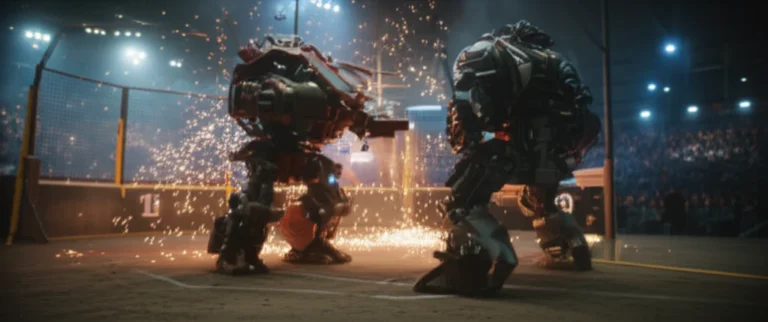
In the real world, “Real Steel” manifests as Combat Robotics. These aren’t just toys; they are custom-engineered gladiators. As seen in the featured video titled “Robot Fighting Is Here,” we see “two robots fighting” in a way that mimics the intensity of the silver screen. One commentator even notes, “This move is impressive,” referring to the complex mechanical maneuvers these bots execute.
However, there is a divide in the community. On one hand, you have the fast-paced, destructive 250lb machines of BattleBots. On the other, you have the giant, piloted (or remote-controlled) mechs from MegaBots.
MegaBots vs. BattleBots: Which is “More” Real?
| Feature | BattleBots (Heavyweights) | MegaBots (Giant Robots) |
|---|---|---|
| Weight | 250 lbs | 6 to 12 Tons |
| Control | Remote Controlled | Remote or Internal Pilot |
| Primary Goal | Destruction/Disabling | Entertainment/Spectacle |
| Speed | High (Up to 20 mph) | Low (Walking/Crawling) |
While MegaBots showcased Iron Glory (6 tons) and Eagle Prime (12 tons) with a “500-pound knife,” some critics argue it’s more “staged” due to the sheer cost and safety risks of 12-ton machines. We believe both are real, but BattleBots represents the peak of competitive engineering, while MegaBots represents the peak of spectacle engineering.
🏗 The Anatomy of a Destroyer: What Makes a Combat Robot?
Building a fighting robot is like building a race car that is designed to be crashed. If you want to dive deep into the blueprints, our Robot Design and Engineering section is your new best friend.
For those looking to start at home, the FingerTech Viper Kit is the gold standard. Let’s look at how it stacks up:
📊 Product Rating: FingerTech Viper Combat Robot Kit
| Category | Rating (1-10) | Notes |
|---|---|---|
| Build Quality | 9 | High-grade aluminum and polycarbonate. |
| Ease of Assembly | 8 | Great instructions, requires basic soldering. |
| Weapon Power | 7 | The optional spinner add-on is surprisingly fierce. |
| Customization | 10 | Infinite ways to tweak and upgrade. |
| Durability | 8 | Can take a beating from other 1lb bots. |
Analysis: The FingerTech Viper is the perfect entry point because it teaches you the fundamentals of DIY Robot Building. It uses a “wedge” design by default, which is the most effective defensive strategy in the game. You’ll learn about ESCs (Electronic Speed Controllers), LiPo batteries, and Radio Systems.
👉 Shop FingerTech on:
- FingerTech Viper Kit: Amazon.com | FingerTech Official
⚖️ From Ants to Giants: Understanding Weight Classes
You don’t have to be a millionaire to start robot fighting. The sport is divided into weight classes to keep things fair. We’ve seen everything from 150g “Fairyweights” that look like toys but fight like hornets, to the 250lb “Heavyweights” that require a forklift.
📋 Weight Class Comparison Table
| Class | Weight Limit | Common Materials | Skill Level |
|---|---|---|---|
| Antweight | 1 lb (454g) | 3D Printed Plastic, Carbon Fiber | Beginner |
| Beetleweight | 3 lbs (1.36kg) | UHMW Plastic, Aluminum | Intermediate |
| Featherweight | 30 lbs (13.6kg) | AR500 Steel, Titanium | Advanced |
| Heavyweight | 250 lbs (113kg) | Aerospace Grade Alloys | Professional |
Pro Tip: We always tell newcomers to start with the Antweight class. Why? Because when an Antweight explodes, it costs $20 to fix. When a Heavyweight explodes, it costs $2,000. 💸
⚔️ 10 Most Iconic BattleBots That Proved the Sport is Real
If you still doubt the reality of the sport, look no further than these legendary machines. These bots utilize complex Robot Battle Strategies to dominate the arena.
- Tombstone: The “King of Kinetic Energy.” Ray Billings’ horizontal spinner is a masterclass in “hit them until they stop moving.”
- Bite Force: The GOAT. Paul Ventimiglia’s 4-time champion bot is the pinnacle of reliability.
- Minotaur: The Brazilian beast with a drum spinner that sounds like a jet engine.
- Witch Doctor: A masterpiece of vertical spinning destruction and fan-favorite aesthetics.
- Hydra: Uses high-pressure hydraulics to flip 250lb opponents into the rafters.
- SawBlaze: A “Dustpan” design with a diamond-tipped saw that cuts through top armor.
- Whiplash: A unique “lifting-spinner” that requires incredible driving skill.
- End Game: The reigning powerhouse from New Zealand, known for its massive vertical discs.
- Hypershock: Famous for its neon yellow look and the time it used a rake to swat a drone.
- Gigabyte: A “Full Body Spinner” where the entire outer shell is the weapon.
👉 Shop BattleBots Merchandise on:
- Official Toys: Amazon.com | Hexbug Official | BattleBots Store
🎮 How to Get Started: Your Path to the BattleBox
Ready to stop watching and start smashing? Here is the expert-approved path to becoming a builder. We’ve walked this path ourselves, and trust us, the first time you land a hit, you’ll be hooked for life.
- Research the Rules: Every event has different requirements. Check SPARC.tools for the industry standard.
- Watch the Tape: Study Robot Combat Videos to see what designs actually win.
- Buy a Radio: We recommend the Spektrum DX5C or the FlySky FS-i6X.
- Spektrum Radio: Amazon.com | Horizon Hobby
- Build a “Wedge”: Don’t start with a weapon. Build a bot that can drive reliably and push things. If you can’t drive, you can’t win.
- Find a Local Event: Use the RobotCombatevents.com map to find a competition near you.
🛡 Safety and the “BattleBox”: Why You Can’t Do This at Home
We cannot stress this enough: Robot fighting is dangerous. A 3lb Beetleweight spinner has enough energy to shatter a cinder block. This is why “The Arena” exists.
The BattleBox used by BattleBots Inc. is a multi-million dollar enclosure. It uses Lexan (Polycarbonate), a material that is 250 times stronger than glass.
❌ Never test a weapon-equipped robot on your kitchen floor. ✅ Always use a “Weapon Lock”—a physical pin that prevents the blade from spinning during maintenance. ✅ Always have a “Kill Switch” or a removable link to cut power instantly.
📈 The Future of the Sport: AI and Autonomous Combat
Is the future of robot fighting purely human-controlled? Not necessarily. We are seeing a massive influx of STEM students bringing AI into the arena.
Some bots are now using Lidar and Computer Vision to automatically track their opponents. This allows the driver to focus on the “timing” of the hit while the onboard computer handles the “tracking.” As processing power gets cheaper and lighter, the “Real Steel” dream of fully autonomous mechanical gladiators is becoming a reality.
But will an AI ever have the “gut instinct” of a driver like Ray Billings? That’s the question that keeps us up at night. We’ve seen autonomous bots get confused by the arena walls, but when they lock on… it’s terrifyingly efficient.
🏁 Conclusion

So, is robot fighting real? Absolutely! It’s a thrilling, high-tech sport where engineering prowess meets raw mechanical power. From the humble beginnings of “wedges on wheels” to the multi-ton giants of MegaBots and the finely tuned 250lb heavyweights of BattleBots, robot fighting is a genuine, evolving spectacle.
If you’re considering dipping your toes into this electrifying world, the FingerTech Viper Combat Robot Kit is our top recommendation for beginners. It strikes the perfect balance between build quality, customizability, and durability—all essential for learning the ropes without breaking the bank. While it’s not a heavyweight contender, it teaches the fundamentals that every builder needs.
Positives:
- Excellent build quality and materials
- Easy to assemble with clear instructions
- Highly customizable for upgrades and modifications
- Durable enough to withstand beginner-level combat
Negatives:
- Limited weapon power compared to larger classes
- Requires some soldering and basic electronics knowledge
- Not suitable for heavy combat classes without significant upgrades
In closing, the question of whether robot fighting is real is answered emphatically by the sparks, dents, and shattered armor you see in arenas worldwide. The sport is safe (when done properly), competitive, and rapidly advancing with AI and autonomous tech on the horizon. So, whether you want to build your own bot or just watch the carnage, robot fighting is here to stay—and it’s more real than ever.
🔗 Recommended Links
👉 Shop Robot Fighting Essentials:
-
FingerTech Viper Combat Robot Kit:
Amazon.com | FingerTech Official Website -
Spektrum DX5C Radio Controller:
Amazon.com | Horizon Hobby -
BattleBots Official Merchandise:
Amazon.com | BattleBots Store
Recommended Books for Aspiring Builders:
- Robot Builder’s Bonanza by Gordon McComb — Amazon.com
- Combat Robotics: Build Your Own Fighting Robot by Matt Denton — Amazon.com
- BattleBots: The Official Guide by BattleBots Inc. — Amazon.com
❓ FAQ

Can I build my own robot to compete in the Robot Fighting League?
Absolutely! Many competitors start from scratch or with kits like the FingerTech Viper. However, you must carefully follow the league’s rules and regulations regarding weight, weapon types, and safety. Building a competitive bot requires mechanical skills, electronics knowledge, and a willingness to iterate after failures.
What types of robots are used in robot fighting competitions?
Robots vary widely by design and weapon type. Common categories include:
- Spinners: Robots with rotating blades or drums (e.g., Tombstone).
- Flippers: Robots that flip opponents out of the arena (e.g., Hydra).
- Wedges: Low-profile bots designed to get under opponents and push (common beginner design).
- Hammerbots: Robots with a hammer or axe weapon.
- Full-body spinners: Entire shell spins to cause damage (e.g., Gigabyte).
Each design has strengths and weaknesses, and successful teams often combine strategy with engineering.
Are robot fighting competitions televised or live streamed?
Yes! The flagship event, BattleBots, is televised on networks like Discovery Channel and streamed online. Many smaller leagues, such as the National Havoc Robot League (NHRL), also live stream their events on platforms like Twitch and YouTube, making the sport accessible worldwide.
Are robot battles real?
Yes, robot battles are very real. Unlike scripted entertainment, these competitions involve actual physical destruction of machines. The damage you see—broken armor, shattered weapons, and sparks flying—is genuine. Safety measures like the Lexan BattleBox ensure that the destruction is contained and spectators remain safe.
Can robots be used in war?
While combat robotics in the military is a separate field, the robots in fighting competitions are not designed for warfare. Military robots focus on surveillance, bomb disposal, or logistics, whereas combat robots are built for sport and entertainment. However, some technologies, like remote control and autonomous navigation, overlap.
Is there such a thing as robot boxing?
Robot boxing is a niche within combat robotics where humanoid robots attempt to mimic boxing moves. While popularized by movies like Real Steel, real robot boxing is still in developmental stages due to the complexity of bipedal balance and movement. Most current competitions focus on wheeled or tracked robots with weapons.
Is robot fighting a thing?
Definitely! Robot fighting is a growing sport with leagues worldwide, from local clubs to international televised events. It combines engineering, strategy, and showmanship, attracting enthusiasts of all ages.
What are the rules of robot fighting competitions?
Rules vary by league but generally cover:
- Weight limits
- Allowed weapon types (e.g., no explosives or projectiles)
- Safety requirements (e.g., kill switches, weapon locks)
- Match duration and victory conditions (e.g., knockout, judge decision)
For detailed rules, visit SPARC.tools or your local league’s website.
How do robot fighting leagues work?
Leagues organize events where teams compete in brackets or round-robin formats. Matches are held inside a BattleBox with strict safety protocols. Teams earn rankings and may qualify for championship events. Leagues often provide standardized rules to ensure fairness.
Can anyone build a robot to compete in robot fighting?
Yes, anyone with the interest, time, and resources can build a robot to compete. Beginners often start with small weight classes and kits. As skills grow, builders can move up to heavier classes and more complex designs.
What are the most popular robot fighting events worldwide?
- BattleBots (USA): The premier televised competition.
- Robot Wars (UK): The original televised series that inspired many builders.
- NHRL (USA): A grassroots league with many regional events.
- RoboGames: An international multi-robot competition including combat.
- King of Bots (China): A large-scale televised event.
📚 Reference Links
- BattleBots Official Website — The home of the most famous robot fighting league worldwide.
- National Havoc Robot League (NHRL) — A grassroots league with extensive resources.
- SPARC – Standardized Procedures for the Advancement of Robotic Combat — Industry-wide rules and safety guidelines.
- FingerTech Robotics — Leading beginner and hobbyist robot kits.
- MegaBots YouTube Channel — Giant robot combat demonstrations.
- Robot Combat Rules and Regulations — In-depth rulebooks and safety protocols.
- Robot Design and Engineering — Expert advice on building your bot.
- Robot Battle Strategies — Tactics to win in the arena.
- Robot Combat Videos — Watch the best fights and learn from the pros.
- DIY Robot Building — Step-by-step guides for builders.