Support our educational content for free when you buy through links on our site. Learn more
🤖 Do Combat Robots Exist? The Shocking Truth (2026)


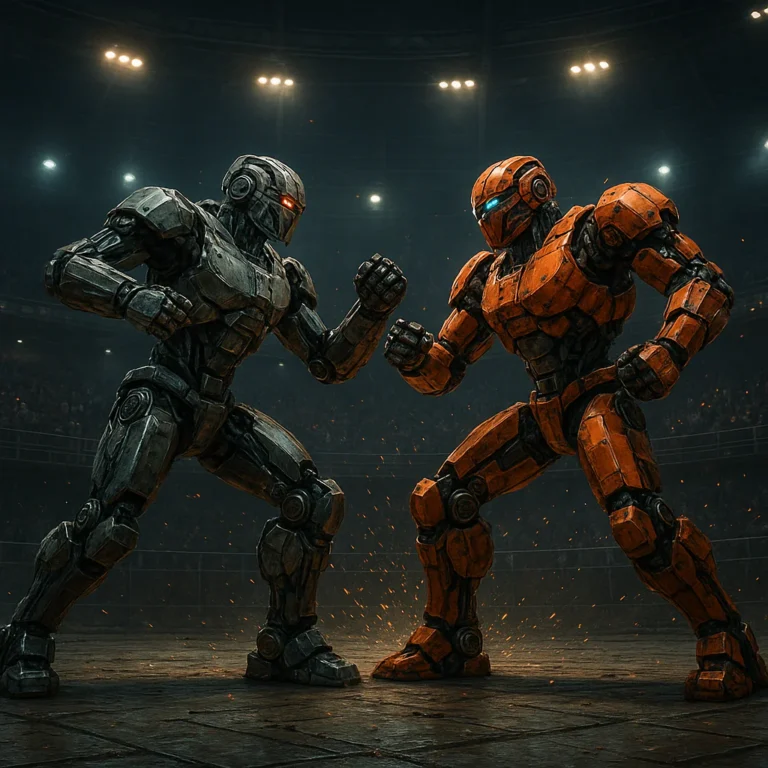
The question echoes through every garage workshop and military briefing room: Do combat robots actually exist? The answer is a resounding, terrifying, and exhilarating yes. But the reality is far more nuanced than the terminator-like automatons of our sci-fi dreams. On one hand, you have the human-controlled gladiators of BattleBots and RoboGames, smashing into each other for the glory of the Giant Washer. On the other, you have the autonomous hunters like the Kargu 2, which have already been confirmed to engage targets without human intervention.
We’ve spent years in the pits, analyzing the torque of a vertical spinner and the ethics of AI warfare. In this deep dive, we’ll separate the metal reality from the fictional hype. You’ll discover how a 250-pound bot can survive a 1,50 RPM impact, why the military is racing toward Lethal Autonomous Weapons Systems (LAWS), and what the future holds for a world where machines make life-or-death decisions. Spoiler alert: The revolution isn’t coming; it’s already here, and it’s louder than you think.
Key Takeaways
- Combat robots are real in two distinct forms: human-controlled sport machines for entertainment and autonomous military systems for warfare.
- Sport bots like BattleBots champions are strictly tele-operated and bound by safety rules, while military drones are increasingly moving toward autonomous engagement.
- The technology is advancing rapidly, with AI-driven swarms and autonomous targeting already being tested in real-world conflicts.
- Ethical and legal debates are intensifying as the line between human control and machine decision-making blurs, raising critical questions about accountability in warfare.
- Whether you’re a builder or a spectator, understanding the engineering and implications of these machines is essential for navigating the future of robotics.
Table of Contents
- ⚡️ Quick Tips and Facts
- 🤖 Do Combat Robots Actually Exist? The Definitive Answer
- 📜 From Sci-Fi Dreams to Metal Reality: A History of Battle Bots
- 🏆 The Arena Kings: Top Professional Combat Robot Leagues and Events
- 1. BattleBots: The Heavyweight Champion of Robot Fighting
- 2. Robot Wars: The British Invasion That Started It All
- 3. RoboGames: The Olympics of Mechanical Mayhem
- 4. World Robot Boxing: Where AI Mets Iron
- ⚙️ Anatomy of a Destroyer: Essential Combat Robot Components and Weapons
- 🛠️ Building Your First War Machine: A Beginner’s Guide to Combat Robotics
- 🧠 The Psychology of the Pit: Why We Love Watching Robots Fight
- ⚖️ Legal and Ethical Boundaries: Can Robots Really Go to War?
- 🎬 BattleBots vs. Real Life: How Fiction Shapes Our Expectations
- 🔮 The Future of Combat Robotics: Autonomous Drones and AI Warfare
- 💡 Quick Tips and Facts for Aspiring Robot Builders
- 🏁 Conclusion: The Metal Revolution is Here
- 🔗 Recommended Links for Robot Enthusiasts
- ❓ Frequently Asked Questions About Combat Robots
- 📚 Reference Links and Sources
⚡️ Quick Tips and Facts
Before we dive into the grease, gears, and glory of the arena, let’s cut through the noise with some hard-hitting truths straight from the Robot Fighting™ pit crew.
- Yes, they exist: Combat robots are not just sci-fi dreams; they are a reality in two distinct forms: military-grade autonomous systems and competitive sport machines.
- The “Killer” Distinction: While military bots like the Kargu 2 have been confirmed to hunt targets autonomously, sport bots are strictly human-controlled and bound by safety regulations.
- Weight Classes Matter: Just like boxing, robot fighting has weight classes. The most famous is the 250 lb (13 kg) Heavyweight class seen in BattleBots, but there are also 12 lb, 60 lb, and even micro-classes.
- The “Giant Washer”: The ultimate trophy in BattleBots isn’t a gold statue; it’s a massive, custom-machined washer. It’s a nod to the industrial roots of the sport.
- Speed of Destruction: A top-tier spinner can hit 1,50+ RPM, delivering kinetic energy equivalent to a small car crash in a fraction of a second.
- Battery Anxiety: The most common cause of a “premature retirement” in the arena isn’t a weapon failure; it’s a battery disconnect or a blown ESC (Electronic Speed Controller).
Curious about how a robot survives a 2,0 PSI impact? We’ll break down the armor plating secrets in the Anatomy of a Destroyer section later!
🤖 Do Combat Robots Actually Exist? The Definitive Answer
If you’ve ever watched a clip of a metal beast tearing another apart on YouTube or wondered if the machines from Terminator are already patrolling the streets, you’re not alone. The short answer? Absolutely, yes. But the long answer is where the real story lies.
At Robot Fighting™, we’ve spent years analyzing everything from the SWORDS ground robots deployed in Iraq to the BattleBots champions that entertain millions. The term “combat robot” is a bit of a chameleon. It wears two very different masks:
- The Military Mask: These are Unmanned Ground Vehicles (UGVs) and Unmanned Aerial Vehicles (UAVs) designed for reconnaissance, bomb disposal, and, in some controversial cases, direct engagement. As noted by the UN Security Council, systems like the STM Kargu 2 have been reported to engage targets autonomously, marking a terrifying shift in modern warfare.
- The Sport Mask: These are the BattleBots, Robot Wars, and RoboGames competitors. They are tele-operated (human-controlled), built for entertainment, and governed by strict rules to ensure no one gets hurt (except the robots).
Why does this distinction matter? Because the ethics, engineering, and future of these two worlds are diverging rapidly. While the military pushes for Lethal Autonomous Weapons Systems (LAWS), the sport world is pushing for better engineering and safer designs.
For a deeper dive into the philosophy of robot fighting, check out our guide on Robot Fighting.
📜 From Sci-Fi Dreams to Metal Reality: A History of Battle Bots
The idea of machines fighting machines isn’t new; it’s as old as the concept of automation itself. But how did we get from German tracked mines in WWII to the glitzy arenas of Las Vegas?
The Early Days: War and Wonder
The roots of combat robotics stretch back to World War II. The Germans deployed the Goliath tracked mines, remote-controlled explosive devices used to clear obstacles. The Soviets countered with teletanks, remote-controlled tanks armed with machine guns. These were the grandfather of modern UGVs, albeit primitive by today’s standards.
Did you know? The term “cybernetics,” coined by Norbert Wiener during WWII, was originally about controlling anti-aircraft fire. It laid the groundwork for the feedback loops that allow modern robots to navigate and fight.
The Birth of the Sport: 194
The modern era of competitive robot fighting began in 194 with the first Robot Wars in the UK, founded by Marc Thorpe. It started as a garage experiment but quickly exploded into a global phenomenon.
- 197: The first US Robot Wars event took place, featuring 12 robots.
- 20: BattleBots premiered on Comedy Central, bringing the sport to mainstream America with a gladiator-style format.
- 2015: After a hiatus, BattleBots returned on the Discovery Channel, introducing stricter safety rules and higher production values.
The Evolution of Autonomy
While the sport has remained human-controlled, the military side has raced toward autonomy.
- 207: The SWORDS robot was deployed in Iraq, carrying a machine gun. It was remote-controlled, but the debate on autonomy began.
- 2020: A UN report confirmed the Kargu 2 drone attacked a human target in Libya without human intervention, a potential first for autonomous killer robots.
The gap between the sport arena and the battlefield is widening, yet both share the same DNA: the desire to build a machine that can out-think and out-maneuver an opponent.
🏆 The Arena Kings: Top Professional Combat Robot Leagues and Events
If you want to see combat robots in action, you need to know where the battles happen. The world of robot fighting is dominated by a few key players, each with its own flavor, rules, and legendary bots.
1. BattleBots: The Heavyweight Champion of Robot Fighting
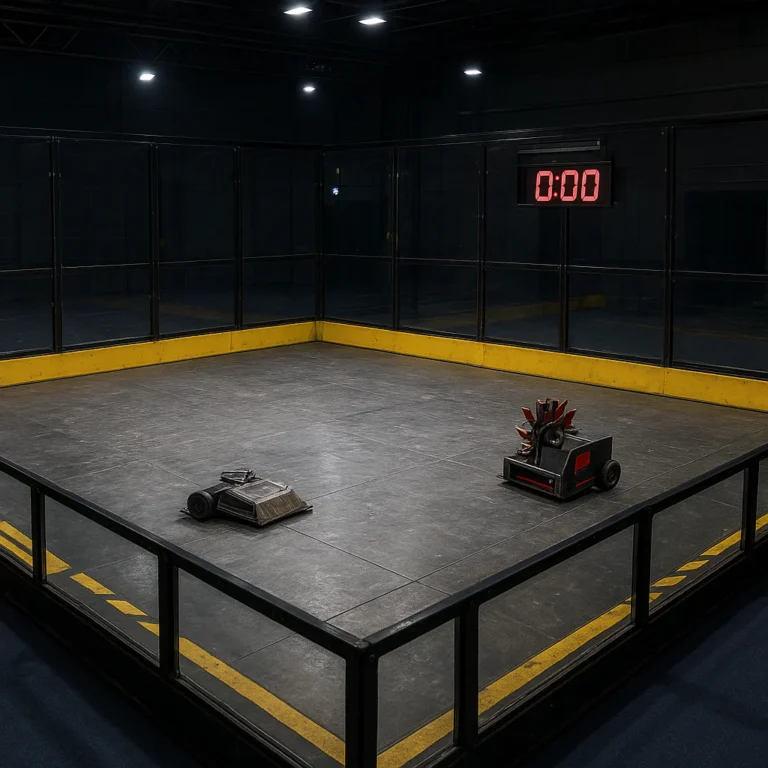
BattleBots is the Super Bowl of robot fighting. Hosted in Las Vegas, it features 32 of the world’s best teams battling for the Giant Washer.
- Format: Round-robin group stages followed by single-elimination brackets.
- Weight Class: Primarily 250 lbs (13 kg).
- Famous Bots: Witch Doctor, Kraken, Lock-Jaw, SawBlaze.
- Where to Watch: The tournament series is available on YouTube for free, with live events in Las Vegas.
2. Robot Wars: The British Invasion That Started It All
The original Robot Wars (UK) set the standard. Though the TV show has had hiatuses, the community remains strong with events like Robot Wars Extreme and regional competitions.
- Unique Feature: The “House Robots” (like Shunt and Matilda) that roam the arena to attack competitors.
- Legacy: Many BattleBots champions got their start in the UK circuit.
3. RoboGames: The Olympics of Mechanical Mayhem
Held in San Francisco, RoboGames is the largest robotics competition in the world. It’s not just about fighting; it includes sumo, soccer, and fire-fighting categories.
- Diversity: Features everything from 12 lb lightweights to 250 lb heavies.
- Community: A massive gathering of engineers, hobbyists, and fans.
4. World Robot Boxing: Where AI Mets Iron
A newer entrant focusing on AI-driven combat and strategy. While still developing, it aims to bridge the gap between sport and autonomous research.
| League | Location | Primary Weight Class | Unique Feature |
|---|---|---|---|
| BattleBots | Las Vegas, USA | 250 lbs | Giant Washer Trophy |
| Robot Wars | UK (Various) | 10kg (approx) | House Robots |
| RoboGames | San Francisco, USA | Multiple | Largest variety of categories |
| RoboGames | San Francisco, USA | Multiple | Largest variety of categories |
Which league do you think has the most dangerous weapons? We’ll reveal the stats in the Anatomy section!
⚙️ Anatomy of a Destroyer: Essential Combat Robot Components and Weapons
What makes a robot a champion? It’s not just the weapon; it’s the synergy of the entire machine. As engineers at Robot Fighting™, we’ve seen bots with incredible weapons fail because their drivetrain couldn’t handle the torque.
The Chassis: The Backbone
The chassis is the skeleton. It must be lightweight yet indestructible.
- Materials: Titanium, Steel, Aluminum, and Polycarbonate (Lexan) are common.
- Design: Low center of gravity is crucial to prevent flipping.
The Drivetrain: The Heartbeat
If the weapon is the fist, the drivetrain is the arm.
- Motors: Brushless DC motors are the standard for high torque and speed.
- Gearboxes: Custom gearboxes are often used to convert motor speed into wheel torque.
- Wheels: Polyurethane wheels are popular for grip, while steel wheels are used for durability.
The Weaponry: The Killer Instinct
This is where the magic happens.
- Spiners: Horizontal or vertical spiners that store kinetic energy. SawBlaze is a prime example of a vertical spinner.
- Flippers: Used to lift and throw opponents. Lock-Jaw is famous for its fliper.
- Hammers/Drums: Witch Doctor uses a massive drum spinner.
- Saws: Ribot and Cobalt use saws to cut through armor.
The Electronics: The Brain
- ESC (Electronic Speed Controller): Controls the motor speed.
- Radio System: Futaba and Spektrum are the go-to brands for reliable control.
- Battery: LiPo (Lithium Polymer) batteries provide the high discharge rates needed for weapons.
Why do some bots flip over so easily? It’s often a center of gravity issue. We’ll discuss this in the Building section!
🛠️ Building Your First War Machine: A Beginner’s Guide to Combat Robotics
Ready to build your own? Don’t start with a 250 lb monster. Start small. Here’s a step-by-step guide to building your first 12 lb combat robot.
Step 1: Choose Your Weight Class
- 12 lb (5.4 kg): Perfect for beginners. Cheap parts, easy to transport.
- 250 lb (13 kg): The professional standard. Expensive and requires a workshop.
Step 2: Select Your Weapon Type
- Pushers: Simple, effective, and less prone to breaking.
- Spiners: High damage, but high risk of self-destruction.
- Flippers: Fun to watch, but require precise timing.
Step 3: Source Your Components
- Motors: BaneBots and Faulhaber are industry standards.
- Wheels: McMaster-Carr has a huge selection of polyurethane wheels.
- Chassis: Start with 3D printed parts or aluminum plates.
Step 4: Assemble and Test
- Dry Run: Test the drivetrain without the weapon.
- Weapon Test: Spin the weapon at low speed to check balance.
- Full Power: Gradually increase speed.
Step 5: Safety First!
- Always wear eye protection.
- Use a kill switch on your radio.
- Test in a safe area away from people.
What’s the biggest mistake beginners make? They underestimate the torque required for their weapon. We’ll explain how to calculate this in our Robot Design and Engineering guide.
🧠 The Psychology of the Pit: Why We Love Watching Robots Fight
Why do we watch metal boxes smash each other? Is it the violence? The engineering? Or something deeper?
The Human Connection
Surprisingly, soldiers often form emotional bonds with their robots. A survey of 746 military personnel showed that 80% “liked” or “loved” their robots. We see this in the sport too. Fans name their favorite bots, mourn their destruction, and celebrate their victories.
The Thrill of the Unknown
Unlike human sports, where skill is the primary factor, robot fighting is a roll of the dice. A single bolt can snap, a battery can disconnect, or a weapon can jam. This unpredictability keeps us on the edge of our seats.
The Engineering Puzzle
For many, the appeal is the intelectual challenge. We analyze the designs, speculate on the strategies, and marvel at the ingenuity. It’s a puzzle where the solution is often a well-timed flip or a perfectly placed hit.
Do you think robots will ever replace human soldiers? The answer is more complex than you might think. We’ll explore the ethical implications in the next section.
⚖️ Legal and Ethical Boundaries: Can Robots Really Go to War?
The existence of Lethal Autonomous Weapons Systems (LAWS) has sparked a global debate. Can we trust machines to make life-and-death decisions?
The Case for Autonomy
- No Fear: Machines don’t panic, get tired, or suffer from PTSD.
- Precision: AI can potentially adhere to the Laws of War more strictly than emotional humans.
- Survivability: Removing soldiers from the battlefield saves human lives.
The Case Against Autonomy
- Accountability: Who is responsible if a robot kills an innocent? The programmer? The commander? The machine?
- The “Black Box” Problem: AI decision-making can be opaque, making it hard to understand why a robot made a specific choice.
- Escalation: Autonomous systems could lead to faster, uncontrollable conflicts.
The Current Landscape
- UN Stance: The UN has called for a ban on LAWS, but no global treaty exists yet.
- US Policy: The US Department of Defense states that “Humans will always make the final decision,” but the line is blurring.
- Public Opinion: A 2015 letter signed by over 1,0 AI experts, including Stephen Hawking and Elon Musk, called for a ban on autonomous weapons.
Is it ethical to build a robot that can kill? This is the question that will define the future of warfare.
🎬 BattleBots vs. Real Life: How Fiction Shapes Our Expectations
Movies like Terminator and Real Steel have shaped our view of combat robots. But how much of that is reality?
The Terminator Effect
- Expectation: Robots that are fully autonomous, intelligent, and unstoppable.
- Reality: Most military robots are tele-operated. True autonomy is still in its infancy.
The Real Steel Effect
- Expectation: Robots that can box, dance, and show emotion.
- Reality: Sport robots are built for destruction, not performance. They don’t have the dexterity for complex movements.
The Gap
The gap between fiction and reality is closing, but slowly. While we have autonomous drones, we don’t have humanoid combat robots that can fight like in the movies.
What do you think the next big leap in robot fighting will be? Will it be AI, or something else entirely?
🔮 The Future of Combat Robotics: Autonomous Drones and AI Warfare
The future of combat robotics is not just about bigger weapons; it’s about smarter systems.
Autonomous Drones
- Swarm Technology: Hundreds of small drones working together to overwhelm defenses.
- AI Targeting: Drones that can identify and engage targets without human input.
AI in Sport
- Auto-Pilot: Robots that can navigate the arena and avoid obstacles on their own.
- Strategy AI: Systems that analyze opponent movements and adapt in real-time.
The Ethical Frontier
As we move toward fully autonomous systems, the ethical questions become more pressing. How do we ensure that these systems are safe and ethical?
Are we ready for a world where robots fight without humans? The answer may be closer than we think.
💡 Quick Tips and Facts for Aspiring Robot Builders
Before you head to the workshop, here are some final tips from the pros at Robot Fighting™:
- Start Small: Don’t build a 250 lb bot as your first project. Start with a 12 lb bot.
- Spare Parts: Always carry spare wheels, batteries, and screws.
- Test Often: Test your robot in a safe area before the competition.
- Join a Community: The RoboGames and BattleBots communities are full of helpful builders.
- Safety First: Always wear eye protection and use a kill switch.
Ready to build your first bot? Check out our DIY Robot Building category for more guides!
🏁 Conclusion: The Metal Revolution is Here
The question “Do combat robots exist?” has a resounding yes. From the battlefields of Libya to the arenas of Las Vegas, combat robots are a reality. They are a testament to human ingenuity, a source of entertainment, and a potential game-changer in warfare.
As we look to the future, the line between sport and war may blur, but the core of robot fighting remains the same: the thrill of the battle, the beauty of engineering, and the human spirit that drives it all.
What’s your favorite combat robot? Let us know in the comments below!
🔗 Recommended Links for Robot Enthusiasts
- BattleBots Official Website: BattleBots.com
- RoboGames: RoboGames.org
- Robot Fighting League: RobotFighting.org
- Amazon Search for Robot Parts: Robot Parts on Amazon
- Walmart Search for Robot Kits: Robot Kits on Walmart
- Etsy Search for Custom Robot Parts: Custom Robot Parts on Etsy
❓ Frequently Asked Questions About Combat Robots
Q: Are combat robots legal?
A: Yes, but it depends on the context. Sport robots are legal and regulated by event organizers. Military robots are legal under international law, but the use of autonomous lethal weapons is a subject of intense debate.
Q: How much does it cost to build a combat robot?
A: A 12 lb bot can cost between $50 and $2,0, while a 250 lb bot can cost $10,0 to $50,0 or more.
Q: Can I build a robot that fights like in the movies?
A: Not yet. While we have advanced robots, the humanoid combat robots seen in movies are still in the realm of science fiction.
Q: What is the most dangerous weapon in robot fighting?
A: Vertical spiners are often considered the most dangerous due to their high kinetic energy and potential to cause catastrophic damage.
Q: How do I get started in robot fighting?
A: Start by joining a local club, attending a competition, and building a small robot. Check out our DIY Robot Building category for more guides.
📚 Reference Links and Sources