Support our educational content for free when you buy through links on our site. Learn more
🤖 Mastering Advanced Robot Control Systems (2026)

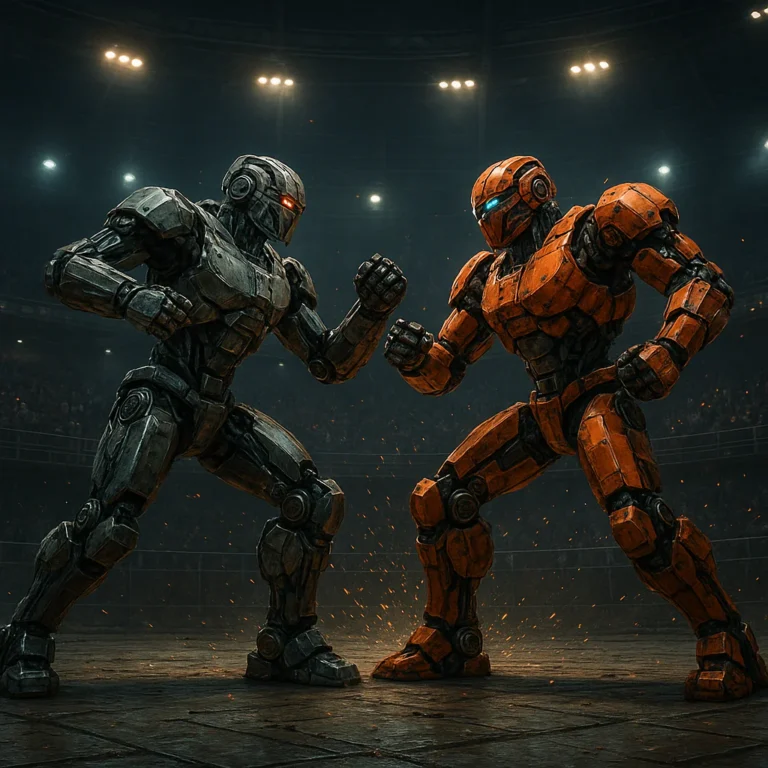
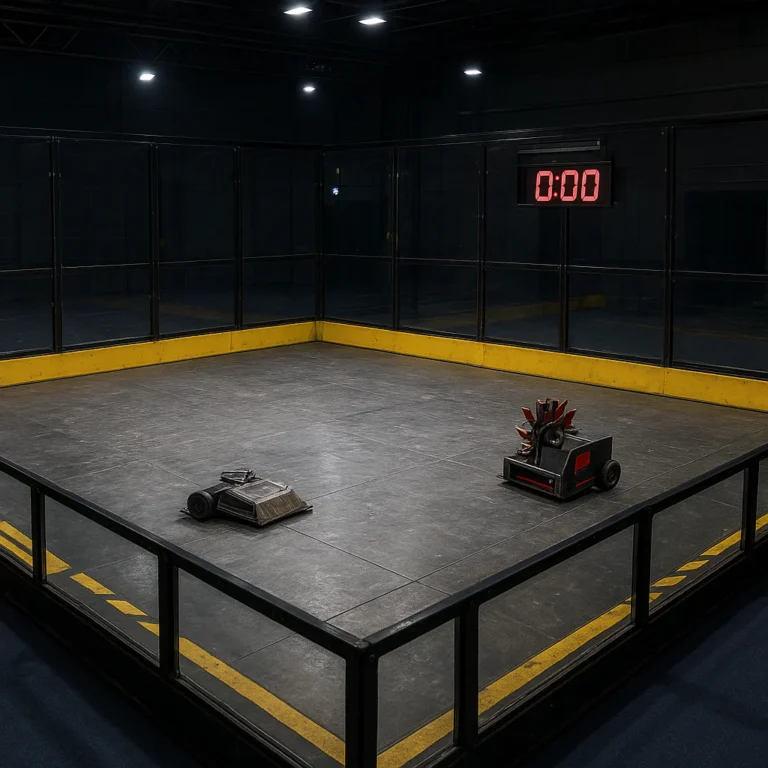
Imagine a battle where a 50-pound robot dodges a spinning blade not by luck, but by calculating the trajectory 20 milliseconds before impact. That is the power of advanced robot control systems. While the world marvels at the precision of the Da Vinci Robotic Surgical System performing delicate heart surgery, the same underlying principles of real-time sensor fusion, adaptive algorithms, and redundant safety architectures are driving the next generation of industrial automation, autonomous vehicles, and even the high-octane chaos of the Robot Fighting League.
In this deep dive, we strip away the marketing fluff to reveal the silicon and code that make these machines tick. From the humble beginnings of PID controllers to the cutting-edge Reinforcement Learning models that allow robots to learn from their mistakes, we explore the full spectrum of robot control system advanced technologies. Whether you are an engineer designing the next generation of collaborative robots (cobots) or a hobbyist looking to build a combat bot that can actually think, this guide covers the hardware, software, and strategies you need to succeed. We’ll even reveal why your favorite battle bot might be failing due to a simple CAN bus grounding issue and how to fix it.
Key Takeaways
- Real-Time Processing is Critical: Advanced systems rely on RTOS and FPGA hardware to execute control loops in microseconds, ensuring split-second reactions in dynamic environments.
- Sensor Fusion Creates Awareness: Combining data from LiDAR, IMUs, and cameras via Kalman Filters allows robots to navigate and react with unprecedented accuracy.
- Adaptive AI is the Future: Moving beyond rigid pre-programed paths, Machine Learning and Model Predictive Control (MPC) enable robots to adapt to unknown variables and optimize performance on the fly.
- Safety and Redundancy are Non-Negotiable: Robust fail-safes, watchdog timers, and hardware E-stops are essential to prevent catastrophic failures in high-stakes applications.
- Open Standards Drive Innovation: Frameworks like ROS 2 and protocols like EtherCAT are democratizing access to high-performance control, bridging the gap between research and industrial deployment.
Table of Contents
- ⚡️ Quick Tips and Facts
- 🤖 From Steam to Silicon: The Evolution of Robot Control Systems
- 🧠 The Brains of the Operation: Core Architectures in Advanced Robotics
- 📡 Sensing the World: Sensor Fusion and Real-Time Data Processing
- 🎮 Mastering Motion: Kinematics, Dynamics, and Trajectory Planning
- 🧩 The AI Revolution: Machine Learning and Adaptive Control Strategies
- 🔌 Hardware Heroes: Microcontrollers, PLCs, and Industrial Controllers
- 🌐 Connectivity and Communication: ROS, ROS 2, and Industrial Protocols
- 🛡️ Safety First: Fail-Safes, Redundancy, and Ethical Control Limits
- 🏭 Industrial Titans: Comparing ABB, KUKA, FANUC, and Universal Robots Control Suites
- 🚀 Future Frontiers: Swarm Intelligence, Haptic Feedback, and Human-Robot Collaboration
- 💡 Quick Tips and Facts for Aspiring Robot Engineers
- 🎓 Educational Pathways: Top Courses and Certifications in Advanced Robotics
- 🏆 Conclusion: The Future is in Your Hands (and Code)
- 🔗 Recommended Links
- ❓ FAQ: Your Burning Questions About Robot Control Systems Answered
- 📚 Reference Links
⚡️ Quick Tips and Facts
Before we dive into the deep end of the robot control systems advanced ocean, let’s hit the high notes. Whether you’re building a battle bot for the Robot Fighting League or designing a surgical assistant, the core principles remain the same: speed, precision, and reliability.
- Real-Time is Non-Negotiable: In combat robotics, a 10-millisecond delay can mean the difference between a winning spin and a dead motor. Industrial and medical robots demand even tighter tolerances.
- Sensor Fusion is King: No single sensor tells the whole story. Combining LiDAR, IMUs, and cameras creates a “super-sense” that allows for adaptive control.
- The PID Paradox: While PID (Proportional-Integral-Derivative) controllers are the bread and butter of engineering, they often struggle with the non-linear chaos of a robot fight. That’s where advanced control strategies like Model Predictive Control (MPC) step in.
- Hardware Matters: A brilliant algorithm running on a $5 microcontroller will lose to a mediocre algorithm on a dedicated FPGA or GPU in a high-speed scenario.
- Safety First: Advanced systems must include hardware fail-safes that operate independently of the main software loop. If the code crashes, the robot must stop, not spin out of control.
For a deeper dive into how these principles apply to the arena, check out our guide on Robot Fighting.
🤖 From Steam to Silicon: The Evolution of Robot Control Systems
The journey from the clanking gears of the Industrial Revolution to the silent, fluid movements of modern advanced robotics is a story of computational power meeting mechanical ingenuity.
The Analog Era: Gears and Levers
In the beginning, control was purely mechanical. Think of the Antikythera mechanism or the early automata of the 18th century. These were “open-loop” systems; once set in motion, they had no way to sense their environment or correct errors. If a gear slipped, the machine failed.
The Digital Revolution: PLCs and Early Microcontrollers
The 1960s and 70s introduced the Programmable Logic Controller (PLC). Suddenly, robots could be reprogramed without rewiring. This was the birth of industrial automation. However, these systems were rigid. They followed a script, blind to the world around them.
The Age of Intelligence: Sensors and AI
Today, we are in the era of closed-loop control and autonomous decision-making. Modern robots don’t just follow paths; they perceive, plan, and adapt. This shift is driven by the integration of machine learning and real-time operating systems (RTOS).
Did you know? The first industrial robot, Unimate, installed in 1961, had no sensors. It simply repeated a motion. Today, a Boston Dynamics Spot robot can navigate a construction site, avoid obstacles, and recover from a fall—all without human intervention.
🧠 The Brains of the Operation: Core Architectures in Advanced Robotics
When we talk about robot control systems advanced, we are really talking about the architecture that holds the brain together. It’s not just about writing code; it’s about how that code interacts with the hardware.
Hierarchical Control
Most complex robots use a hierarchical architecture:
- Strategic Layer: High-level planning (e.g., “Go to the red zone”).
- Tactical Layer: Path planning and obstacle avoidance.
- Execution Layer: Low-level motor control and sensor reading.
This separation allows the robot to make big decisions without getting boged down in the minutiae of motor voltage.
Distributed vs. Centralized
- Centralized: One powerful computer controls everything. Great for complex logic, but a single point of failure.
- Distributed: Each joint or sensor has its own microcontroller. This is common in humanoid robots and battle bots for redundancy. If one controller dies, the rest might still function.
The Role of the RTOS
A Real-Time Operating System (RTOS) is the unsung hero. Unlike Windows or Linux, an RTOS guarantees that tasks are completed within a specific time frame. In a robot fighting match, if your control loop misses a deadline, you lose.
📡 Sensing the World: Sensor Fusion and Real-Time Data Processing
You can’t control what you can’t see. Sensor fusion is the art of combining data from multiple sources to create a reliable model of the world.
The Sensor Suite
- LiDAR: Provides precise 3D mapping. Essential for navigation.
- IMU (Inertial Measurement Unit): Measures acceleration and rotation. Critical for balance.
- Encoders: Tell the robot exactly where its joints are.
- Force/Torque Sensors: Allow the robot to “feel” resistance.
The Kalman Filter
How do we handle noisy data? Enter the Kalman Filter. This mathematical algorithm estimates the state of a system by predicting where it should be and then correcting that prediction with sensor data. It’s the reason your drone doesn’t wobble in the wind.
Pro Tip: In the Robot Fighting League, we’ve seen bots fail because they relied solely on vision. When the arena lights flickered, they went blind. The winners? Those that fused vision with IMU data to maintain orientation even when the camera feed was lost.
🎮 Mastering Motion: Kinematics, Dynamics, and Trajectory Planning
Moving a robot is easy. Moving it precisely and efficiently is where the magic happens.
Forward vs. Inverse Kinematics
- Forward Kinematics: “If I move joint A 10 degrees and joint B 20 degrees, where is the end-effector?”
- Inverse Kinematics (IK): “I want the end-effector at point X. What angles do joints A and B need to be?”
- IK is computationally expensive and often has multiple solutions. Advanced systems use numerical solvers to find the optimal path.
Dynamics and Torque Control
Kinematics is about geometry; dynamics is about forces. To lift a heavy object, a robot must calculate the required torque at each joint, accounting for gravity, friction, and inertia.
Trajectory Optimization
A naive robot moves in straight lines. An advanced robot uses trajectory optimization to find the smoothest, fastest, and most energy-efficient path. This often involves cubic splines or polynomial interpolation.
🧩 The AI Revolution: Machine Learning and Adaptive Control Strategies
Traditional control relies on pre-defined models. Machine Learning (ML) allows robots to learn from experience.
Reinforcement Learning (RL)
In RL, the robot learns by trial and error. It gets a “reward” for good actions and a “penalty” for bad ones. This is how Boston Dynamics robots learn to do backflips or how a battle bot learns to dodge a spinning weapon.
Neural Network Controllers
Instead of a PID controller, we can use a Neural Network to map sensor inputs directly to motor outputs. These networks can adapt to changing conditions, like a robot losing a wheel or carrying a different payload.
The Black Box Problem
The downside? Explainability. If a neural network makes a mistake, it’s hard to know why. In safety-critical applications like surgery, this is a major hurdle.
🔌 Hardware Heroes: Microcontrollers, PLCs, and Industrial Controllers
Software is nothing without hardware. Let’s look at the silicon that makes it all possible.
The Microcontroller Wars
- Arduino: Great for protyping, but lacks the speed for complex control loops.
- STM32: The workhorse of the industry. Fast, reliable, and widely supported.
- ESP32: Excellent for Wi-Fi/Bluetooth connectivity, but watch out for real-time jitter.
- FPGA (Field-Programmable Gate Array): The ultimate speed demon. You can hardwire logic for nanosecond response times. Essential for high-speed robotics.
Industrial PLCs
Brands like Siemens, Allen-Bradley, and Mitsubishi dominate the factory floor. They are rugged, reliable, and designed for 24/7 operation. However, they can be expensive and less flexible than custom solutions.
Single Board Computers (SBCs)
For high-level processing (AI, vision), we use Raspberry Pi, NVIDIA Jetson, or BeagleBone. These run full operating systems and handle the heavy lifting of computer vision and path planning.
🌐 Connectivity and Communication: ROS, ROS 2, and Industrial Protocols
How do all these components talk to each other?
ROS (Robot Operating System)
ROS is the de facto standard for research and protyping. It provides a framework for writing robot software.
- ROS 1: Great for research, but not real-time.
- ROS 2: The future. Built on DDS (Data Distribution Service), it offers real-time capabilities, better security, and distributed architecture.
Industrial Protocols
- Modbus: Simple, reliable, but slow.
- CAN Bus: The standard for automotive and robotics. Fast and robust.
- EtherCAT: The king of speed. Used in high-performance industrial robots.
- Profinet: Common in European manufacturing.
Insider Secret: In the Robot Fighting arena, we often see teams struggle with CAN bus noise. A simple shielded cable and proper grounding can save a bot from erratic behavior.
🛡️ Safety First: Fail-Safes, Redundancy, and Ethical Control Limits
When a robot weighs 50 pounds and spins a blade at 20 RPM, safety isn’t optional.
Hardware Redundancy
- Dual Microcontrollers: One runs the main loop, the other monitors for errors. If the main one hangs, the backup cuts power.
- Watchdog Timers: A hardware timer that resets the system if the software stops sending a “heartbeat” signal.
Software Safeguards
- Geofencing: Hard limits on where the robot can go.
- Velocity Limits: Preventing the robot from moving faster than a safe speed.
- Emergency Stop (E-Stop): A physical button that cuts power to all motors immediately.
Ethical Considerations
As robots become more autonomous, we must program ethical constraints. A robot should never harm a human, even if it means sacrificing itself. This is the core of Asimov’s Laws, updated for the digital age.
🏭 Industrial Titans: Comparing ABB, KUKA, FANUC, and Universal Robots Control Suites
Let’s compare the giants of the industry. Each has its own control philosophy.
| Brand | Control Philosophy | Strengths | Weaknesses | Best For |
|---|---|---|---|---|
| ABB | Synchronous Control | High precision, excellent path tracking, robust safety. | Proprietary, expensive, steep learning curve. | High-speed assembly, welding. |
| KUKA | Open Architecture | Highly customizable, strong in automotive. | Interface can be clunky, older models lack modern AI. | Heavy lifting, automotive. |
| FANUC | Reliability First | Unmatched uptime, simple programming, rugged. | Closed ecosystem, limited flexibility. | Mass production, pick-and-place. |
| Universal Robots | Collaborative (Cobots) | Easy to program, safe to work alongside humans. | Slower, lower payload, less precise than industrial arms. | SMEs, flexible manufacturing. |
Deep Dive: ABB vs. KUKA
ABB robots are known for their OmniCore controller, which offers incredible synchronization for multi-robot cells. KUKA, on the other hand, has opened up its KUKA.System platform, allowing for more third-party integration.
Battle Bot Analogy: Think of FANUC as the tank—slow but unstoppable. Universal Robots is the agile scout—fast to deploy but fragile. ABB is the sniper—precise and deadly.
🚀 Future Frontiers: Swarm Intelligence, Haptic Feedback, and Human-Robot Collaboration
Where are we heading next?
Swarm Intelligence
Imagine hundreds of small robots working together like a hive mind. This is swarm robotics. It’s used in search and rescue, agriculture, and even robot fighting (imagine a swarm of mini-bots taking down a giant).
Haptic Feedback
Giving robots a sense of touch. Haptic gloves allow surgeons to “feel” tissue through the da Vinci system. In combat, this could allow a remote operator to feel the impact of a hit.
Human-Robot Collaboration (Cobots)
The future is not robots replacing humans, but robots working with humans. Cobots are designed to be safe, intuitive, and adaptive.
💡 Quick Tips and Facts for Aspiring Robot Engineers
Ready to build your own advanced control system? Here are some golden rules from the Robot Fighting™ team:
- Start Simple: Don’t try to build a neural network on day one. Get a PID loop working first.
- Log Everything: If you can’t see the data, you can’t debug it. Use serial logging or ROS bags.
- Test in Simulation: Use Gazebo or Webots to test your control algorithms before risking hardware.
- Power is King: A clean, stable power supply is more important than a fancy algorithm.
- Community is Key: Join forums, read ROS documentation, and share your code.
🎓 Educational Pathways: Top Courses and Certifications in Advanced Robotics
Want to master robot control systems advanced? Here are the best resources:
- Coursera: “Robotics Specialization” by the University of Pennsylvania.
- edX: “Robotics MicroMasters” by Georgia Tech.
- Udacity: “Robotics Software Engineer” Nanodegree.
- Books: “Probabilistic Robotics” by Thrun, Burgard, and Fox is the bible of the field.
Note: While the KU Leuven program mentioned in some search results focuses on academic theory, practical skills are best gained through hands-on projects and DIY Robot Building.
🏆 Conclusion: The Future is in Your Hands (and Code)

We’ve journeyed from the steam-powered automata of the past to the AI-driven swarms of the future. The evolution of robot control systems advanced is a testament to human ingenuity. Whether you are designing a battle bot for the Robot Fighting League or a surgical robot for the operating room, the principles remain the same: sensing, planning, and acting with precision.
The question isn’t whether robots will become more advanced; it’s whether we can keep up. As we push the boundaries of haptic feedback, swarm intelligence, and adaptive control, one thing is clear: the future belongs to those who can code it.
So, what are you waiting for? Grab your soldering iron, fire up your IDE, and start building the future. The arena is waiting.
🔗 Recommended Links
Ready to get your hands dirty? Here are the tools and resources we recommend:
👉 Shop Microcontrollers & Sensors on:
- Arduino Starter Kits: Amazon | Adafruit | Arduino Official
- Raspberry Pi 4/5: Amazon | Microcenter | Raspberry Pi Official
- NVIDIA Jetson Nano: Amazon | DigiKey | NVIDIA Official
👉 Shop Industrial Components:
- Siemens PLCs: Amazon | Siemens Official
- FANUC Controllers: FANUC Official
Books & Resources:
❓ FAQ: Your Burning Questions About Robot Control Systems Answered

What are the latest advancements in real-time robot control algorithms for combat sports?
The latest advancements focus on Model Predictive Control (MPC) combined with Reinforcement Learning. Unlike traditional PID controllers, MPC can predict future states and optimize control actions over a time horizon. In combat sports, this allows robots to anticipate an opponent’s move and react proactively rather than reactively. For example, a robot can calculate the optimal angle to dodge a spinning blade milliseconds before impact.
Read more about “🤖 Humanoid Robot Fighting: The Future of Bipedal Combat (2026)”
How do advanced sensor fusion techniques improve robot reaction times in the Robot Fighting League?
Sensor fusion, particularly using Kalman Filters and Complementary Filters, reduces noise and latency. By combining data from IMUs, encoders, and vision systems, the robot creates a more accurate and faster estimate of its state. This means the control loop can make decisions faster, reducing the “reaction time” from hundreds of milliseconds to mere tens of milliseconds.
What role does machine learning play in adaptive robot control systems for fighting arenas?
Machine Learning (ML) enables robots to adapt to unknown environments and changing conditions. In a fighting arena, where the terrain and opponent behavior are unpredictable, Reinforcement Learning (RL) allows the robot to learn optimal strategies through trial and error. This adaptability is crucial for handling unexpected events, like a broken wheel or a slippery floor.
How are haptic feedback systems integrated into advanced remote control for battle robots?
Haptic feedback systems use force sensors on the robot and actuators on the controller to provide the operator with a sense of touch. When the robot hits an obstacle, the controller vibrates or resists movement, giving the operator a “feel” for the impact. This is essential for precise control in complex environments.
What are the most effective control architectures for balancing speed and precision in combat robots?
A hierarchical architecture with a distributed control system is often most effective. High-level planning (speed) is handled by a powerful computer, while low-level motor control (precision) is managed by fast microcontrollers or FPGAs. This separation ensures that the robot can react quickly to threats while maintaining precise movements.
How do advanced control systems prevent catastrophic failures during high-impact robot battles?
Advanced systems use redundancy and fail-safes. This includes dual microcontrollers, watchdog timers, and hardware E-stops. If the main control loop fails or detects anomaly, the backup system immediately cuts power to the motors, preventing the robot from spinning out of control or causing damage.
What software frameworks are best suited for developing next-generation robot fighting controllers?
ROS 2 (Robot Operating System 2) is the leading framework due to its real-time capabilities and distributed architecture. It allows for modular development, where different components (sensing, planning, control) can be developed independently and integrated seamlessly. For high-speed applications, C++ is preferred over Python for its performance.
📚 Reference Links
- Intuitive Surgical Da Vinci System: Da Vinci Surgical System – Intuitive
- Robot Fighting League Rules: Robot Fighting League
- ROS 2 Documentation: ROS 2 Official Site
- IEEE Robotics and Automation Society: IEEE RAS
- Boston Dynamics Research: Boston Dynamics
- NVIDIA Robotics: NVIDIA Robotics
- Siemens Industrial Automation: Siemens
- FANUC Robotics: FANUC
- Universal Robots: Universal Robots
- KUKA Robotics: KUKA
- ABB Robotics: ABB Robotics
- MIT CSAIL Robotics: MIT CSAIL
- Stanford Robotics Lab: Stanford Robotics