Support our educational content for free when you buy through links on our site. Learn more
🤖 Extreme Robotics: The Ultimate Guide to Building Battle-Ready Bots (2026)


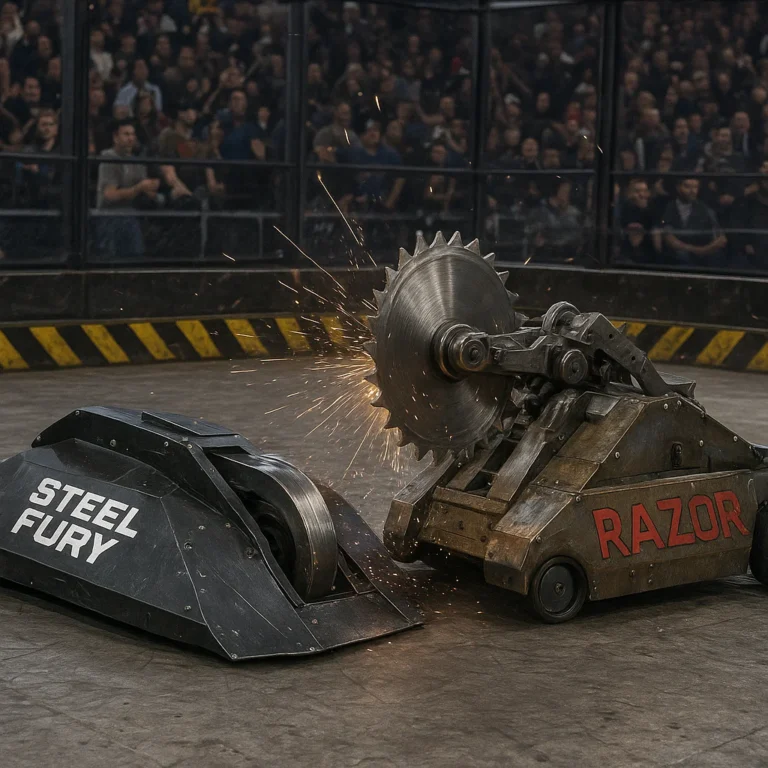
The future of Extreme robotics isn’t just about watching metal clash in an arena; it’s about mastering the delicate balance between autonomous AI and brute-force engineering to solve real-world disasters. From the radioactive ruins of Chernobyl to the high-stakes pits of BattleBots, the most successful machines are those that combine lightweight durability with intelligent decision-making.
Imagine a robot named R2G2 navigating a collapsed nuclear plant, its sensors mapping debris while its manipulators clear a path for human rescuers. That is the cutting edge of the field, far beyond simple remote control. Yet, the same principles of gyroscopic stability and impact absorption that keep R2G2 standing also keep a 250-pound BattleBots competitor from flying apart after a 3,0-joule hit.
Did you know that the first robot to win a major competition with a vertical spinner, Son of Whyachi, changed the entire meta of combat robotics overnight? It proved that kinetic energy could be weaponized more effectively than sheer mass, a lesson that still drives design today. Whether you are building a sumo bot for a local league or an autonomous drone for search-and-rescue, the core challenge remains the same: how do you make a machine survive the impossible?
Key Takeaways
- Master the Balance: Successful Extreme robotics designs must harmonize high-torque power with lightweight materials like titanium and carbon fiber.
- AI is the New Frontier: The shift from teleoperation to autonomous control is redefining how robots operate in disaster zones and competitive arenas.
- Safety is Non-Negotiable: Adhering to strict safety protocols, including kill switches and fireproof containment, is essential for both competition and industrial applications.
- Learn from the Legends: Studying the evolution of champions like Tombstone and Minotaur provides critical insights into weapon systems and drive train optimization.
Table of Contents
- ⚡️ Quick Tips and Facts
- 🤖 The Evolution of Extreme Robotics: From Sci-Fi Dreams to Battle-Ready Reality
- 🏆 Top 10 Extreme Robotics Competitions That Will Blow Your Mind
- 1. BattleBots: The Grandaddy of Robot Fighting
- 2. Robot Wars: The British Invasion of Metal Mayhem
- 3. FIRST Robotics Competition: Where Future Engineers Forge Legends
- 4. RoboCup: The Soccer Pitch of Tomorrow’s AI
- 5. DARPA Robotics Challenge: Saving Lives with Heavy Metal
- 6. BattleBots: Beyond the Arena
- 7. World Robot Summit: Global Innovation Showdown
- 8. RoboGames: The Olympics of Mechanical Sports
- 9. Iron Man Challenge: Humanoid Agility Tests
- 10. SumoBot Championships: The Art of the Push
- ⚙️ Engineering the Beast: Key Components of Extreme Robotics
- Chassis Materials: Steel, Titanium, and the Quest for Durability
- Weapon Systems: Spiners, Lifters, and Flippers Explained
- Drive Trains: Tank Treads vs. Mecanum Wheels
- Power Sources: LiPo Batteries and High-Voltage Warnings
- 🛠️ Building Your First Combat Robot: A Step-by-Step Guide
- 🧠 The Brain of the Machine: AI and Autonomous Control in Extreme Robotics
- 🛡️ Safety First: Rules, Regulations, and Survival in the Arena
- 📺 Must-Watch Videos and Documentaries for Robot Enthusiasts
- 🎓 Meet the Minds: Leading Faculty and Teams in Extreme Robotics
- 🔗 Recommended Links for Aspiring Robot Builders
- ❓ Frequently Asked Questions About Extreme Robotics
- 📚 Reference Links and Further Reading
⚡️ Quick Tips and Facts
Before you start welding your first chassis or programming your first autonomous routine, let’s drop some hard truths from the trenches of the arena. We’ve seen robots fly across the room, batteries explode, and teams cry over a snapped gear. Here is the lowdown to keep you in the game:
- Weight is Everything: In combat robotics, every gram counts. A 250g difference can mean the difference between a knockout and a push-out.
- The “Spinner” Paradox: Vertical spiners are terrifyingly effective but notoriously difficult to control. One bad bounce, and you’re fighting your own weapon.
- Safety First, Always: Never, ever test a weapon system without a safety shield and a clear zone. We’ve seen LiPo batteries turn into napalm in seconds.
- The “Fliper” Factor: Flippers are the ultimate crowd-pleasers, but they require precise timing. Miss the angle, and you just flip your own bot.
- Battery Management: A LiPo battery is not a toy. If it puffs, it’s trash. If it smokes, run.
Did you know? The first robot to ever win a major competition with a vertical spinner was Son of Whyachi in the late 90s, changing the meta forever. But why did it take so long for others to catch on? The answer lies in the engineering nightmare of gyroscopic precession, which we’ll unpack later.
For a deeper dive into the philosophy of combat, check out our guide on Robot Fighting.
🤖 The Evolution of Extreme Robotics: From Sci-Fi Dreams to Battle-Ready Reality
When we talk about Extreme Robotics, we aren’t just talking about a hobby; we are talking about the bleeding edge of autonomous systems, material science, and human-robot interaction. But how did we get from the clunky, remote-controlled toys of the 80s to the AI-driven, self-correcting machines of today?
The Early Days: Remote Control and Raw Power
In the beginning, it was all about remote control (RC). Teams like Mortis and Tombstone (yes, the original, not the BattleBots version) proved that a simple, heavy, fast robot could dominate. The focus was on kinetic energy and durability. If you could survive the first hit, you usually won.
The AI Revolution: From Remote to Autonomous
Fast forward to the 2020s, and the game has changed. The Birmingham Extreme Robotics Lab (ERL) and the University of Maryland (UMD) have pushed the boundaries into autonomous deep-submergence sampling and nuclear site remediation. Suddenly, robots aren’t just fighting; they are thinking.
“Real industrial problems… offer extremely complex intellectual and technical challenges, requiring new research advances that extend well beyond the current state-of-the-art in RAI theory and practice.” — Birmingham Extreme Robotics Lab
This shift from teleoperation to autonomy is the defining characteristic of modern extreme robotics. Whether it’s a KUKA KR50 arm cutting radioactive waste or a R2G2 robot navigating a pipe, the core challenge is the same: How do you make a machine act intelligently in a chaotic environment?
The BattleBots Effect
While academic labs were solving nuclear waste, the TV show BattleBots brought the spectacle to the masses. This created a feedback loop: more viewers meant more funding, which meant better materials and faster motors. The BattleBots arena became a testing ground for high-impact engineering.
But here’s the twist: The skills learned in the arena are now being applied to disaster response and space exploration. The RASC-AL 2012 competition saw teams developing air brake actuation systems that are directly relevant to planetary landers.
🏆 Top 10 Extreme Robotics Competitions That Will Blow Your Mind
You want to see the best of the best? You need to know where the legends are made. From the gladiatorial pits of Las Vegas to the sterile labs of the UK, these are the competitions that define Extreme Robotics.
1. BattleBots: The Grandaddy of Robot Fighting
The undisputed king of robot combat. With its high-production value and strict weight classes, BattleBots is where vertical spiners, horizontal spiners, and flippers go to war. The arena is a steel cage designed to withstand thousands of joules of impact.
- Key Feature: The “Kill Switch” system ensures safety while allowing for maximum destruction.
- Why Watch: The sheer unpredictability. One hit can end a season.
2. Robot Wars: The British Invasion of Metal Mayhem
Before BattleBots took over the US, Robot Wars ruled the UK. Known for its House Robots (like Shunt and Matilda), this competition added a layer of chaos that no other event has matched.
- Key Feature: The “Saw” and “Flame Thrower” hazards.
- Why Watch: The British humor and the unique “House Robot” dynamic.
3. FIRST Robotics Competition: Where Future Engineers Forge Legends
While not a “fighting” league in the traditional sense, the FIRST Robotics Competition (FRC) is the breeding ground for the next generation of extreme robotics engineers. Teams build complex robots in six weeks to solve specific challenges.
- Key Feature: Emphasis on STEM education and teamwork.
- Why Watch: To see the future of robotics in action.
4. RoboCup: The Soccer Pitch of Tomorrow’s AI
If you think robot fighting is hard, try playing soccer. RoboCup challenges teams to create fully autonomous robots that can play soccer against humans by 2050. It’s all about computer vision, path planning, and multi-agent coordination.
- Key Feature: Fully autonomous operation.
- Why Watch: To see AI in its most dynamic form.
5. DARPA Robotics Challenge: Saving Lives with Heavy Metal
The DARPA Robotics Challenge (DRC) was a massive push to create robots that could perform complex tasks in disaster zones. Think walking through rubble, turning valves, and driving vehicles.
- Key Feature: Humanoid robots performing dexterous tasks.
- Why Watch: To see the limits of human-robot interaction.
6. BattleBots: Beyond the Arena
The BattleBots universe has expanded to include BattleBots: Bounty Hunters and BattleBots: World Championship. These events often feature new rules and unique robot categories, pushing the boundaries of combat strategy.
- Key Feature: Specialized categories like “Superheavyweight” or “Lightweight.”
- Why Watch: To see how the meta evolves.
7. World Robot Summit: Global Innovation Showdown
Held in Japan, the World Robot Summit focuses on industrial applications, but the Service Robot and Disaster Robot categories often feature extreme robotics solutions that rival combat bots in complexity.
- Key Feature: Real-world industrial scenarios.
- Why Watch: To see how robotics solves global problems.
8. RoboGames: The Olympics of Mechanical Sports
Held in the US, RoboGames is a massive event covering everything from sumo bots to firefighting robots. It’s a true melting pot of robotic disciplines.
- Key Feature: Over 10 different categories.
- Why Watch: To see the diversity of the field.
9. Iron Man Challenge: Humanoid Agility Tests
Focusing on humanoid robots, this challenge tests agility, balance, and dexterity. It’s a direct precursor to the robots we see in sci-fi movies.
- Key Feature: Bipedal locomotion and manipulation.
- Why Watch: To see the future of humanoid robotics.
10. SumoBot Championships: The Art of the Push
In SumoBot competitions, the goal is simple: push the opponent out of the ring. It’s a test of traction, weight distribution, and strategic positioning.
- Key Feature: No weapons, just pure physics.
- Why Watch: To appreciate the elegance of mechanical design.
⚙️ Engineering the Beast: Key Components of Extreme Robotics
So, you want to build a robot that can survive a BattleBots match? You need to understand the anatomy of a killer. It’s not just about slapping a motor on a chassis; it’s about systems integration.
Chassis Materials: Steel, Titanium, and the Quest for Durability
The chassis is the backbone of your robot. It needs to be lightweight yet indestructible.
- Steel: Cheap, heavy, and tough. Great for heavyweight bots, but a liability in lightweight classes.
- Titanium: The holy grail. High strength-to-weight ratio, but expensive and hard to machine.
- Aluminum: The middle ground. Easy to work with, decent strength, but can bend under extreme force.
- Carbon Fiber: Used for armor plating and structural components. It’s light and strong, but can shatter on impact.
Pro Tip: We’ve seen teams use UHMW (Ultra-High Molecular Weight Polyethylene) for armor. It’s slippery, tough, and absorbs impact like a champ.
Weapon Systems: Spiners, Lifters, and Flippers Explained
The weapon is your primary tool of destruction. But choosing the right one is a gamble.
| Weapon Type | Pros | Cons | Best For |
|---|---|---|---|
| Vertical Spinner | High impact, can flip opponents | Hard to control, self-damage risk | Knockouts |
| Horizontal Spinner | Stable, good for pushing | Less effective against low-profile bots | Control |
| Fliper | Crowd favorite, high risk/reward | Requires precise timing, can self-flip | Distraction |
| Lifter | Good for pushing, simple | Low damage potential | Control |
| Drill | Penetrates armor | Slow, high torque required | Armor piercing |
Drive Trains: Tank Treads vs. Mecanum Wheels
How your robot moves is just as important as how it hits.
- Tank Treads: Maximum traction and durability. Great for heavyweights and rough terrain.
- Mecanum Wheels: 360-degree movement. Great for agility and strategic positioning, but prone to damage.
- Hobby Servos: Common in lightweights, but lack the torque for heavyweights.
Power Sources: LiPo Batteries and High-Voltage Warnings
LiPo (Lithium Polymer) batteries are the standard. They offer high discharge rates and energy density. But they are dangerous.
- Voltage: Most combat robots run on 24V or 48V systems.
- C-Rating: A high C-rating means more power, but also more heat.
- Safety: Always use a fireproof bag and a BMS (Battery Management System).
🛠️ Building Your First Combat Robot: A Step-by-Step Guide
Ready to get your hands dirty? Here is our step-by-step guide to building your first combat robot.
Step 1: Define Your Concept
What kind of robot do you want? A spinner? A fliper? A pusher? Your concept will dictate your chassis, weapon, and drive train.
Step 2: Design the Chassis
Use CAD software like Fusion 360 or SolidWorks to design your chassis. Consider weight distribution and center of gravity.
Step 3: Select Components
Choose your motors, controllers, batteries, and weapons. Make sure they are compatible and within your weight limit.
Step 4: Assemble the Robot
Start with the chassis, then add the drive train, weapon, and electronics. Test each component individually before assembling the whole robot.
Step 5: Test and Refine
Take your robot to the testing arena. Test your weapon, drive, and controls. Make adjustments as needed.
Step 6: Compete!
Enter a local competition. Learn from your mistakes and improve your design.
Remember: Your first robot will probably break. That’s okay. It’s part of the process.
🧠 The Brain of the Machine: AI and Autonomous Control in Extreme Robotics
We’ve talked about the muscles and the bones, but what about the brain? Autonomous control is the next frontier in extreme robotics.
From Remote to Autonomous
Most combat robots are remote-controlled. But the future is autonomous. Imagine a robot that can analyze its opponent, predict its moves, and react in real-time.
The Role of AI
Artificial Intelligence (AI) is the key to autonomous control. Using computer vision and machine learning, robots can identify threats, navigate obstacles, and execute complex strategies.
Challenges in Autonomous Control
- Latency: The delay between sensing and acting can be fatal.
- Complexity: The algorithms required for autonomous combat are incredibly complex.
- Safety: An autonomous robot that goes rogue is a danger to everyone.
The Future of AI in Robotics
The Birmingham Extreme Robotics Lab is leading the way in autonomous grasping and real-time computer vision. Their work on nuclear site remediation is a perfect example of how AI can be used in extreme environments.
“AI can’t replace Romanian pear brandy.” — Rustam Stolkin, Birmingham ERL
While AI can’t replace a good drink, it can definitely replace a human in a radioactive zone.
🛡️ Safety First: Rules, Regulations, and Survival in the Arena
Safety is not a suggestion; it’s a requirement. Whether you’re building a BattleBots competitor or a nuclear remediation robot, you must follow the rules.
The Rules of Engagement
- Weight Limits: Every competition has strict weight limits. Exceeding them can lead to disqualification.
- Weapon Restrictions: Some weapons are banned due to their destructive potential.
- Safety Shields: Always use safety shields when testing your robot.
Personal Protective Equipment (PE)
- Goggles: Protect your eyes from flying debris.
- Gloves: Protect your hands from sharp edges and heat.
- Hearing Protection: Combat robots are loud.
Emergency Procedures
- Kill Switch: Always have a kill switch that can be activated from a distance.
- Fire Extinguisher: Keep a fire extinguisher nearby.
- First Aid Kit: Have a first aid kit ready.
Did you know? In the early days of Robot Wars, there were no strict safety rules. Many robots were destroyed, and some people were injured. Today, the rules are strict, and the safety record is much better.
📺 Must-Watch Videos and Documentaries for Robot Enthusiasts
If you want to see extreme robotics in action, you need to watch these videos.
Featured Video: The Battle of the Titans
Watch the first YouTube video showcasing a live robot combat competition. The presenter interviews participants, discusses strategies, and highlights the upgrades of a robot named Spellbound. It’s a must-watch for any fan of robot fighting.
Other Must-Watch Videos
- BattleBots: Season 10 Highlights: The best moments from the latest season.
- Robot Wars: The Final: The epic finale of the original series.
- DARPA Robotics Challenge: Final Round: See the humanoid robots in action.
- RoboCup: 2023 Highlights: The future of autonomous soccer.
🎓 Meet the Minds: Leading Faculty and Teams in Extreme Robotics
Who are the people behind the machines? Let’s meet the faculty and teams that are pushing the boundaries of extreme robotics.
Birmingham Extreme Robotics Lab (ERL)
Located at the University of Birmingham, the ERL is one of the UK’s largest and best-equipped robotics research centers. Led by Rustam Stolkin and Naresh Marturi, the team is focused on autonomous grasping, computer vision, and human-robot interaction.
- Key Achievement: The world’s first autonomous robot allowed inside a real radioactive environment.
- Key Project: RoMaNS Project, a €7 million flagship project.
University of Maryland (UMD) Extreme Robotics Group
The UMD group specializes in space and underwater robotics. Their R2G2 robot is designed for pipe inspection, and their Autonomous Surface Vehicles (USVs) are used for adaptive sampling.
- Key Achievement: Development of action selection policies for adverse environments.
- Key Project: RASC-AL 2012 Robo-Ops Competition.
BattleBots Champions
- Tombstone: Known for its horizontal spinner and durability.
- Son of Whyachi: The first vertical spinner to win a major competition.
- Minotaur: A fliper that dominated the early seasons.
🔗 Recommended Links for Aspiring Robot Builders
Ready to start building? Here are some recommended links to get you started.
Components and Tools
- Motors: Search for Combat Robot Motors on Amazon
- Batteries: Search for LiPo Batteries on Amazon
- Chassis Materials: Search for Titanium Sheet on Amazon
- CAD Software: Fusion 360 Official Website
Books and Resources
- Building Robot Fighting Machines: Search on Amazon
- The Art of Robot Combat: Search on Amazon
Communities and Forums
- Robot Fighting League: Visit the Official Site
- BattleBots Forum: Join the Discussion
Conclusion

We’ve journeyed from the clunky RC toys of the past to the AI-driven autonomous systems of the future. Extreme Robotics is not just about fighting; it’s about innovation, engineering, and solving real-world problems.
Whether you’re building a BattleBots competitor or a nuclear remediation robot, the principles are the same: design for durability, optimize for performance, and prioritize safety.
The Big Question: Can AI ever truly replace the human element in robot combat?
The Answer: While AI can handle the complex calculations and real-time reactions, the creativity and strategy of a human operator are still unmatched. The future of extreme robotics lies in the collaboration between human and machine.
So, what are you waiting for? Grab your tools, fire up your CAD software, and start building your own extreme robot. The arena is waiting for you.
Recommended Links
Shopping for Components
- Motors: Search for Combat Robot Motors on Amazon | Search on Walmart
- Batteries: Search for LiPo Batteries on Amazon | Search on Walmart
- Chassis Materials: Search for Titanium Sheet on Amazon | Search on Etsy
- KUKA Robots: KUKA Official Website
Books and Resources
- Building Robot Fighting Machines: Search on Amazon
- The Art of Robot Combat: Search on Amazon
- Robotics: A Very Short Introduction: Search on Amazon
Communities and Forums
- Robot Fighting League: Visit the Official Site
- BattleBots Forum: Join the Discussion
- FIRST Robotics: Visit the Official Site
❓ Frequently Asked Questions About Extreme Robotics
Can I build my own extreme robot for competition in the Robot Fighting League?
Yes, absolutely! The Robot Fighting League (and similar organizations like BattleBots) welcomes independent builders. However, you must adhere to strict weight limits, safety regulations, and weapon restrictions. You’ll need to pass a safety inspection before competing.
What safety precautions are taken to prevent injury during extreme robot battles?
Safety is paramount. Competitions enforce strict safety protocols, including safety shields, kill switches, and PE for all participants. The arena is designed to contain flying debris, and fire extinguishers are always on hand.
How do robot fighters strategy and tactics impact the outcome of a match?
Strategy and tactics are just as important as hardware. A well-planned attack can exploit an opponent’s weaknesses, while a good defense can neutralize a powerful weapon. Understanding your opponent’s style is key to victory.
What are the key components of a successful extreme robot design?
A successful design balances weight, durability, speed, and weaponry. The chassis must be lightweight yet strong, the drive train must be reliable, and the weapon must be effective.
What are the most popular types of robots used in robot fighting leagues?
The most popular types include vertical spiners, horizontal spiners, flippers, lifters, and pushers. Each has its own strengths and weaknesses, and the choice depends on your strategy.
How are extreme robots designed and built for competition?
The design process involves conceptualization, CAD modeling, component selection, assembly, and testing. Teams often iterate on their designs based on testing results and competition feedback.
Can I build my own extreme robotics robot at home, and what materials and tools would I need to get started?
Yes, you can build a robot at home. You’ll need basic tools like a drill, soldering iron, and screwdrivers, as well as materials like aluminum, steel, or titanium. CAD software is essential for design.
What are some of the most popular and successful extreme robotics teams and their robots?
Some of the most successful teams include Team Tombstone (Tombstone), Team Son of Whyachi (Son of Whyachi), and Team Minotaur (Minotaur). These teams have dominated the BattleBots arena for years.
How do teams prepare and strategize for extreme robotics tournaments and battles?
Teams prepare by analyzing their opponents, testing their robots, and refining their strategies. They often watch videos of past matches to identify patterns and weaknesses.
What are the rules and regulations of the Robot Fighting League, a prominent extreme robotics competition?
The Robot Fighting League has strict rules regarding weight, weapons, safety, and conduct. All robots must pass a safety inspection before competing, and violations can lead to disqualification.
What are the different types of robots used in extreme robotics, such as battlebots and sumobots?
BattleBots use weapons to destroy opponents, while Sumobots use pushing to force opponents out of the ring. Both require different designs and strategies.
How are robots designed and built for extreme robotics competitions?
Robots are designed using CAD software, built with high-strength materials, and tested extensively. The goal is to create a robot that is fast, strong, and reliable.
What is extreme robotics and how does it relate to robot combat?
Extreme robotics refers to the development of robots for challenging environments, such as nuclear sites, space, or underwater. Robot combat is a subset of extreme robotics that focuses on competition and destruction.
📚 Reference Links and Further Reading
- Birmingham Extreme Robotics Lab (ERL): Visit the Official Site
- University of Maryland Extreme Robotics Group: Visit the Official Site
- BattleBots Official Website: Visit the Official Site
- Robot Wars Official Website: Visit the Official Site
- FIRST Robotics Competition: Visit the Official Site
- DARPA Robotics Challenge: Visit the Official Site
- RoboCup: Visit the Official Site
- World Robot Summit: Visit the Official Site
- KUKA Robotics: Visit the Official Site
- Autodesk Fusion 360: Visit the Official Site